Gross profit vs net profit
Gross profit and net profit measure earnings at different stages. Learn how they differ and when to use each.
Published Monday 31 August 2026
Table of contents
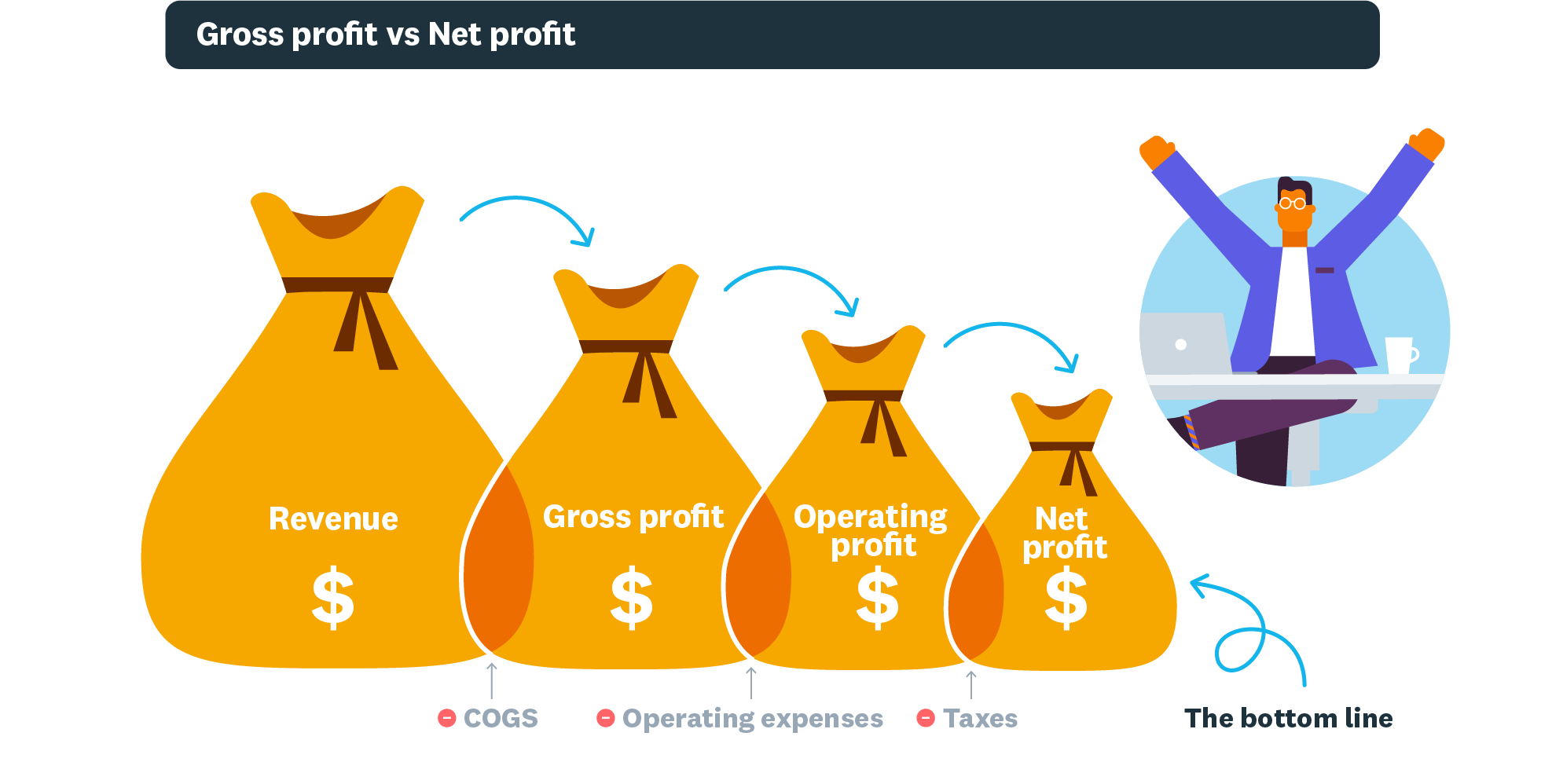
The difference between gross profit and net profit is operating expenses and taxes
Key takeaways
- Gross profit is revenue minus the cost of goods sold, and it shows how efficiently you produce or source what you sell
- Net profit is gross profit minus all other operating expenses, interest and taxes, so it reflects the overall health of your business
- A business can post strong gross profit yet little net profit when overheads, interest and tax eat into the total
- Use gross profit to guide pricing and production, and net profit to judge profitability for loans, investors and reinvestment
Gross profit vs net profit at a glance
Gross profit is what you keep from sales after the direct cost of making or buying your products, while net profit is what remains once every other expense, including interest and tax, is taken out. The core difference is scope: gross profit counts only direct costs, and net profit counts all of them.
Here is how the two measures compare at a glance:
- Gross profit covers revenue minus the cost of goods sold, and nothing else
- Gross profit shows how efficiently you turn sales into money before overheads
- Net profit covers revenue minus every cost, including rent, salaries, interest and tax
- Net profit is your bottom line and the clearest single measure of overall profitability
What is gross profit?
Gross profit is the money left over from your sales after you subtract the direct cost of producing or buying the goods you sell. It tells you how much each sale contributes before you pay for the wider running of the business.
The formula is straightforward:
- Gross profit = revenue − cost of goods sold
The cost of goods sold (COGS) covers the direct costs tied to what you sell, such as raw materials, stock bought for resale, and the direct labour used to make a product. It leaves out indirect costs like office rent, marketing and administrative salaries. For a fuller breakdown of what belongs in this figure, see the guide to calculating your cost of goods sold.
Say your business earns ₱500,000 in revenue over a quarter and spends ₱300,000 on the direct costs of the goods you sold. Your gross profit is ₱500,000 − ₱300,000, which comes to ₱200,000.
What is net profit?
Net profit is what remains after you take gross profit and subtract every other cost of running the business, including operating expenses, interest and taxes. It is the figure that shows whether your business is genuinely making money.
The formula builds on gross profit:
- Net profit = gross profit − all other operating expenses, interest and taxes
Carrying on the same example, your gross profit was ₱200,000. Suppose you then pay ₱100,000 in operating expenses such as rent, utilities and administrative salaries, ₱10,000 in interest on a loan, and ₱15,000 in tax. Subtract that ₱125,000 from your ₱200,000 gross profit and your net profit is ₱75,000.
How to calculate gross profit and net profit
Both figures come from the same set of numbers, worked through in order. Follow these steps to move from revenue down to net profit:
- Identify your total revenue for the period
- Add up your cost of goods sold for the same period
- Subtract the cost of goods sold from revenue to get your gross profit
- Total your remaining costs: operating expenses, interest and tax
- Subtract those remaining costs from gross profit to get your net profit
Gross profit vs net profit on the income statement
Your income statement, also called a profit and loss statement, lists your earnings and costs from the top down, and both profit figures appear at set points along the way. Reading it in order shows how each measure connects to the next.
Revenue sits at the top. Subtract the cost of goods sold and you reach gross profit. Take away operating expenses such as rent, wages and marketing and you reach operating profit. Then subtract interest and tax to arrive at net profit, the “bottom line” that shows what the business actually kept. To see how these figures fit together across your reports, review the guide to reading a financial statement.
Gross profit margin vs net profit margin
Gross profit and net profit are peso amounts, while their margins express the same results as a percentage of revenue. Margins make it easier to compare performance across periods or against other businesses, whatever the size of the sales figures.
The two margin formulas are:
- Gross profit margin = (gross profit ÷ revenue) × 100
- Net profit margin = (net profit ÷ revenue) × 100
Using the earlier numbers, a ₱200,000 gross profit on ₱500,000 revenue is a 40% gross profit margin, and a ₱75,000 net profit on the same revenue is a 15% net profit margin. For more on reading the first of these, see the guide to gross profit margin.
There is no single good net profit margin, but a common rule of thumb treats 5% as low, 10% as average and 20% as high (Corporate Finance Institute). Margins also vary widely by industry: as of January 2024, US general retail averaged a net profit margin of about 3%, while some sectors run much higher, based on NYU Stern data reported by NetSuite. Note these are US figures, so Philippine small-business margins may differ.
Why a business can have high gross profit but low net profit
A healthy gross profit only accounts for direct costs, so a business can look strong at that level and still keep very little at the end. The gap opens up when operating expenses, interest and tax are large relative to sales.
Picture a retailer with ₱200,000 gross profit that then pays ₱150,000 in rent, salaries and utilities, plus ₱30,000 in interest and ₱15,000 in tax. Net profit falls to ₱5,000, even though the products themselves sell at a solid margin. Watching this gap helps you spot where costs are quietly draining your earnings, and the guide on how to improve your profits covers practical ways to close it.
When to use each metric for business decisions
Each figure answers a different question, so the one you reach for depends on the decision in front of you. Gross profit speaks to the products themselves, while net profit speaks to the business as a whole.
Use gross profit when you are setting prices, comparing product lines, or judging how efficiently you produce or source stock, because it isolates the direct cost of each sale. Use net profit when you need the full picture: applying for a loan, reporting to investors, deciding how much to reinvest, or checking whether the business can sustain itself. The guide to understanding profit margin can help you turn both figures into percentages you can track over time.
Track your profit with Xero
Keeping gross profit and net profit in view is far easier when your sales and costs flow into one place and update as you go. Xero brings your income and expenses into clear reports, so you can watch both figures without building spreadsheets by hand. New customers can get one month free to see how real-time profit tracking fits your business.
FAQs on gross profit vs net profit
These quick answers cover the questions Philippine small business owners ask most about the two figures.
Is net profit the same as gross profit?
No. Gross profit counts only revenue minus the cost of goods sold, while net profit goes further and subtracts every other expense, including interest and tax.
Does gross profit include wages?
Gross profit includes only the direct labour used to make or deliver a product, such as a factory worker’s pay. Administrative and office salaries are operating expenses, so they come out later when you calculate net profit.
Should gross profit always be higher than net profit?
Usually, yes, because net profit sits after more costs are deducted. Gross profit can turn negative if the cost of goods sold is higher than revenue, which signals your direct costs are out of line with your pricing.
Why might a business have high gross profit but low net profit?
It happens when overheads, interest and tax are large compared with sales. The products sell at a good margin, but the wider cost of running the business absorbs most of what is left.
What expenses are included in net profit?
Net profit accounts for every cost: the cost of goods sold, operating expenses like rent and salaries, interest on borrowing, and tax. Whatever remains after all of these is your net profit.
What is the difference between gross profit and gross profit margin?
Gross profit is a peso amount, while gross profit margin is that amount shown as a percentage of revenue. The margin lets you compare performance across periods or businesses regardless of their size.
Related terms
Learn more about gross profit vs net profit
Handy resources
Advisor directory
You can search for experts in our advisor directory
Xero Small Business Guides
Discover resources to help you do better business
Financial reporting
Keep track of your performance with accounting reports
Disclaimer
This glossary is for small business owners. The definitions are written with their requirements in mind. More detailed definitions can be found in accounting textbooks or from an accounting professional. Xero does not provide accounting, tax, business or legal advice.