Liabilities
Liabilities are what your business owes. Learn the main types, how to calculate them and how to keep them in check.
Published Wednesday 30 September 2026
Table of contents
Key takeaways
- Liabilities are the debts and obligations your business owes, shown on the balance sheet alongside assets and equity
- Current liabilities are due within 12 months, non-current liabilities are due later, and contingent ones depend on a future event
- In Malaysia, common liabilities include supplier bills, Sales and Service Tax (SST), income tax instalments and payroll contributions
- Tracking liabilities every month and comparing them with your assets keeps your cash flow steady and your borrowing under control
What are liabilities?
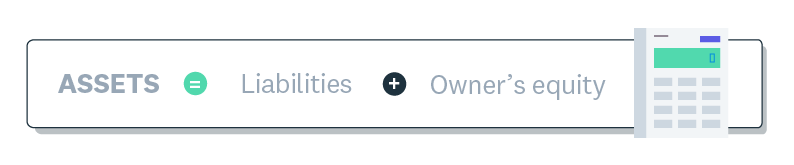
The accounting equation
Liabilities are amounts your business owes to other people or organisations. You settle them later with cash, goods or services.
Liabilities sit on your balance sheet and form one side of the accounting equation: assets = liabilities + equity. Put simply, everything your business owns is funded either by money it owes or by money the owners have put in.
Liabilities are a normal part of running a business. A loan for new equipment or a 30-day supplier credit account lets you grow while keeping cash on hand for daily costs.
Types of liabilities
Liabilities fall into three groups based on when they’re due and how certain they are. Sorting them this way shows how much cash you’ll need soon and how much you owe over the longer term.
Current liabilities
Current liabilities are obligations you expect to settle within 12 months of the balance sheet date. Common current liabilities include:
- accounts payable owed to suppliers for goods and services bought on credit
- accrued expenses, such as utilities or rent you’ve used but haven’t been billed for yet
- wages and statutory contributions owed to employees and government funds
- SST payable, which is tax you’ve collected from customers and not yet paid to customs
- income tax payable to the Inland Revenue Board of Malaysia (LHDN)
- short-term loans, overdrafts and the portion of long-term loans due this year
- unearned revenue from customers who’ve paid for work you haven’t delivered yet
SST is collected for the Royal Malaysian Customs Department. Service tax is charged at 8% for most taxable services, with a 6% rate for food and beverage, logistics, telecommunications and parking.
Companies estimate their yearly tax and pay it to LHDN in monthly instalments using Form CP204, so any unpaid instalment is a current liability. Payroll adds more: employers contribute 13% to the Employees Provident Fund (EPF) for staff earning RM5,000 or less a month, and 12% above that.
You’ll also owe contributions to the Social Security Organisation (SOCSO) for your employees. Until you pay EPF and SOCSO each month, those amounts sit in current liabilities.
Non-current liabilities
Non-current liabilities are obligations due more than 12 months after the balance sheet date. They usually fund bigger purchases that you pay off over several years, such as:
- long-term bank loans for equipment, renovations or expansion
- property loans on a shop lot, office or factory
- hire purchase balances on vehicles that fall due after 12 months
- lease liabilities for premises or equipment, covering payments due beyond 12 months
- deferred tax liabilities, which are taxes you’ll pay in a future year
- long-term provisions, such as the cost of restoring a leased property when you move out
Contingent liabilities
Contingent liabilities are possible obligations that depend on a future event, so you may never have to pay them. Examples include a customer lawsuit, a warranty claim or a guarantee you’ve given on another company’s loan.
Malaysian companies report under the Malaysian Financial Reporting Standards (MFRS), and private entities can choose the Malaysian Private Entities Reporting Standard (MPERS) instead. Both are set by the Malaysian Accounting Standards Board.
MFRS 137, Malaysia’s version of International Accounting Standard (IAS) 37, requires a provision when a payment is probable and can be reliably estimated. Otherwise, you disclose the contingent liability in the notes to your accounts, unless the chance of paying is remote.
Liabilities vs debt
Debt is money you’ve borrowed and must repay, usually with interest, such as a bank loan, overdraft or hire purchase. Liabilities cover debt plus every other amount your business owes.
That wider group includes supplier bills, unpaid wages, SST you’ve collected, EPF contributions and unearned revenue. So all debt is a liability, while many liabilities involve no borrowing at all.
How to calculate total liabilities
Total liabilities is everything your business owes on a given date. Follow these steps to work it out:
- Pick the date you’re calculating for, such as your financial year end
- List every amount owed using supplier bills, loan statements, payroll records and tax notices
- Sort each item into current or non-current, depending on whether it’s due within 12 months
- Add up your current liabilities to get a subtotal
- Add up your non-current liabilities to get a second subtotal
- Add the two subtotals together to get total liabilities
- Check your figure by subtracting it from total assets, which should leave your owner’s equity
Leave out contingent items that are only disclosed in the notes. They don’t count towards the total until they meet the test for a provision.
Examples of liabilities in business
Here’s how the steps work for a café in Penang. At the end of its financial year, the café owes these current liabilities:
- RM8,500 to suppliers for coffee beans, milk and packaging
- RM3,200 in wages to staff for the last week of the month
- RM1,800 in SST collected on food and drink sales
That’s RM13,500 in current liabilities. The café also owes RM45,000 on an equipment loan for its espresso machines and kitchen fit-out. It has an RM120,000 property loan on its shop lot too.
Non-current liabilities come to RM165,000, so total liabilities are RM178,500. With RM250,000 in total assets, the café has RM71,500 in equity, meaning the owner holds about 29% of the business outright.
Liabilities vs assets
Assets are what your business owns, while liabilities are what it owes. The two often arrive together.
Say you take out an RM50,000 loan to buy a delivery van. The van is an asset worth RM50,000 and the loan is an RM50,000 liability, so your equity doesn’t change on the day you buy it.
Over time, the van loses value through depreciation while each repayment lowers the loan balance. If you ever owe more than your assets are worth, your business has negative equity, which lenders watch closely.
Liabilities vs expenses
An expense is a cost of running your business during a period, and it appears on your income statement. A liability is an amount you still owe, and it appears on your balance sheet.
Take an RM30,000 car loan repaid over five years. The outstanding loan balance is a liability, while the interest you pay and the car’s depreciation are expenses.
A utility bill shows how the two connect. You record the expense when you use the electricity, and the unpaid bill sits in accounts payable until you settle it. Paying the bill clears the liability and reduces your cash, using debits and credits to keep both sides balanced.
Financial ratios that use liabilities
Ratios turn what you owe into a quick read on your business’s health. Lenders and accountants use these three most often.
Current ratio
The current ratio divides current assets by current liabilities to show whether you can cover bills due in the next 12 months. A result above 1 means your current assets are larger than your current liabilities.
If the Penang café has RM20,250 in cash, stock and money owed by customers, its current ratio is RM20,250 ÷ RM13,500 = 1.5.
Quick ratio
The quick ratio is a stricter test that leaves stock out of current assets, because stock can take time to sell. You divide current assets minus stock by current liabilities.
If RM4,050 of the café’s current assets is stock, its quick ratio is RM16,200 ÷ RM13,500 = 1.2.
Debt-to-asset ratio
The debt-to-asset ratio divides total liabilities by total assets to show how much of your business is funded by borrowing. It’s one of several gearing measures lenders use.
The café’s ratio is RM178,500 ÷ RM250,000 = 0.71. A lower ratio means less of your business is funded by debt.
There’s no single ideal figure, so compare your ratio with businesses in your industry.
How to manage business liabilities
Managing what you owe keeps your cash flow steady and your borrowing affordable. Start with the amounts due soonest.
Pay close attention to your current liabilities, because they affect your day-to-day cash flow. Compare them with your current assets each month so you can spot a shortfall early.
Borrowing is common among Malaysian small businesses. Bank Negara Malaysia’s Annual Report 2025 shows banks and development financial institutions approved RM186.7 billion in new small and medium enterprise (SME) financing in 2025. That funding went to more than 206,000 SME accounts, and outstanding SME financing grew by 5.9%.
These habits help you keep what you owe under control:
- Negotiate longer payment terms with suppliers
- Refinance high-interest debt when better rates are available
- Build a cash reserve to cover tax, EPF and SOCSO payments
- Pay bills on schedule to avoid late fees and protect supplier relationships
- Review your balance sheet every month
- Keep personal and business debts separate
If your debt-to-asset ratio keeps rising, talk to an accountant. They can work with you to plan repayments and choose the right mix of short-term and long-term financing.
Track your business liabilities with Xero
Knowing what you owe helps you plan with confidence and keep more cash on hand. Xero gives you a real-time balance sheet, with bank feeds that bring in transactions automatically so reconciling takes less time.
You can pay bills on time, track loans and run reports whenever you need them. Try Xero today and get one month free.
FAQs on liabilities
Here are quick answers to questions Malaysian small business owners often ask about what they owe.
Are EPF contributions a liability?
Yes. Once you’ve run payroll, both the employee’s share you’ve deducted and your employer’s share are current liabilities until you pay them to the EPF.
Is accounts receivable a liability?
No, accounts receivable is an asset because it’s money customers owe you. Accounts payable is the matching liability for money you owe suppliers.
How are liabilities recorded?
You record a new liability as a credit to a liability account, with a matching debit to an asset or expense account. When you pay it, you debit the liability and credit your bank account.
Is equity a liability?
No, equity is the owners’ claim on the business after all debts are paid. It sits on the same side of the balance sheet as liabilities, and lenders get paid before owners do.
Is a bank overdraft a current liability?
Yes, a bank overdraft is a current liability because the bank can usually ask for repayment at any time. It stays in that category even if you use it all year.
Related terms
Learn more about liabilities
Handy resources
Advisor directory
You can search for experts in our advisor directory
Xero Small Business Guides
Discover resources to help you do better business
Financial reporting
Keep track of your performance with accounting reports
Disclaimer
This glossary is for small business owners. The definitions are written with their requirements in mind. More detailed definitions can be found in accounting textbooks or from an accounting professional. Xero does not provide accounting, tax, business or legal advice.