Assets
Assets are resources your business owns or controls that have economic value and bring future benefit.
Published Monday 17 August 2026
Table of contents
Key takeaways
- Assets are resources your business owns or controls that have economic value and are expected to provide future benefits.
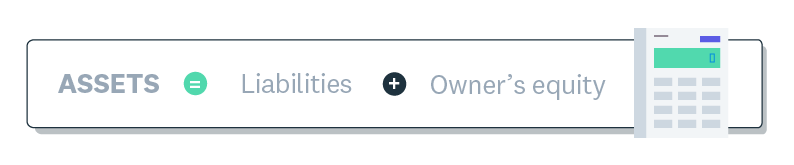
- In accounting, assets form one side of the accounting equation: Assets = Liabilities + Owner's equity.
- Assets are classified as current or fixed (non-current), and as tangible or intangible, depending on their nature and how quickly they can be converted to cash.
- Proper asset tracking helps you understand your business's financial position and make informed decisions.
What is an asset?
An asset is a resource that your business owns or controls, which has economic value and is expected to provide future benefit. In contrast, liabilities represent what your business owes to others.
The accounting equation
Under the Malaysian Financial Reporting Standards (MFRS), which align with International Financial Reporting Standards (IFRS), an asset is defined as a resource controlled by an entity as a result of past events, from which future economic benefits are expected to flow. This definition applies whether you're running a small retail shop or a growing services business.
What makes something an asset?
For something to qualify as an asset in accounting, it must meet three key tests.
- Ownership or control: your business must own the resource or have the right to control its use and benefit from it
- Economic value: the resource must have measurable monetary worth
- Future economic benefit: the resource must be capable of generating income, reducing costs, or providing other benefits in the future
It's worth noting that employees and their labour aren't classified as assets, even though they're valuable to your business. This is because you don't own or control your employees in an accounting sense.
What are assets in accounting?
In accounting, assets are central to understanding your business's financial position. They form one side of the fundamental accounting equation:
Assets = Liabilities + Owner's equity
This equation must always balance. For example, if your business has RM100,000 in assets and RM40,000 in liabilities, your owner's equity is RM60,000. You can see this relationship clearly on your balance sheet.
Types of assets
Assets can be categorised in several ways depending on their characteristics and how they're used in your business.
- Current assets: resources expected to be converted to cash or used up within one year (for example, cash, inventory, accounts receivable)
- Fixed (non-current) assets: long-term resources used for more than one year (for example, property, equipment, vehicles)
- Tangible assets: physical items you can see and touch (for example, machinery, buildings, stock)
- Intangible assets: non-physical assets with value (for example, patents, trademarks, goodwill)
- Financial assets: investments such as shares, bonds, or deposits
- Operating assets: resources used in day-to-day operations, versus non-operating assets held for investment purposes
Understanding the difference between current and fixed assets helps you manage cash flow and plan for the future.
Examples of assets
Here are common examples of assets you might find in a small business.
- Cash and bank balances
- Accounts receivable (money owed to you by customers)
- Inventory and stock
- Equipment, tools, and machinery
- Property and land
- Vehicles
- Patents and trademarks
- Goodwill (often arising from business acquisitions)
Assets vs liabilities
Assets and liabilities are opposites on your balance sheet. Assets represent what your business owns, while liabilities represent what your business owes. The difference between your total assets and total liabilities equals your owner's equity, which is the net value of your business.
How assets appear on the balance sheet
Your balance sheet lists assets in order of liquidity, meaning how quickly each asset can be converted to cash. Current assets (such as cash, accounts receivable, and inventory) appear first because they're the most liquid. Fixed or non-current assets (such as property, equipment, and vehicles) are listed below. Reviewing your balance sheet regularly gives you a clear snapshot of your business's financial position.
How are assets valued?
Assets can be valued using different methods depending on their type and accounting standards.
- Historical cost: the original purchase price of the asset
- Fair or market value: the current price the asset could be sold for in the open market
- Depreciation: the gradual reduction in value of tangible fixed assets over their useful life
- Amortisation: the gradual reduction in value of intangible assets over time
- Impairment: a write-down when an asset's value falls below its recorded amount
Manage your fixed assets with Xero
Tracking and managing your fixed assets doesn't have to be complicated. With Xero's fixed asset management features, you can record asset purchases, calculate depreciation automatically, and keep accurate records for tax and reporting purposes. Whether you're tracking equipment, vehicles, or property, Xero helps you stay organised. Ready to simplify your asset management? Get one month free and see how Xero works for your business.
FAQs on assets
Here are answers to common questions about assets in accounting.
Is labour an asset?
No, labour isn't classified as an asset in accounting. While employees provide significant value, businesses don't own or control people in the way required by accounting standards. Instead, wages and salaries are recorded as expenses.
What is the difference between current and fixed assets?
Current assets are expected to be used or converted to cash within 12 months (for example, inventory and accounts receivable). Fixed assets are long-term resources used for more than a year (for example, machinery and property) and are typically depreciated over time.
What are intangible assets?
Intangible assets are non-physical resources that have value, such as patents, trademarks, copyrights, and goodwill. They're recorded on the balance sheet and amortised over their useful life.
How can a business tell if something is an asset?
Ask three questions: does the business own or control it, does it have measurable economic value, and will it provide future benefit? If the answer to all three is yes, it's likely an asset.
Related terms
Learn more about assets
Handy resources
Advisor directory
You can search for experts in our advisor directory
Xero Small Business Guides
Discover resources to help you do better business
Fixed assets in Xero
Manage your fixed assets with easy-to-use accounting software
Disclaimer
This glossary is for small business owners. The definitions are written with their requirements in mind. More detailed definitions can be found in accounting textbooks or from an accounting professional. Xero does not provide accounting, tax, business or legal advice.