What is a balance sheet?
Learn what a balance sheet is, how it works, and how to read one to understand your business's financial position.
Published Monday 17 August 2026
Table of contents
Key takeaways
- A balance sheet is a financial statement that shows what your business owns (assets), what it owes (liabilities), and what belongs to the owners (owner's equity) at a specific point in time.
- The three parts of a balance sheet are assets, liabilities, and owner's equity, each divided into current and non-current categories where applicable.
- The balance sheet must always balance because total assets equal total liabilities plus owner's equity.
- Reviewing your balance sheet regularly helps you understand your business's financial health, track changes over time, and make informed decisions.
What is a balance sheet?
A balance sheet is a financial statement that shows your business's financial position at a specific point in time. It's sometimes called a statement of financial position.
The balance sheet gives you a snapshot of what your business owns, what it owes, and what's left over for the owners. It helps you measure your business's solvency (your ability to meet long-term obligations) and track how its value changes over time.
The three parts of a balance sheet
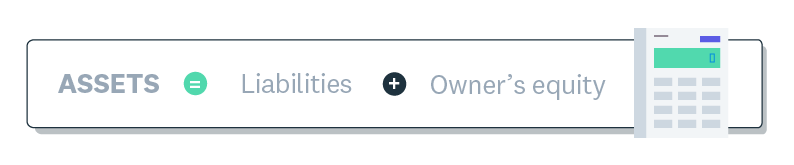
The accounting equation
Every balance sheet has three main sections: assets, liabilities, and owner's equity. Each section tells you something different about your business's finances.
Assets
Assets are everything your business owns that has value. They're divided into current assets (expected to be converted to cash within one year) and non-current assets (held for longer than one year).
- Cash
- Accounts receivable
- Inventory
- Property and equipment
Liabilities
Liabilities are what your business owes to others. Current liabilities are due within one year, while non-current liabilities are due after one year.
- Accounts payable
- Short-term loans
- Long-term loans
Owner's equity
Owner's equity is what's left over after you subtract liabilities from assets. It represents the owners' stake in the business.
- Share capital
- Retained earnings
The balance sheet formula
The accounting equation that underpins every balance sheet is:
Assets = Liabilities + Owner's equity
This equation must always balance. If your assets don't equal your liabilities plus owner's equity, there's an error somewhere in your records. Double-entry bookkeeping keeps your balance sheet in balance by recording every transaction in at least two accounts, with debits always equalling credits.
Example of a balance sheet
Here's a simple balance sheet example for a Malaysian small business. Notice how total assets equal total liabilities plus owner's equity.
- Cash: RM20,000
- Accounts receivable: RM10,000
- Inventory: RM15,000
- Equipment: RM55,000
- Total assets: RM100,000
- Accounts payable: RM12,000
- Short-term loan: RM8,000
- Long-term loan: RM30,000
- Total liabilities: RM50,000
- Owner's equity: RM50,000
Total assets (RM100,000) equal total liabilities (RM50,000) plus owner's equity (RM50,000).
How to prepare a balance sheet
You can prepare a balance sheet by following these steps. In Malaysia, financial statements follow standards set by the Malaysian Accounting Standards Board (MASB): larger and public-interest companies apply Malaysian Financial Reporting Standards (MFRS), while many smaller private companies apply the Malaysian Private Entities Reporting Standard (MPERS). Both are aligned with international standards, and companies lodge their financial statements with the Companies Commission of Malaysia (SSM).
- Choose a reporting date (the balance sheet shows your financial position on that date).
- List all your assets and calculate the total.
- List all your liabilities and calculate the total.
- Calculate owner's equity (total assets minus total liabilities).
- Check that total assets equal total liabilities plus owner's equity.
- Review your balance sheet for accuracy and assess your business's solvency.
How to read and analyse a balance sheet
Reading a balance sheet helps you understand your business's financial health. Compare balance sheets from different periods to spot trends and identify areas for improvement.
- Look at total assets, liabilities, and owner's equity to get an overview of your financial position.
- Compare current assets to current liabilities to see if you can cover short-term obligations.
- Current ratio: current assets divided by current liabilities. A ratio above 1 suggests you can meet short-term debts.
- Quick ratio: (current assets minus inventory) divided by current liabilities. This shows liquidity without relying on selling inventory.
- Debt-to-equity ratio: total liabilities divided by owner's equity. A lower ratio suggests less reliance on borrowed money.
Balance sheet vs profit and loss statement and cash flow statement
The balance sheet is one of three core financial statements. Each serves a different purpose and covers a different timeframe.
- A balance sheet is a snapshot at a single point in time, showing what you own, owe, and your net worth on that date.
- A profit and loss statement (also called an income statement) covers performance over a period, showing revenue, expenses, and profit or loss.
- A cash flow statement tracks cash movement over a period, helping you understand how cash enters and leaves your business. For more on this, see our guide to cash flow management.
Limitations of a balance sheet
While a balance sheet is useful, it has some limitations to keep in mind.
- Assets are often recorded at historical cost, which may not reflect current market value.
- Some figures rely on estimates (for example, the useful life of equipment or the collectability of receivables).
- A balance sheet doesn't capture intangible value like the skills of your team, brand reputation, or customer relationships.
Free balance sheet template
If you want to create a balance sheet for your business, Xero offers a free balance sheet template you can download and customise to suit your needs.
Track your financial position with Xero
Keeping your balance sheet up to date helps you understand where your business stands financially. Xero's cloud accounting software makes it easy to track assets, liabilities, and owner's equity in real time, so you always have an accurate picture of your financial position. Get one month free and see how Xero can simplify your bookkeeping.
FAQs on balance sheets
Here are answers to common questions about balance sheets.
What is a balance sheet in simple terms?
A balance sheet is a summary of what your business owns (assets), what it owes (liabilities), and the difference between the two (owner's equity) on a specific date.
What happens if a balance sheet doesn't balance?
If your balance sheet doesn't balance, there's likely an error in your bookkeeping. Check for missing transactions, incorrect amounts, or entries recorded in the wrong account.
Can owner's equity be negative?
Yes, owner's equity can be negative if your liabilities exceed your assets. This can happen when a business accumulates losses over time or takes on more debt than it can support.
How often should I prepare a balance sheet?
Most businesses prepare a balance sheet at least once a year for annual reporting. Preparing one monthly or quarterly gives you more timely insights into your financial position.
What is the difference between a balance sheet and a profit and loss statement?
A balance sheet shows your financial position at a single point in time. A profit and loss statement shows your revenue, expenses, and profit or loss over a period.
Related terms
Learn more about balance sheets
Handy resources
Advisor directory
You can search for experts in our advisor directory
Xero Small Business Guides
Discover resources to help you do better business
Financial reporting
Keep track of your performance with accounting reports
Disclaimer
This glossary is for small business owners. The definitions are written with their requirements in mind. More detailed definitions can be found in accounting textbooks or from an accounting professional. Xero does not provide accounting, tax, business or legal advice.