Chart of accounts
Learn what a chart of accounts is, how it's organised and how to set one up for your Malaysian business.
Published Wednesday 30 September 2026
Table of contents
Key takeaways
- A chart of accounts is the full list of accounts your business uses to categorise transactions in the general ledger
- Most charts group accounts into five types: assets, liabilities, equity, revenue and expenses
- Clear account names and a numbering system with gaps make your chart easy to use and expand as you grow
- Malaysian businesses must keep accounting records for seven years, and a well-organised chart of accounts makes that simpler
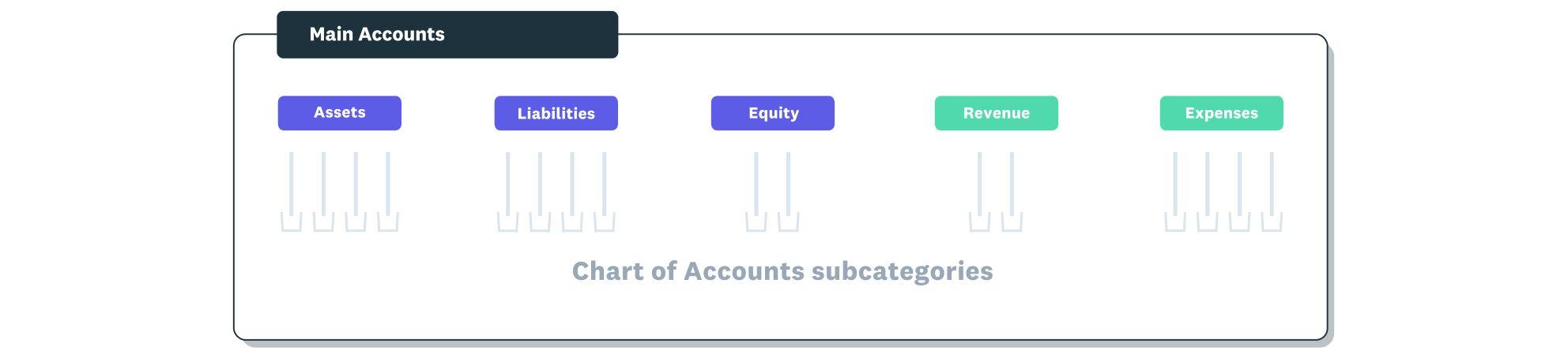
The chart of accounts is organised under the five main account types.
Chart of accounts definition
A chart of accounts is a list of all the accounts you use to record financial transactions in your general ledger. It shows where your money comes from and where it goes.
Think of it like a map of your finances. Every transaction has a place to land, and similar accounts sit together, so your bookkeeping and reporting stay accurate.
The 5 types of accounts in a chart of accounts
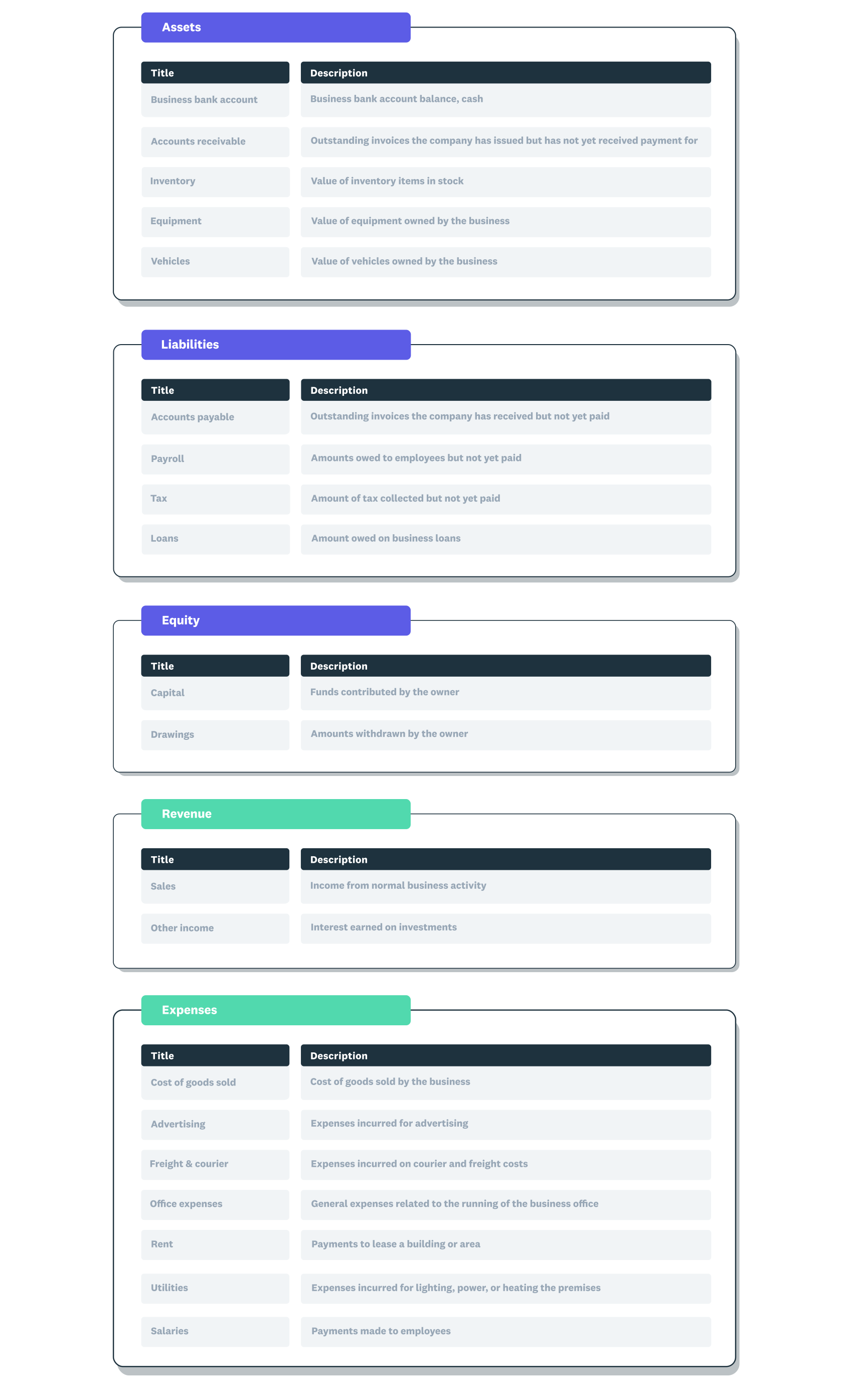
A chart of accounts example showing the five main account types with subcategories within each.
Every chart of accounts is built from five account types, and each one tracks a different part of your finances. With a Malaysian example for each, they are:
- assets, the things your business owns, such as your business bank account
- liabilities, the debts your business owes, such as a bank loan or Sales and Service Tax (SST) payable
- equity, the owners' stake in the business, such as owner's capital for a sole proprietor or share capital for a Sendirian Berhad (Sdn Bhd) company
- revenue, the money your business earns, such as sales of your products or services
- expenses, the money your business pays out to operate, such as rent for your shop or office
How a chart of accounts is organised
Your accounts follow a set order that mirrors your financial statements. Accounts that appear on your balance sheet come first: assets, liabilities and equity. Income statement accounts follow: revenue and expenses.
Each account gets a name, a short description and a code. Codes are commonly grouped by account type like this:
- 1000s for assets
- 2000s for liabilities
- 3000s for equity
- 4000s for revenue
- 5000s and above for expenses
Leave gaps between codes, for example 1000, 1010 and 1020, so you can add accounts later without renumbering. Consistent codes also make it quicker to record transactions in the right place.
Chart of accounts vs general ledger
Your chart of accounts is the list and structure of your accounts. The general ledger is where your transactions are actually recorded against those accounts. If the chart of accounts is the map, the ledger is the logbook of every trip you take.
With double-entry bookkeeping, every transaction affects at least two accounts in the ledger. For example, a journal entry for a RM500 cash sale increases both your bank account and your sales account by RM500.
How to set up a chart of accounts
A little planning upfront saves you time every time you do your books. Follow these five steps to build a chart of accounts that fits your business.
1. Start with the 5 account types
List the five main types first: assets, liabilities, equity, revenue and expenses. Every account you add later sits under one of them.
2. Choose a numbering system
Pick a code range for each account type, such as the ranges above, and use it consistently. Number accounts in steps of 10 or 100 so there's room to slot in new ones.
3. Add sub-accounts that fit your business
Break each type into sub-accounts that reflect how your business earns and spends money. Keep cost of goods sold separate from operating expenses so you can see your gross profit at a glance. If you're registered for SST, add accounts to track the tax you collect and pay to the Royal Malaysian Customs Department.
4. Name each account clearly
Give each account a short, specific name that you and your accountant will understand, such as “Shop rent” instead of “Expenses 2”. Add a brief description when the name alone could be read more than one way.
5. Review and update it as you grow
Add accounts for new income streams or costs as your business changes, and archive ones you've stopped using. Running a trial balance is a quick way to spot accounts that sit empty or carry too much.
Common chart of accounts mistakes
A few habits can make your chart of accounts harder to use over time. Watch out for:
- creating too many accounts, which clutters your reports and slows down data entry
- relying on too few or vague accounts, such as a catch-all “miscellaneous” account
- mixing personal and business spending in the same accounts
- deleting accounts that have transaction history instead of archiving them
Why a chart of accounts matters for your business
A well-built chart of accounts pays off every time you look at your numbers. It helps you:
- keep your records organised and consistent
- produce reports that show how your business is performing
- complete your bank reconciliation faster, because every transaction has a home
- make better decisions about pricing and spending
It also makes compliance simpler. Malaysian companies must record entries within 60 days of a transaction and keep records for seven years under Section 245 of the Companies Act 2016. Section 82 of the Income Tax Act 1967 also requires businesses to keep records for seven years.
Example of chart of accounts categories
Here's a sample chart of accounts for a small Malaysian retail business. The codes are illustrative, so adjust them to suit your own numbering system.
- 1000 Bank account
- 1200 Inventory
- 2000 Accounts payable
- 2100 SST payable
- 3000 Owner's capital
- 4000 Product sales
- 5000 Cost of goods sold
- 6000 Rent
Your accounts will look different depending on your industry. A café might track food and beverage costs in detail, while a consultancy would focus on billable services.
Simplify your chart of accounts with Xero
A well-organised chart of accounts gives you a true picture of your finances from day one. With Xero, you can set up and customise your chart of accounts, then categorise transactions as they arrive through bank feeds. You'll see how your business is tracking with real-time financial reports. Spend less time on your books and get one month free.
FAQs on chart of accounts
Here are answers to common questions about charts of accounts for Malaysian small businesses.
Why is a chart of accounts important?
It gives every transaction a consistent home, so your reports are accurate and your tax filing is reliable. That consistency also makes it easier for your accountant to review your books and give you advice.
How many accounts should a chart of accounts have?
There's no fixed number. Start with the accounts you need to run your business today and add more as new income streams and costs come up.
Is there a standard chart of accounts format in Malaysia?
Malaysia has no mandated list of accounts, but your chart should map neatly to your financial statements. Private entities generally report under the Malaysian Private Entities Reporting Standard (MPERS), while others use Malaysian Financial Reporting Standards (MFRS).
Is a chart of accounts required?
Malaysian law requires you to keep sufficient records rather than a chart of accounts by name. A chart of accounts is the simplest way to meet that requirement.
How often should you review your chart of accounts?
Review it at least once a year, for example at your financial year end. Check it again whenever your business changes, such as when you register for SST or launch a new product line.
Related terms
Learn more about chart of accounts
Handy resources
Advisor directory
You can search for experts in our advisor directory
Xero Small Business Guides
Discover resources to help you do better business
Online accounting with Xero
Automate your accounting in the cloud
Disclaimer
This glossary is for small business owners. The definitions are written with their requirements in mind. More detailed definitions can be found in accounting textbooks or from an accounting professional. Xero does not provide accounting, tax, business or legal advice.