Dropshipping suppliers: how to find the right ones
Discover trusted dropshipping suppliers to save time and protect your margins. Learn where to find and vet them.
Written by Lena Hanna—Trusted CPA Guidance on Accounting and Tax. Read Lena's full bio
Published Thursday 2 April 2026
Table of contents
Key takeaways
- Research suppliers thoroughly by checking online reviews, requesting product samples, and verifying business credentials before committing to any partnership, even with suppliers listed in trusted directories.
- Use supplier directories like SaleHoo or Spocket to access pre-vetted suppliers quickly, but also explore direct methods like competitor research, trade shows, and marketplace analysis to find potential partners.
- Prioritise suppliers located closer to your target customers to reduce shipping times and costs, as overseas suppliers often mean longer delivery times that can affect customer satisfaction.
- Build long-term relationships with suppliers by communicating expectations clearly, staying flexible on implementation details, and approaching negotiations as partnerships rather than adversarial transactions.
What are dropshipping suppliers and companies?
Before you start your search, understand the different players in the dropshipping ecosystem and how they work together.
Dropshipping suppliers are third-party businesses that store, pack, and ship products directly to your customers on your behalf. Dropshipping companies are platforms or directories that connect you to multiple suppliers and products in one place.
You need a supplier to fulfil orders for your store. Think of them as your backstage team, handling everything from storage to delivery so you can focus on sales.
Here's how the typical dropshipping process works:
- A customer purchases a product from your store
- You forward the order details to your supplier
- The supplier picks, packs, and ships the product directly to the customer
- The customer receives the product with your branding
Dropshipping suppliers operate worldwide, giving you access to a broad range of products. Keep in mind that overseas suppliers often mean longer shipping times, which can affect customer satisfaction and returns.
Companies that dropship
Dropshipping suppliers come in different forms, each with distinct advantages for your business model.
Most sellers use a dropshipping company or directory, like SaleHoo or Spocket, to connect with suppliers. These platforms list thousands of suppliers and products in one place.
Dropshipping suppliers fall into two main categories:
- Manufacturers: Create and sell products directly. They often offer lower prices but may require bulk orders upfront, which increases risk if you're testing a new product.
- Wholesalers: Buy products from manufacturers and resell them to retailers. Prices per unit are typically higher, but you can order smaller quantities with less financial risk.
Best dropshipping companies
Here's an overview of trusted dropshipping platforms, including their features, pricing, and what makes each one unique. Some platforms offer free plans, while others require a subscription.
Before choosing a supplier, check that it integrates with your ecommerce platform and read reviews about product quality, shipping times, and customer service.
SaleHoo
SaleHoo, a platform founded in 2005 in New Zealand, offers a supplier directory and Shopify integration that lets you import products directly to your store.
Pros:
- Access to 2.5 million products from over 8,000 pre-vetted suppliers
- Direct product import to Shopify (500 products on Basic, unlimited on Premium)
- Established reputation with verified supplier network
Cons:
- Limited to two pricing plans (Basic or Premium)
- No dedicated onboarding manager on the Basic plan
- No free trial available
Spocket
Spocket connects you to suppliers you can filter by location, helping reduce shipping times. You pay a monthly subscription plus product costs, with no commission fees.
Pros:
- Product samples available to verify quality before selling
- Integrations with Shopify, BigCommerce, WooCommerce, and Wix
- Vetted and verified supplier network
- 24/7 chat support on all plans
Cons:
- Starter plan limited to 25 unique products
- No direct communication with suppliers through the platform
AliExpress
AliExpress is a marketplace owned by Alibaba, offering over 100 million products at wholesale prices. It's a popular choice for dropshippers seeking variety without subscription fees.
Pros:
- No subscription or membership fees required
- Compatibility with Shopify, WooCommerce, DSers, and other platforms
- Low wholesale prices that support higher profit margins
Cons:
- Significant time investment needed to research product quality and trends
- Longer delivery times with free or standard shipping from Asia-based suppliers
- Variable supplier reliability requiring careful vetting
Worldwide Brands
Worldwide Brands is a supplier directory established in 1999, offering access to verified wholesalers and over 16 million products with lifetime membership.
Pros:
- Verified suppliers with quality assurance standards
- Access to 16+ million wholesale products
- One-time payment for lifetime membership
Cons:
- Upfront fee of US$299 required for access
- No direct integration with ecommerce platforms
- Additional shipping fees possible for deliveries outside the US
How to find dropshipping suppliers
Once you understand the types of suppliers available, you can start your search using these proven methods.
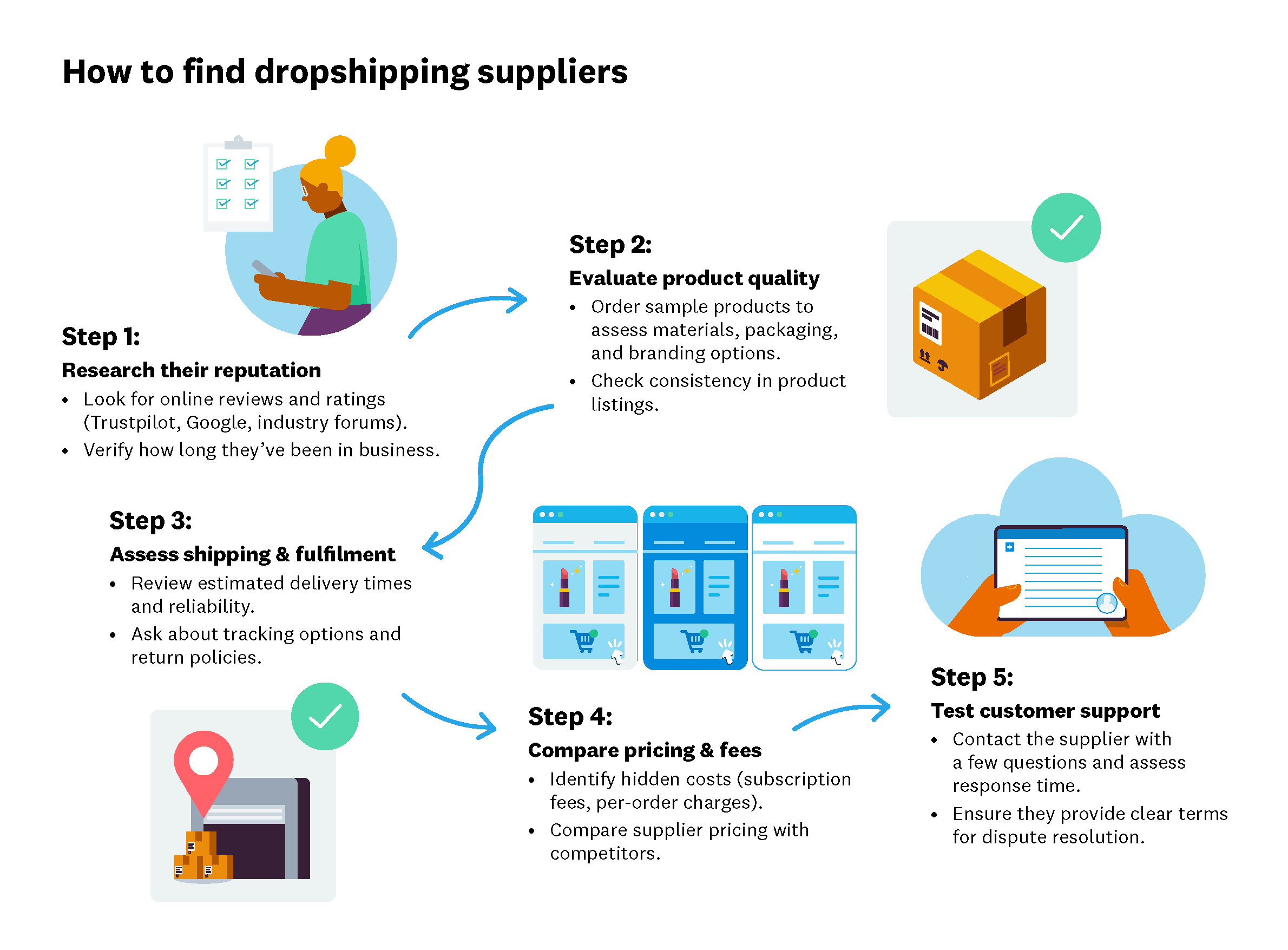
You can find dropshipping suppliers through several methods:
- Supplier directories: Platforms like SaleHoo and Spocket list thousands of vetted suppliers in one place, making them the fastest way to start.
- Search engines: Try search terms like "wholesale dropshipping," "dropshipping suppliers [your niche]," or "dropshipping suppliers [your region]."
- Marketplaces: Browse Amazon or eBay for products in your niche. When considering Etsy, be aware that general reselling is not allowed, with specific exceptions for vintage items and craft supplies. Learn more about dropshipping legality on Shopify's blog. Sort by lowest price to identify potential suppliers, then research them to explore a direct relationship.
- Competitor research: Order from businesses you suspect are dropshippers. Check the return address on the package to identify their supplier.
- Trade shows: Attend industry events to meet suppliers in person, evaluate products firsthand, and negotiate terms directly.
- Social media: Search LinkedIn, Facebook groups, or industry forums for supplier recommendations and reviews.
Tips for contacting and negotiating with dropshipping suppliers
- Research thoroughly: Check online reviews for product quality, shipping times, and pricing, even for suppliers listed in trusted directories. Use this information to negotiate better terms.
- Communicate expectations clearly: State your requirements, concerns, and standards upfront. Ask questions to ensure you both understand the agreement before committing.
- Stay flexible on details: Be firm on your core requirements but open to how suppliers can meet them. Finding common ground leads to stronger partnerships.
- Build long-term relationships: Offer ongoing business in exchange for discounts or better terms. If you're not ready to commit, suggest a trial period first.
- Understand their perspective: Recognise that suppliers have their own margins and targets. Approach negotiations as a partnership, not a battle.
- Maintain professionalism: Come prepared with your business figures and requirements. Treat all suppliers respectfully, whether you work with them or not.
Is dropshipping worth it?
Before committing to a supplier, assess whether dropshipping aligns with your business goals and resources.
Dropshipping can be worth it if you're looking for a low-cost way to start selling online without managing inventory. You can launch quickly once you have an ecommerce store and a reliable supplier.
That said, dropshipping requires effort. You'll manage supplier relationships, handle customer service, and compete on marketing rather than product exclusivity. Working with overseas suppliers adds complexity around shipping times and communication.
Learn more about the business model in What is dropshipping and How to dropship.
Is dropshipping possible in my region?
Dropshipping is possible in most regions worldwide. North America held the major dropshipping market share in 2024. However, profitability depends on local factors like shipping costs, tax requirements, and supplier availability.
Before you start, check these regional considerations:
- Legal requirements: Confirm you can legally operate an online business and sell your chosen products in your country.
- Tax compliance: Understand local tax obligations, including GST, VAT, or sales tax on imported goods.
- Shipping logistics: Look for suppliers closer to your target customers to reduce delivery times and costs.
- Market competition: Research local competitors and pricing to ensure your margins remain viable.
The global dropshipping market is expected to double between 2022 and 2026, creating opportunities for sellers who research their market thoroughly.
Manage your dropshipping business with confidence
Finding the right dropshipping supplier is just the first step. Managing your finances effectively, from tracking supplier costs to monitoring profit margins, helps you build a sustainable business.
Xero's ecommerce accounting software connects with your store to automate bookkeeping, track expenses across multiple suppliers, and give you real-time visibility into your cash flow. Explore ecommerce apps in the Xero App Store to streamline your operations further.
Ready to manage your dropshipping finances with confidence? Get one month free.
FAQs on dropshipping suppliers
Here are answers to common questions about finding and working with dropshipping suppliers.
Do you need money to start dropshipping?
You can start dropshipping with minimal upfront investment. Most costs come from your ecommerce platform subscription (often free to start), a supplier directory membership (some are free), and marketing. You don't pay for inventory until customers place orders.
Is dropshipping still viable in 2025?
Dropshipping remains a viable business model in 2025, though competition has increased. Success depends on choosing the right niche. For example, the fashion segment accounted for over 34% of revenue in 2024. Finding reliable suppliers and building a strong brand rather than competing solely on price are also key.
How can I avoid choosing a bad dropshipping supplier?
Look for these warning signs when vetting suppliers:
- no verifiable business address or contact information
- consistently negative reviews about product quality or shipping times
- unwillingness to provide product samples
- prices that seem too good to be true
- poor communication or slow response times
What's the difference between a dropshipping supplier and a dropshipping company?
A dropshipping supplier is the business that stores and ships products to your customers. A dropshipping company or directory is a platform that connects you to multiple suppliers, like SaleHoo or Spocket.
Can I use multiple dropshipping suppliers for my store?
Yes, many successful dropshippers work with multiple suppliers to offer a wider product range and reduce risk. Keep in mind that managing multiple suppliers requires more coordination, and customers may receive separate shipments for single orders.
Disclaimer
Xero does not provide accounting, tax, business or legal advice. This guide has been provided for information purposes only. You should consult your own professional advisors for advice directly relating to your business or before taking action in relation to any of the content provided.
Start using Xero for free
Access Xero features for 30 days, then decide which plan best suits your business.