Gearing ratio: definition, calculation and meaning
Learn how the gearing ratio helps you set debt levels, cut finance costs, and protect cash flow.

Written by Shaun Quarton—Accounting & Finance Content Writer and Growth Marketer. Read Shaun's full bio
Published Friday 20 February 2026
Table of contents
Key takeaways
- Calculate your gearing ratio by dividing total debt by total equity and multiplying by 100, then aim to keep it between 25% and 50% for most small businesses to maintain a healthy balance of growth potential and financial stability.
- Review your gearing ratio quarterly or before making major financial decisions to spot changes in financial risk early and ensure you can safely take on more debt without straining cash flow.
- Recognise that gearing ratios above 50% indicate high financial risk and potential difficulty attracting lenders or investors, while ratios below 25% suggest strong equity but may limit your growth opportunities.
- Use the debt-to-equity ratio for quick financial snapshots and comparisons, but apply the broader gearing ratio when doing comprehensive strategic planning and long-term financial management.
Gearing ratio definition
Gearing is the balance between debt and equity your business uses to fund operations. A gearing ratio compares these two funding sources, showing how reliant you are on borrowed money versus your own investment.
Key terms:
- Debt: borrowed money, such as loans and lines of credit, that must be repaid with interest
- Equity: the owner's investment in the business, including retained earnings and share capital
Lenders, investors and stakeholders use gearing ratios to assess your financial stability. A higher ratio signals greater reliance on debt, which means increased financial risk. In fact, a company with a gearing ratio over 50% is usually considered highly leveraged and high risk. However, it also offers the potential for higher returns. A lower ratio suggests a stronger equity position, reducing risk but potentially limiting growth.
Why does your gearing ratio matter?
Your gearing ratio matters because it reveals whether your business can safely take on more debt, attract funding and manage financial risk. Tracking it helps you make smarter decisions and plan for sustainable growth.
Your gearing ratio affects these key business areas:
- Borrowing decisions: Assess whether you can take on more debt without straining cash flow or increasing risk
- Investor and lender appeal: Demonstrate financial stability to make your business more attractive to funders
- Strategic planning: Align your debt-to-equity structure with growth goals, whether expanding rapidly or growing steadily
- Cash flow management: Free up more cash for reinvestment with a lower ratio, or plan for higher debt repayments with a higher ratio
- Risk identification: Spot financial vulnerabilities early and take corrective action before problems grow
Types of gearing ratios
Several types of gearing ratios help measure financial leverage and risk. Each examines a different aspect of your capital structure to give you a complete picture of financial stability.
- Debt-to-equity ratio: Compares total debt to total equity, showing how much of your business is funded by creditors versus owners
- Debt-to-capital ratio: Measures the proportion of total capital (debt + equity) funded by debt, indicating your reliance on borrowing
- Equity ratio: Shows the share of total assets financed by equity, with higher ratios indicating stronger stability. Generally, an equity ratio of 0.50 or below indicates that a company is leveraged.
- Times interest earned (TIE) ratio: Measures your ability to cover interest payments with pre-tax earnings, reassuring lenders you can meet debt obligations
Debt-to-equity ratio versus gearing ratio
The debt-to-equity ratio and gearing ratio both measure financial leverage, but they serve different purposes.
- Debt-to-equity ratio: Compares long-term debt specifically to shareholders' equity for quick financial assessments
- Gearing ratio: Considers various types of debt relative to capital structure for deeper, long-term analysis
Both ratios help evaluate financial risk. Use the debt-to-equity ratio for quick snapshots and the gearing ratio for comprehensive planning.
How to calculate the gearing ratio
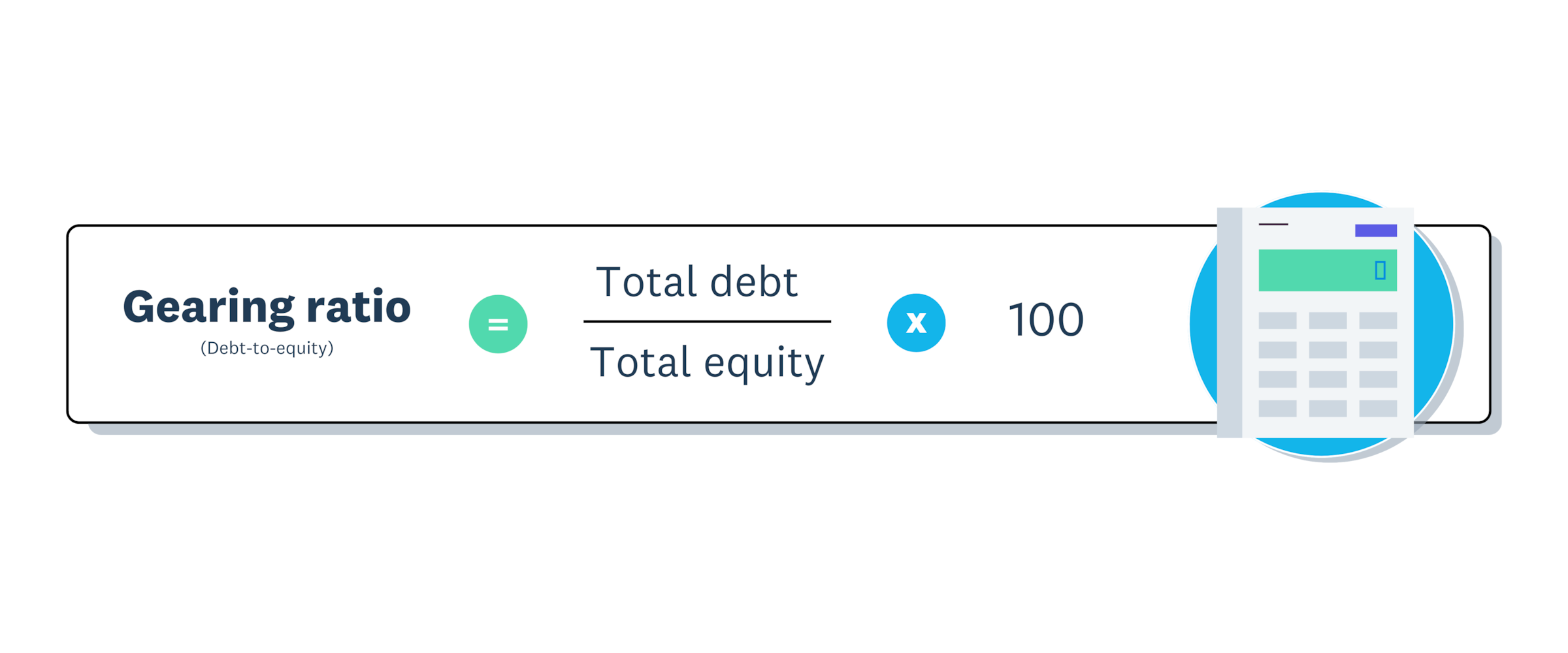
Calculate your gearing ratio in four steps to understand your debt-to-equity balance.
- Calculate total debt: Add all financial liabilities, including loans, bonds and credit lines.
- Determine total equity: Add retained earnings and share capital to find the owner's total investment.
- Apply a gearing ratio formula: Use one of these common formulas:
- Debt-to-equity formula: Gearing ratio = (Total Debt / Total Equity) × 100
- Debt-to-capital formula: Gearing ratio = (Total Debt / (Total Debt + Total Equity)) × 100
- Interpret the result:
- A higher percentage indicates greater reliance on debt
- A lower percentage shows a stronger equity position
Example gearing ratio calculations
Calculate gearing ratio using the same example figures with two different formulas.
Example figures:
- Total debt: $50,000
- Total equity: $100,000
Using the debt-to-equity formula:
Gearing ratio = (Total Debt / Total Equity) × 100
Gearing ratio = ($50,000 / $100,000) × 100 = 50%
This result indicates moderate gearing, suggesting a balanced approach to debt and equity financing.
Using the debt-to-capital formula:
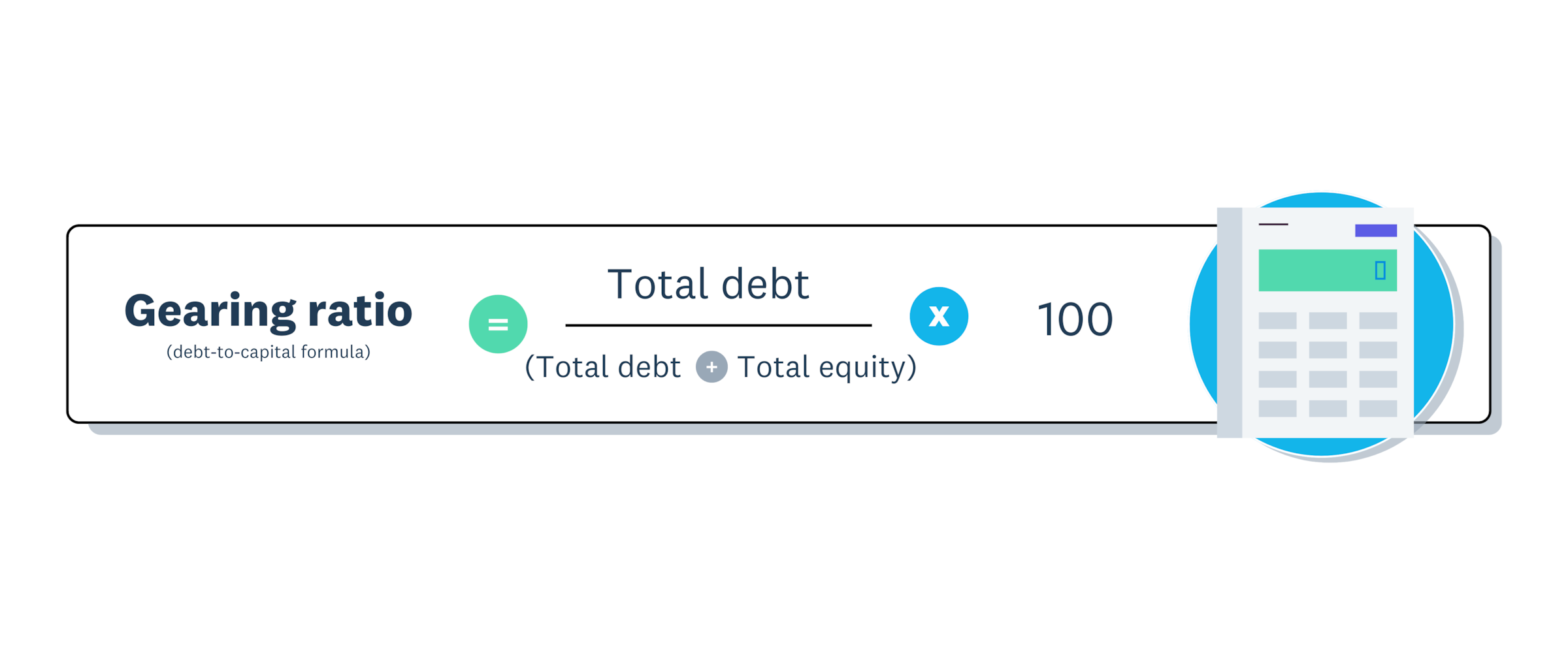
Gearing ratio = (Total Debt / (Total Debt + Total Equity)) × 100
Gearing ratio = ($50,000 / $150,000) × 100 = 33.3%
This result shows that debt makes up about one-third of total capital, indicating relatively low financial risk.
Gearing ratio analysis: what your numbers mean
Understanding what your gearing ratio means helps you assess financial health and make informed decisions about debt and growth.
What's a good gearing ratio?
A good gearing ratio for most small businesses falls between 25% and 50%. This range indicates a healthy balance between debt and equity financing.
Interpret different ranges as follows:
- Low gearing (below 25%): Strong equity position with lower risk, but may limit growth potential
- Moderate gearing (25% to 50%): Balanced approach that supports growth while maintaining stability
- High gearing (above 50%): Greater reliance on debt with increased financial risk, as research suggests a company is typically considered highly geared above 50%.
Ideal ratios vary by industry, growth stage and risk tolerance. Many SMBs maintain a 30% to 50% debt mix, using borrowed funds to support growth while relying on equity for stability.
High versus low gearing: understanding the trade-offs
The difference between high and low gearing comes down to how you balance debt and equity to fund your business.
High gearing means relying more on debt than equity. This approach can accelerate growth when sales are strong, but increases risk if revenues drop or interest rates rise. This danger was highlighted when ten large banks and securities firms recorded over $64 billion in writedowns in a single quarter leading up to the 2008 financial crisis.
High gearing works best when your business has stable cash flow to service debt, or when you're in a high-growth industry that requires borrowing to scale quickly. For example, a retail store taking out a large loan to buy inventory and renovate would have a high gearing ratio.
Low gearing means using more equity and less debt. This "safety first" approach prioritises long-term security and protects your credit rating, though growth may be slower.
Low gearing suits businesses prioritising stability over rapid expansion. A family-owned cafe expanding using saved profits, rather than borrowing, keeps financial risk to a minimum while growing steadily.
Finding the right balance helps you manage financial risk while staying ready to seize growth opportunities.
When to use the debt-to-equity ratio versus the gearing ratio
Choose between the debt-to-equity ratio and gearing ratio based on your specific needs.
- Use the debt-to-equity ratio when you need a quick snapshot of how much debt your business has relative to equity, or when making standardised comparisons
- Use the gearing ratio when you want a comprehensive view of financial leverage across different debt types, or when doing strategic planning and long-term financial management
Manage your gearing ratio with confidence using Xero
Track your gearing ratio simply with automated calculations and real-time financial reports in Xero. You can monitor your debt-to-equity balance, streamline accounting tasks and share clear, up-to-date information with lenders and investors.
Keep your business financially stable while planning for growth. Get one month free and see how Xero's reporting tools help you stay in control of your finances.
FAQs on gearing ratios
Common questions about gearing ratios and how to use them in your business.
What is a good gearing ratio for a small business?
A good gearing ratio for most small businesses is between 25% and 50%, indicating a healthy balance between debt and equity financing. Ratios below 25% suggest strong equity but potentially limited growth, while ratios above 50% indicate higher financial risk.
Is 50% gearing too high?
A 50% gearing ratio sits at the upper end of the ideal range and isn't necessarily too high. Whether it's appropriate depends on your industry, cash flow stability and growth stage.
How often should I review my gearing ratio?
Review your gearing ratio quarterly, or whenever you're considering taking on new debt, seeking investment or making major financial decisions. Regular monitoring helps you spot changes in financial risk early.
Does gearing ratio vary by industry?
Yes, acceptable gearing ratios vary significantly by industry. Capital-intensive industries like manufacturing or property often have higher ratios (60% or more). For instance, one industrial firm reported its debt was 136% of its equity. Service-based businesses typically maintain lower ratios (below 40%).
How can I improve a high gearing ratio?
Reduce your gearing ratio by paying down existing debt, retaining more profits instead of distributing them or raising additional equity investment. Avoid taking on new debt until your ratio reaches a healthier level.
Start using Xero for free
Access Xero features for 30 days, then decide which plan best suits your business.