Petty cash: how to set it up, manage and record it
Learn how to manage petty cash with simple rules and controls. Save time, control spend, and reconcile faster.

Written by Lena Hanna—Trusted CPA Guidance on Accounting and Tax. Read Lena's full bio
Published Saturday 7 March 2026
Table of contents
Key takeaways
- Establish a petty cash fund with $100-$500 and designate one person as the custodian to manage all transactions, collect receipts, and maintain records in a secure, locked location.
- Require detailed receipts for every petty cash transaction and set clear spending limits of $25-$100 per purchase to keep the fund focused on minor business expenses.
- Use an imprest system by maintaining a fixed fund amount and replenishing it regularly when cash runs low, recording all expenses in a petty cash book to track the running balance.
- Record petty cash as a current asset account in your general ledger, debiting the petty cash account when you establish or replenish the fund and crediting it when expenses are made.
What is petty cash?
Petty cash is a small reserve of cash that businesses keep on hand for minor, everyday expenses. Instead of writing cheques or processing card payments for small amounts, you pay directly from this fund.
Typical petty cash expenses include:
- office supplies like pens, notepads, or printer paper
- small repairs or maintenance items
- postage and shipping costs
- employee reimbursements for minor purchases
- coffee, tea, snacks for the office, or costs for office parties; you can deduct expenses for up to six such events per year if all employees from a particular location are invited (see CRA entertainment expense rules)
- parking or transit fares for business errands
Most businesses keep between $100–$500 in their petty cash fund, though the right amount depends on how often you have small expenses.
Petty cash vs. cash on hand
Petty cash refers specifically to a designated fund for small business expenses. Cash on hand is a broader term that includes all cash your business has available, including cash registers, bank deposits in transit, and petty cash.
In your accounting records, petty cash is tracked as its own current asset account, separate from your main cash accounts.
Why use petty cash?
Keeping a petty cash fund saves time and reduces administrative hassle for small expenses. Here's why it makes sense for most businesses:
- Speed: Pay for small items immediately without waiting for cheque approvals or card processing
- Convenience: Handle unexpected expenses on the spot, like a last-minute supply run
- Efficiency: Avoid processing costs and paperwork for transactions under $50
- Flexibility: Cover expenses when cards aren't accepted or practical
- Simplicity: Give employees a straightforward way to handle minor purchases
Without petty cash, you'd need to process every small expense through accounts payable. That creates unnecessary work for purchases that cost less than the time spent approving them.
How does petty cash work?
Petty cash works on an imprest system, meaning you maintain a fixed fund amount and replenish it periodically to restore the balance. Here's the typical workflow:
Most businesses set aside a specific amount of petty cash, typically between $100–$1,000 depending on their needs. You'll add more as needed to maintain adequate reserves.
When you create your fund, record a debit to your petty cash account and a credit to your bank account in your general ledger. For example, withdrawing $200 from the bank means you record the withdrawal and note that the funds went to petty cash.
The petty cash process works in two ways:
- Reimbursement method: Employees pay out of pocket, bring a receipt to the cashier, and get reimbursed from the fund
- Advance method: Employees receive cash upfront from petty cash and return with the receipt afterward
Either way, the cashier keeps the receipt and notes the expense in a petty cash book or spreadsheet.
Replenishing the fund brings your petty cash back to its original amount. Here's how it works:
- The cashier tallies all receipts against the petty cash book to confirm the balance.
- The cashier sends receipts and the petty cash book to the bookkeeper.
- The bookkeeper provides cash from the bank to top up the fund.
- The bookkeeper updates the general ledger with the withdrawal and records each expense to the correct account.
- The cashier updates the petty cash book to reflect the new balance.
If you're a one-person business or have just a few employees, you'll handle all of this yourself. You'll hand out the cash, collect receipts, track everything in the petty cash book, and update your accounting records when you replenish the fund.
How to set up a petty cash fund
Setting up a petty cash fund takes just a few steps. Here's how to get started:
- Determine your fund amount. Review your typical monthly small expenses to decide how much cash you need. Most small businesses start with $100–$500.
- Designate a petty cash custodian. Choose one person to manage the fund, hand out cash, collect receipts, and maintain records. This creates accountability and prevents confusion.
- Choose a secure storage location. Keep your petty cash in a locked cash box or drawer. Only the custodian should have access.
- Create the initial accounting entry. Debit your petty cash account and credit your bank account for the amount you're withdrawing to fund it.
- Set up your tracking system. Prepare petty cash vouchers, a receipt envelope, and a petty cash log or spreadsheet to record every transaction.
- Establish clear policies. Define transaction limits (for example, $50 maximum per purchase), what qualifies as a petty cash expense, and documentation requirements.
Once your fund is set up, you're ready to start using it for everyday expenses.
How to record petty cash
Recording petty cash means tracking every transaction and keeping your books accurate. You'll need three key documents to stay organized:
- Petty cash voucher: Note the expense, its business purpose, and the employee's name if you're reimbursing them. Attach the receipt when possible.
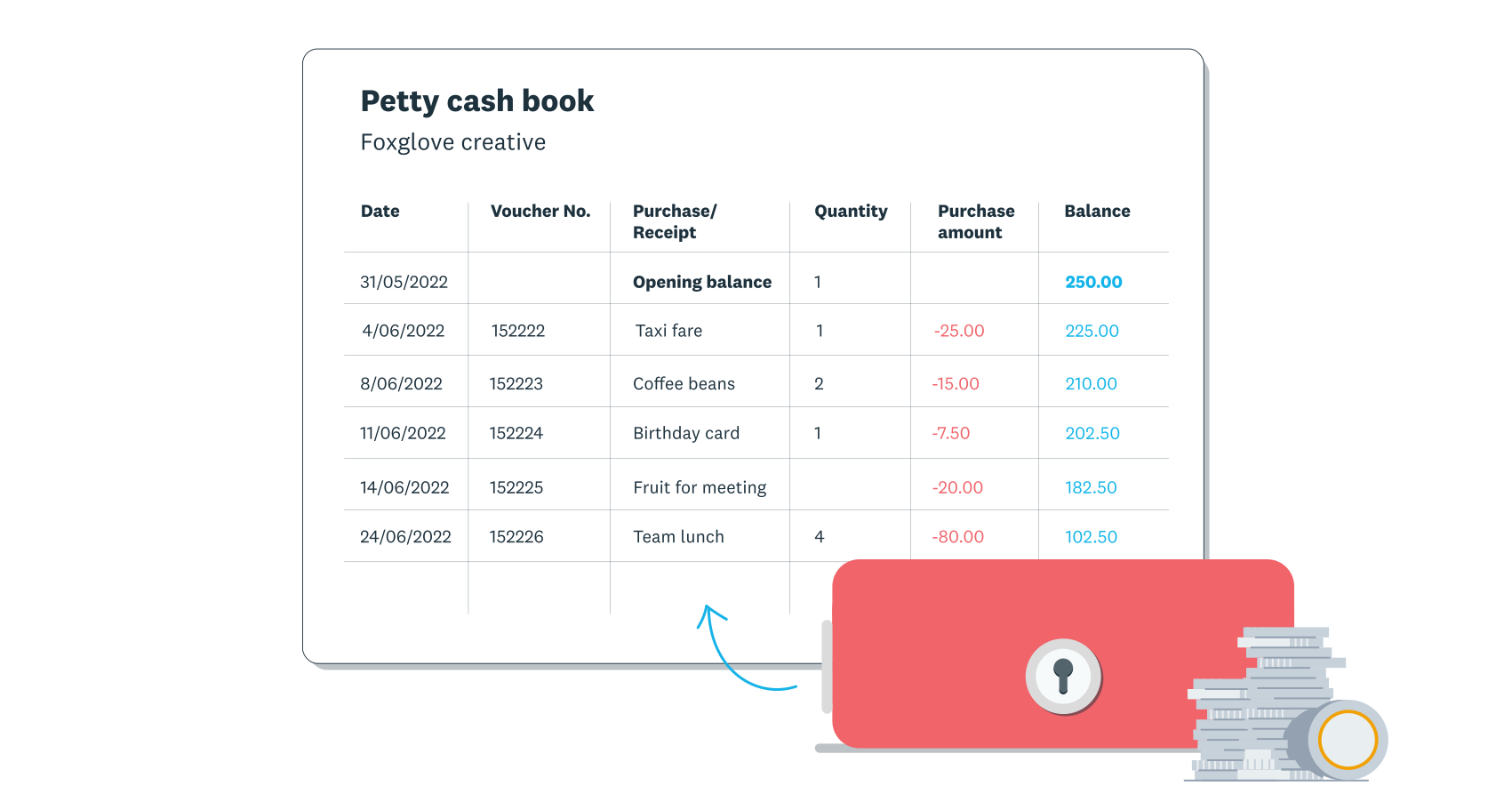
- Petty cash book or spreadsheet: Track the fund's running balance. Record all expenses paid and any cash added to the account.
- General ledger record: Record petty cash receipts as credits to the petty cash account and debits to the appropriate expense accounts. For example, spending $20 on pencils means crediting petty cash $20 and debiting office supplies $20.
Petty cash book example
A petty cash book is a simple log that tracks every transaction in your fund. Here's an example of what it looks like:
Best practices for managing petty cash
Good controls keep your petty cash secure and your records accurate. Follow these practices to avoid common problems:
- Set clear transaction limits. Cap individual purchases at $50–$100 to keep expenses appropriate for petty cash.
- Require receipts for every withdrawal. No exceptions. For compliance, the Canada Revenue Agency requires that receipts show specific details like the date, seller information, and a full description of the goods (see CRA business records requirements). Missing receipts create gaps in your records and make it harder to reconcile.
- Limit access to authorized personnel. Only the custodian should handle the fund. This prevents confusion and reduces the risk of loss.
- Keep petty cash separate from personal funds. Never mix business petty cash with personal money or other cash sources.
- Reconcile regularly. Count the cash and compare it to your records weekly or monthly, depending on transaction volume.
- Store cash securely. Use a locked box or drawer in a safe location. Keep the key with the custodian only.
- Replenish at consistent intervals. Top up the fund when it runs low or at set times, like the end of each month.
- Document everything. Record even the smallest transactions. Small amounts add up and affect your books.
Managing petty cash doesn't have to be complicated. With the right setup and consistent tracking, you'll stay organized and audit-ready without adding hours to your workload. Cloud-based accounting software can automate much of the process, from recording transactions to helping you reconcile your fund. Get one month free to see how Xero simplifies petty cash management and other financial tasks for your business.
FAQs on petty cash
Here are answers to common questions about petty cash management.
What is a petty cash journal entry?
A petty cash journal entry records transactions in your accounting system. To set up the fund, debit petty cash and credit your bank account. When replenishing, debit each expense account for the amounts spent and credit your bank account for the total replenishment.
Is petty cash a debit or credit?
Petty cash is a current asset with a normal debit balance. You debit the account to increase it and credit it to decrease it.
How often should I replenish petty cash?
Replenish your fund when it runs low or at regular intervals, such as weekly or monthly. The right frequency depends on how often you use petty cash and your transaction volume.
What's the maximum amount for a petty cash transaction?
Most businesses set limits between $25–$100 per transaction. The right cap depends on your typical expenses, but keeping limits low ensures petty cash is used only for minor purchases.
What happens if petty cash doesn't balance?
If your cash count doesn't match your records, you have a shortage (less cash than expected) or an overage (more cash than expected). Record the difference in a cash over/short account and investigate the cause to prevent future discrepancies.
Disclaimer
Xero does not provide accounting, tax, business or legal advice. This guide has been provided for information purposes only. You should consult your own professional advisors for advice directly relating to your business or before taking action in relation to any of the content provided.
Start using Xero for free
Access Xero features for 30 days, then decide which plan best suits your business.