What is a journal entry in accounting? Guide + examples
Learn what a journal entry is, how to record one, and keep your books accurate and audit ready.

Written by Lena Hanna—Trusted CPA Guidance on Accounting and Tax. Read Lena's full bio
Published Monday 23 February 2026
Table of contents
Key takeaways
- Record every journal entry using the double-entry bookkeeping principle where total debits must always equal total credits, ensuring your financial records remain accurate and balanced.
- Follow the five-step process for each transaction: identify affected accounts, classify as debits or credits, record the date and details, enter amounts, then post to your general ledger and review for errors.
- Use different journal entry types based on your specific needs—simple entries for straightforward transactions, compound entries for complex transactions affecting multiple accounts, and adjusting entries at period-end to ensure accurate financial statements.
- Implement consistent recording practices by entering journal entries as transactions occur rather than waiting, as regular entries keep your books accurate and make month-end reconciliation much easier.
What is a journal entry?
A journal entry is a record of a business transaction in your accounting system. Each entry shows the date, accounts affected, and the amounts debited and credited.
Journal entries form the foundation of double-entry bookkeeping. They feed directly into your general ledger and financial statements, helping you track business performance and report finances accurately.
Why journal entries matter for your business
Accurate journal entries keep your financial records reliable and your business compliant. Without them, your financial statements won't reflect reality, and you risk costly errors at tax time.
Here's why journal entries matter:
- Financial accuracy: Journal entries ensure every transaction is recorded, giving you a true picture of your business performance
- Tax compliance: Proper records create an audit trail that satisfies tax authorities and simplifies filing
- Better decisions: Reliable data helps you understand cash flow, profitability, and where to invest
- Credibility: Accurate books build trust with accountants, lenders, and potential investors
Recording entries correctly now saves hours of troubleshooting later.
How journal entries work: understanding debits and credits
Debits and credits are the two sides of every journal entry. In double-entry bookkeeping, each transaction affects at least two accounts: one gets debited, the other gets credited.
A debit increases asset and expense accounts but decreases liability, revenue, and equity accounts. A credit does the opposite. The total debits must always equal the total credits in every entry.
The example below shows what happens when debits and credits are made:
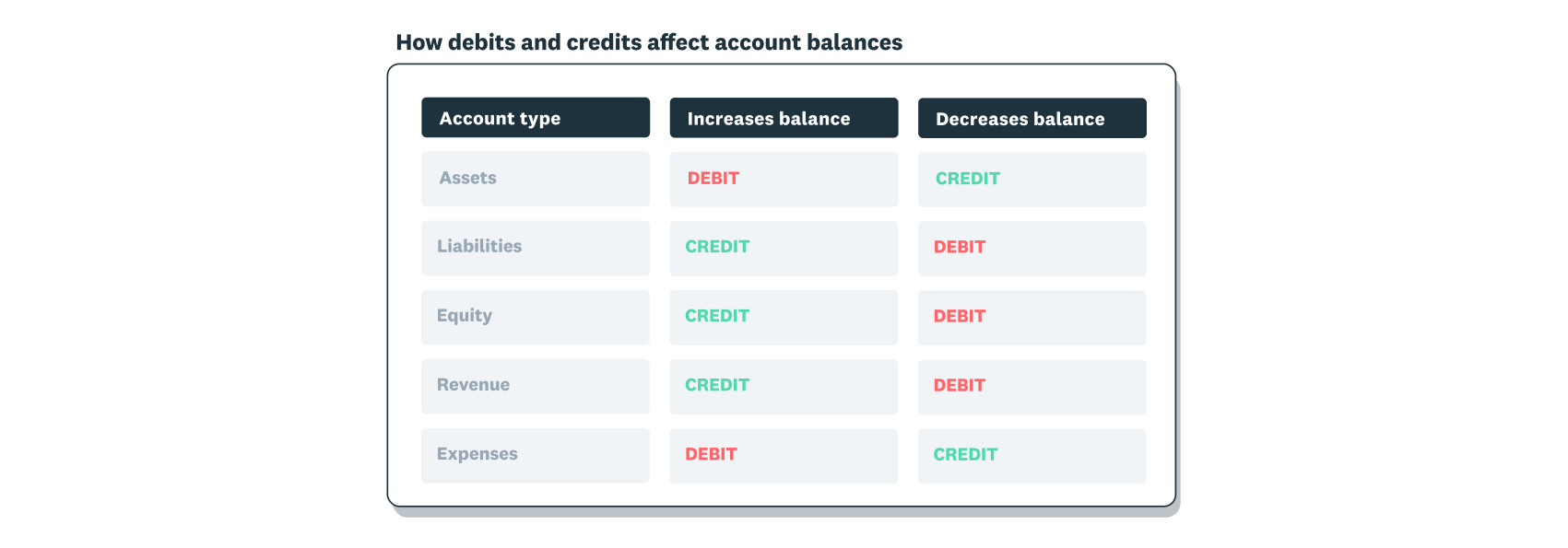
Here's how debits and credits affect each account type:
- Asset accounts: debits increase, credits decrease
- Expense accounts: debits increase, credits decrease
- Liability accounts: credits increase, debits decrease
- Revenue accounts: credits increase, debits decrease
- Equity accounts: credits increase, debits decrease
Journal entry example
Here's a practical example of a simple journal entry.
Scenario: The Cosy Cake Shop buys $300 of baking supplies with cash on 20 January 2021.
What happens: The baking supplies account (an asset) increases, and the cash account decreases by the same amount.
Here's what the simple journal entry looks like:

What are the different types of journal entries in accounting?
Journal entry types vary based on the transaction and timing. Most small businesses use seven main types: simple, compound, adjusting, reversing, recurring, closing, and correcting entries.
Here's what each type does and when to use it.
Simple journal entry
A simple journal entry affects exactly two accounts: one debit and one credit for the same amount. Use this type for straightforward transactions like cash purchases or single payments.
Compound journal entry
A compound journal entry involves more than two accounts in a single transaction. Use this type when one event affects multiple accounts, like payroll.
For example, a payroll entry might debit wage expenses while crediting cash, tax payable, and superannuation payable. The total debits still must equal the total credits.
Adjusting journal entry
An adjusting journal entry updates account balances at the end of an accounting period. Use these entries to record income or expenses that span multiple periods, ensuring your financial statements reflect accurate figures.
Common uses include accruals, deferrals, and estimated expenses. For example, the four largest U.S. banks wrote off a combined $3.4 billion in bad consumer loans in just the first quarter of 2023, highlighting why adjusting for bad debt is critical.
If you complete work over three months but invoice at the end, you'd record an adjusting entry each month for one-third of the revenue.
Reversing journal entry
A reversing journal entry cancels out an adjusting entry from the previous period. This simplifies recording when a transaction spans two periods.
For example, if you accrued wages in December for work paid in January, you'd reverse the accrual in January when you record the actual payment.
Recurring journal entry
A recurring journal entry records transactions that repeat on a regular schedule, such as monthly rent, subscriptions, or loan payments. To reduce manual effort and avoid mistakes, 66% of accounting teams now prefer automating these recurring expenses.
Closing journal entry
A closing journal entry transfers balances from temporary accounts to permanent accounts at the end of a fiscal period. Revenue and expense account balances move to retained earnings, resetting them to zero for the new period.
Correcting journal entry
A correcting journal entry fixes errors in previous entries. Use this type when you've posted an amount to the wrong account or recorded an incorrect figure.
How to record journal entries
Recording journal entries correctly keeps your books accurate and your financial statements reliable. Follow these five steps for each transaction.
- Identify the transaction and accounts involved Start by selecting the transaction and determining which accounts it affects. Ask yourself: which account increases and which decreases?
- Classify the transaction as a debit or credit Determine whether each account should be debited or credited. Remember: debits increase assets and expenses, while credits increase liabilities, revenue, and equity.
- Record the date and transaction details Enter the transaction date and a brief description, such as "office supplies purchase." Clear descriptions make it easier to review entries later and prepare for audits.
- Enter debit and credit amounts Enter the debit and credit amounts in their respective columns. Verify that total debits equal total credits before proceeding.
- Post to your general ledger and review Post the entry to your general ledger once you've confirmed the amounts balance. Review your ledger accounts periodically to catch any errors early.
Simplify journal entries with Xero
With Xero, you can automate journal entries, reducing manual data entry and the risk of errors. Your entries sync directly to your general ledger, and you can generate financial statements in just a few clicks.
Ready to simplify your bookkeeping? Get one month free and see how Xero simplifies accounting for small businesses.
FAQs on journal entries
Here are answers to common questions about journal entries.
How do I fill out a journal entry?
Gather the transaction date, account names, amounts, and a brief description. Then follow these steps:
- Enter the date and assign a reference number
- Record the account name and description
- Input debit and credit amounts
- Verify that debits equal credits
With accounting software like Xero, you can automate this process and reduce manual errors.
What's an example journal entry?
Here's an example journal entry:
- Date: 25 October 2024
- Description: Purchased office supplies for cash
- Debit: Office Supplies – $300
- Credit: Cash – $300
This entry records a $300 cash purchase. The debit increases the expense account, while the credit reduces cash on hand.
Can I use accounting software to track journal entries?
Yes. With accounting software, you can automate journal entry creation, reduce errors, and generate financial reports automatically. This saves time and helps you stay confident in your numbers.
What happens if I make a mistake in a journal entry?
You can fix errors by posting a correcting journal entry. This entry adjusts the original amounts and records the correct figures. Reviewing entries early keeps your financial statements and tax filings accurate.
Do I need to make journal entries every day?
Not necessarily. Record journal entries as transactions occur, whether that's daily, weekly, or as needed. The key is consistency: regular entries keep your books accurate and make it easier to reconcile at month-end.
Disclaimer
Xero does not provide accounting, tax, business or legal advice. This guide has been provided for information purposes only. You should consult your own professional advisors for advice directly relating to your business or before taking action in relation to any of the content provided.