What is a sales funnel? Stages, benefits and examples
Turn more leads into customers with a clear sales funnel. Learn the stages and what to do at each step.

Written by Lena Hanna—Trusted CPA Guidance on Accounting and Tax. Read Lena's full bio
Published Wednesday 1 April 2026
Table of contents
Key takeaways
- Implement a five-stage sales funnel structure that guides prospects through qualification, proposal, negotiation, closing, and retention to systematically convert leads into loyal customers.
- Track conversion rates at each funnel stage to identify bottlenecks and optimise weak points, as improving just one stage can significantly increase overall sales performance.
- Prioritise customer retention over new customer acquisition, since existing customers are 14 times more likely to make repeat purchases and can increase profits by 25% to 95%.
- Qualify leads early by assessing their needs, budget, and decision-making authority to focus your sales efforts on prospects most likely to convert.
What is a sales funnel?
A sales funnel is a step-by-step model that maps the journey a potential customer takes before making a purchase.
The funnel guides prospects from initial awareness at the top to purchase decisions at the bottom. As leads move through each stage, the funnel narrows. Some drop off due to lack of interest, budget constraints, or alternative solutions.
By the bottom of the funnel, only the most qualified leads remain, ready to buy.
For example, imagine an online store selling speciality coffee beans. A customer discovers the brand through Instagram, browses the website, joins the email list for a 10% discount, adds beans to their cart, and completes the purchase.
A sales funnel is also called a business growth funnel, conversion funnel, or purchase funnel. Each stage reflects increasing commitment. Understanding this process helps you nurture prospects and convert more of them.
What are the sales funnel stages?
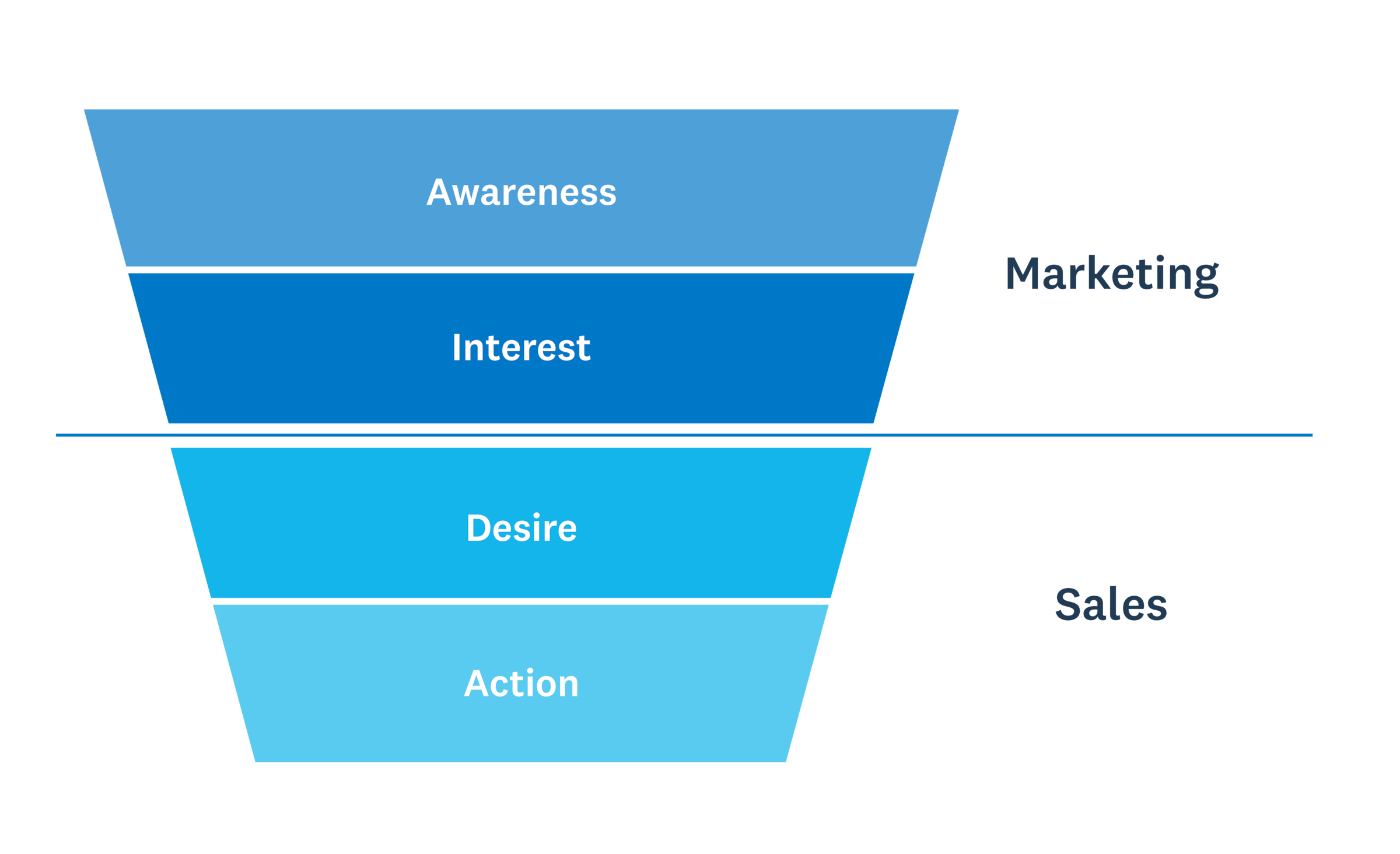
Before prospects enter your sales funnel, your marketing needs to grab their attention. Once you've piqued their interest, they start engaging with your business by visiting your website, signing up for a newsletter, or requesting more information.
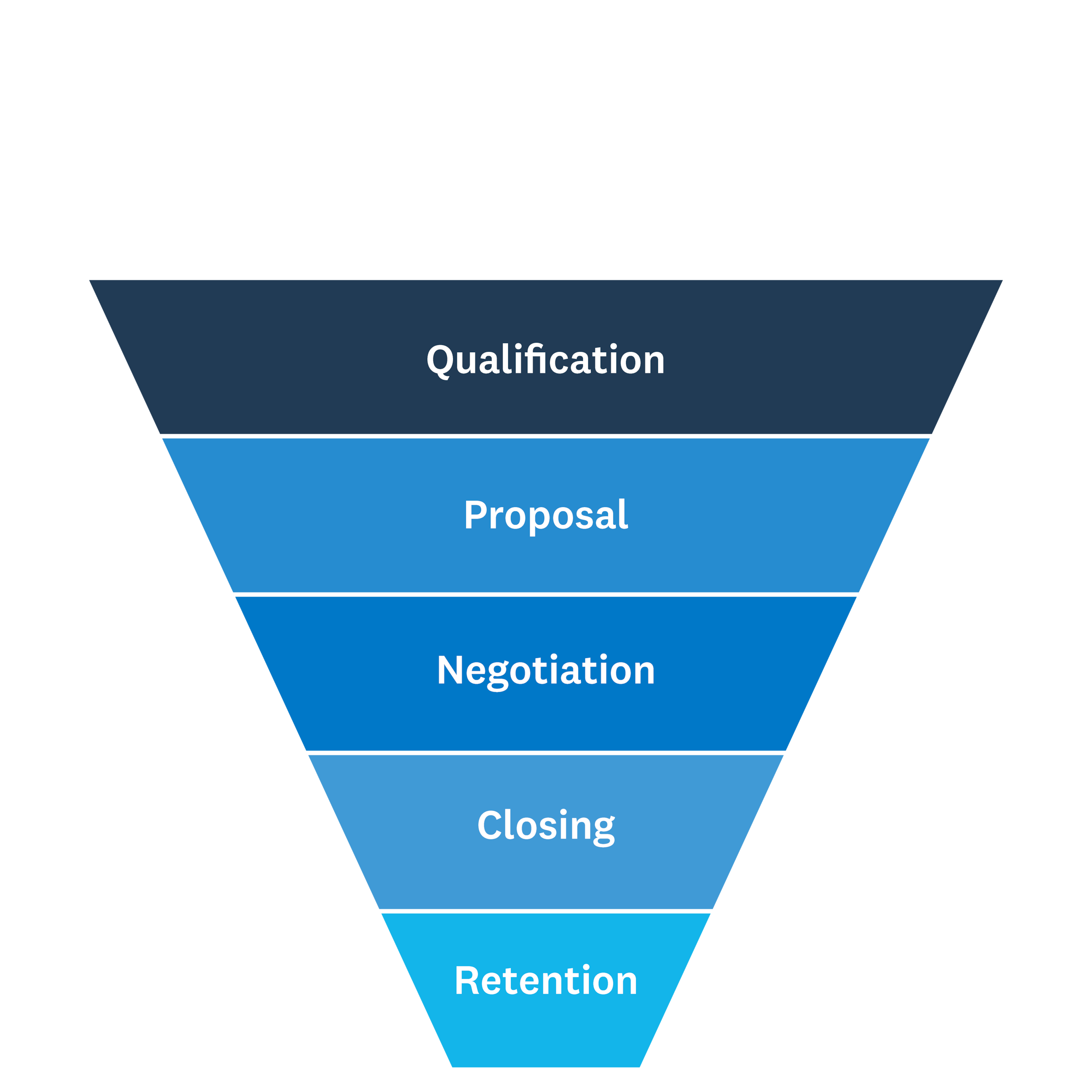
At this point, they've entered your sales funnel. Here are the five key stages:
- Qualification: identify best-fit prospects based on their needs, budget, and timeframe
- Proposal: present your product or service to qualified prospects and demonstrate its value
- Negotiation: address remaining objections and discuss terms, pricing, or contract details
- Closing: finalise the sale by securing agreement, processing payment, and completing the transaction
- Retention: ensure customer satisfaction to encourage repeat business and long-term loyalty
How does a sales funnel work?
A sales funnel works by guiding prospects through a series of stages, from initial contact to final purchase. At each stage, some prospects move forward while others drop off.
Here's the basic process:
- Entry: prospects enter the funnel through marketing efforts like ads, content, or referrals
- Progression: as prospects engage with your business, they move deeper into the funnel
- Narrowing: at each stage, some prospects leave due to lack of fit, budget, or timing
- Convert: the most qualified leads reach the bottom and become customers
The funnel shape reflects reality: you'll always have more prospects at the top than customers at the bottom. A typical funnel might see 1,000 visitors become 100 leads, then 10 customers. However, benchmark sales funnel conversion rates vary significantly by industry. For example, in B2B SaaS, the conversion rate from lead to marketing-qualified lead (MQL) is around 39%.
Understanding where prospects drop off helps you identify weak points and improve how many convert at each stage.
What are the benefits to using a sales funnel?
A sales funnel helps small businesses convert more leads, predict revenue, and focus on the most promising prospects. Here are the key advantages for SMBs.
Better understand customer behaviour
Analysing how prospects move through your sales funnel reveals which customer segments are most likely to convert.
By identifying patterns in successful conversions, you can recognise ideal customers earlier and allocate resources to the most promising leads. Each stage of the funnel provides insight into what drives purchasing decisions, helping you tailor your messaging.
For example, your data might show that high-converting leads come from specific industries. With this knowledge, you can prioritise similar prospects and focus your efforts where prospects are most likely to convert.
Consumer behaviour also varies by region. Understanding local trends lets you adapt your funnel strategies to maximise conversions in your market.
Forecast sales more accurately
Your sales funnel data helps you forecast more accurately by revealing conversion rates at each stage. This lets you estimate future sales volumes with greater accuracy.
For example, if 20% of qualified leads request a callback and 40% of those convert to customers, you can project revenue based on your current lead pool. This insight also helps you determine how much to invest in acquiring leads while maintaining positive returns.
Drive business growth
A sales funnel supports data-driven decisions and helps you grow by providing performance insights at every stage. Track key metrics to identify bottlenecks, then take targeted action to fix them.
For example, if 40% of brochure downloaders request a demo but only 3% of demos lead to a price quote, you've found a weak point. Refining your demo presentation could significantly increase prospects reaching the next stage. Consistently optimising at critical points compounds into major gains.
Retaining customers is another opportunity to grow that many businesses overlook. Track these metrics to nurture customers over time:
- Customer lifetime value: total revenue from each customer over time
- Repeat purchase rate: percentage of customers who buy again
- Churn rate: percentage of customers who stop buying
Selling to existing customers is typically more cost-efficient than acquiring new ones. Research shows the probability of making a sale to an existing customer is 14 times higher than to a new prospect.
Sales funnel examples
While you'll tailor your sales funnel to your audience, the core structure remains the same. Here are three examples showing how you might apply the sales funnel stages to different business models.
Ecommerce sales funnel
The ecommerce sales funnel moves customers from product discovery to purchase with minimal friction.
Here are the stages:
- Attract: draw visitors through ads, SEO, and social media
- Engage: showcase products with compelling images and reviews
- Capture: offer discounts or freebies in exchange for email sign-ups
- Nurture: use retargeting ads and abandoned cart emails to re-engage
- Convert: provide a seamless checkout experience
- Retain: send personalised product recommendations
B2B sales funnel
The B2B sales funnel builds trust and demonstrates expertise to drive high-value conversions. McKinsey research reveals that 80% of long-term B2B value comes from existing customers, not new prospects.
Here are the stages:
- Attract: generate interest through content marketing, networking, and referrals
- Engage: provide value with webinars, case studies, and whitepapers
- Capture: offer gated content and free consultations
- Nurture: follow up with emails, demos, and personalised outreach
- Convert: present proposals and negotiate terms
- Retain: provide ongoing support and identify upsell opportunities
SaaS sales funnel
The SaaS sales funnel converts prospects into users through free trials, then retains them with ongoing value.
Here are the stages:
- Attract: drive traffic through SEO, PPC, and content marketing
- Engage: showcase benefits with landing pages, videos, and case studies
- Capture: offer free trials, demos, or limited-access plans
- Nurture: guide users with onboarding emails, tutorials, and in-app prompts
- Convert: encourage upgrades with premium features and time-limited offers
- Retain: deliver strong support, regular updates, and loyalty incentives
How to create a sales funnel
To create a sales funnel, plan each stage carefully to guide prospects from first contact to purchase. Follow these five steps.
1. Qualify your leads
Qualifying leads means evaluating whether a prospect is a good fit for your business. Assess each lead's needs, budget, and decision-making authority.
Consider these factors when qualifying leads:
- Demographics and pain points: understand who they are and what problems they need solved
- Purchasing behaviour: gauge their likelihood of buying based on past actions
- Industry and market conditions: prioritise leads in thriving sectors over struggling markets
Learn more about market research.
2. Propose your product or service
Present your product or service to qualified leads through sales calls, demos, or formal proposals.
A personalised approach works best. Address their specific pain points and clearly highlight your unique value proposition (UVP).
3. Negotiate the details
When you negotiate, discuss terms, address objections, and work through pricing or contract details. Tailor your approach to each prospect's specific concerns.
Keep these factors in mind:
- Timing and urgency: they play a major role in decision-making
- Economic conditions: interest rates and inflation can influence willingness to commit
- Market shifts: you should adapt your approach as conditions change
4. Close the sale
Closing the sale means removing last-minute obstacles so the prospect can say yes easily.
Make the process seamless with:
- Simple checkout or contract process: reduce steps and complexity
- Flexible payment options: offer choices that fit different budgets
- Incentives: exclusive discounts or free upgrades can provide the final push
5. Retain your customers
Once you've closed the sale, focus on retaining customers and building long-term relationships.
Keep customers engaged by:
- Providing excellent customer support: respond quickly and solve problems effectively
- Offering ongoing value: share helpful content, updates, and exclusive offers
- Asking for feedback: use their input to improve your products and services
- Creating loyalty programmes: reward repeat customers with special benefits
FAQs on sales funnels
Here are answers to common questions about sales funnels.
What's the difference between a sales funnel and a marketing funnel?
A marketing funnel focuses on attracting and nurturing leads before they're ready to buy. A sales funnel picks up where the marketing funnel ends, guiding qualified prospects through the buying process to conversion.
How long does it take to build a sales funnel?
Building a basic sales funnel can take a few days to a few weeks, depending on your business complexity. However, optimising your funnel is an ongoing process that requires regular testing and refinement.
What's a good conversion rate for a sales funnel?
Conversion rates vary widely by industry, business model, and funnel stage. For example, B2B SaaS companies typically see lead-to-MQL conversion rates around 39%. Focus on improving your own baseline rather than comparing to others.
Do I need special software to create a sales funnel?
No, you can start with basic tools like email marketing software, a CRM system, and analytics platforms. As your business grows, you might invest in dedicated sales funnel software to automate and optimise the process.
How often should I review my sales funnel performance?
Review your sales funnel metrics at least monthly. Track conversion rates at each stage, identify bottlenecks, and test improvements. Regular monitoring helps you spot issues early and capitalise on opportunities.
Disclaimer
Xero does not provide accounting, tax, business or legal advice. This guide has been provided for information purposes only. You should consult your own professional advisors for advice directly relating to your business or before taking action in relation to any of the content provided.
Start using Xero for free
Access Xero features for 30 days, then decide which plan best suits your business.