Liabilities
Learn what business liabilities are, the main types, and how to track and manage what your business owes.
Published Monday 31 August 2026
Table of contents
Key takeaways
- Liabilities are the financial obligations your business owes to others, and they sit on the balance sheet alongside your assets and equity.
- Liabilities fall into current (due within 12 months), non-current (due beyond 12 months), and contingent (dependent on a future event) categories.
- Liabilities are what you owe, assets are what you own, and expenses are the costs of running your business day to day.
- Tracking your liabilities regularly helps you protect cash flow and keep your business financially healthy.
What are liabilities?
The accounting equation
Liabilities are the financial obligations your business owes to other people or organisations, such as suppliers, lenders, staff, and the government. In plain terms, they are the debts and commitments you are expected to settle over time.
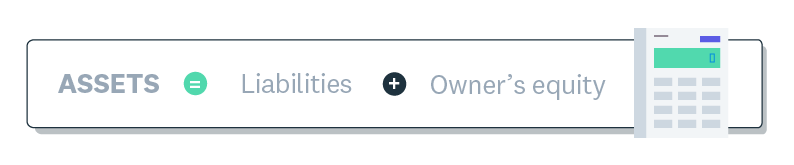
Liabilities are one of the three parts of the accounting equation: Assets = Liabilities + Equity. This equation is the foundation of your balance sheet, which shows what your business owns and owes at a single point in time.
Liabilities are not necessarily a bad thing for a small business. Borrowing to buy equipment or fund growth is a normal part of trading, and well-managed liabilities can help you expand faster than cash alone would allow.
Types of liabilities
Liabilities are usually grouped by when they fall due and how certain they are. The three main types below help you see which obligations need attention soon and which can be planned for over the longer term.
Current liabilities
Current liabilities are obligations you expect to settle within 12 months. They tend to affect your day-to-day cash flow, so they are worth watching closely.
- Accounts payable: money owed to suppliers for goods or services
- Wages payable: salaries and wages earned by staff but not yet paid
- Short-term loans: borrowings due for repayment within the year
- Income tax payable: national income tax owed to the Bureau of Internal Revenue (BIR)
- Output VAT payable: value-added tax collected from customers at the 12% rate but not yet remitted to the BIR
- Unearned revenue: payments received for goods or services you still need to deliver
Non-current liabilities
Non-current liabilities are obligations due beyond 12 months. They usually fund larger investments and are repaid gradually over several years.
- Long-term business loans
- Mortgages
- Bonds payable
- Deferred tax liabilities
- Pension obligations
Contingent liabilities
Contingent liabilities are potential obligations that depend on a future event, such as a lawsuit or a warranty claim. Whether they turn into a real debt depends on how that event plays out.
Under PAS 37 (Provisions, Contingent Liabilities and Contingent Assets), part of Philippine Financial Reporting Standards, you recognise a provision when an outflow is probable and can be reliably estimated. If it does not meet both conditions, you disclose it in the notes to your financial statements instead.
Where liabilities appear on the balance sheet
Liabilities sit on the balance sheet, directly below or beside your assets, depending on the format. They are split into two groups so readers can see what is due soon and what is due later.
- Current liabilities: obligations due within 12 months, listed first
- Non-current liabilities: obligations due beyond 12 months, listed after
Adding your total liabilities to your equity gives the same figure as your total assets, which keeps the accounting equation in balance. That balance is what makes the report a reliable snapshot of your financial position.
Examples of liabilities in business
Imagine a small landscaping business in Quezon City reviewing its books at year end. Its liabilities give a clear picture of what the business owes and when.
The current liabilities are ₱85,000 in accounts payable to an equipment supplier, ₱32,000 in wages payable, and ₱18,000 in output VAT collected but not yet remitted to the BIR. Together these come to ₱135,000 due within 12 months.
The non-current liabilities are ₱450,000 remaining on a five-year vehicle loan and a ₱1,200,000 property mortgage, adding up to ₱1,650,000. Total liabilities are therefore ₱1,785,000.
If the business holds ₱2,500,000 in assets, its equity, or net worth, is ₱715,000. That means the owner holds about 29% of the business outright, with the rest funded by liabilities.
Liabilities vs. assets
Assets and liabilities sit on opposite sides of your finances, and the gap between them tells you what your business is really worth. Assets are what you own, liabilities are what you owe, and the difference between them is your equity.
Say you buy a delivery vehicle for ₱600,000 using a ₱450,000 loan and ₱150,000 of your own cash. The vehicle is an asset worth ₱600,000, the loan is a liability of ₱450,000, and the ₱150,000 you contributed is your equity in that asset.
Liabilities vs. expenses
Liabilities and expenses are easy to mix up, but they appear on different reports and mean different things. An expense is a cost you incur to generate revenue within a period, and it appears on your income statement.
A liability is a future obligation to pay, and it appears on your balance sheet. If you buy a company vehicle outright for ₱600,000, the cost is recorded as an asset and depreciated as an expense over time. If you finance it with a loan, the outstanding balance is a liability until you repay it.
How to manage business liabilities
Managing liabilities well keeps your repayments affordable and your cash flow steady. One useful measure is the debt-to-asset ratio, which shows how much of your assets are funded by debt rather than equity.
A lower ratio generally means your business relies less on debt and carries lower financial risk. There is no single figure that is healthy for everyone, though, because what counts as reasonable varies a lot by industry and stage of growth.
The strategies below can help you keep liabilities under control and manage your debt with more confidence.
- Negotiate longer payment terms with suppliers to ease short-term cash pressure
- Refinance high-interest debt to reduce the total cost of borrowing
- Build a cash reserve so you can meet obligations without new borrowing
- Review your liabilities monthly to catch problems early
- Keep personal and business debts separate for cleaner records
Track your business liabilities with Xero
Xero Accounting Software gives you real-time visibility of your balance sheet, so you always know what your business owes and when. Automated bank feeds and reconciliation keep your payables and loan balances up to date without hours of manual data entry.
With a clear view of your current and non-current liabilities, you can plan repayments, protect your cash flow, and make confident decisions. Start with Xero today and get one month free.
FAQs on liabilities
Here are quick answers to common questions Filipino small business owners ask about liabilities.
Is it okay for a business to have liabilities?
Yes, liabilities are a normal part of running a business and often fund growth you could not manage on cash alone. The key is keeping repayments affordable relative to your income and assets.
What is the difference between current and non-current liabilities?
Current liabilities are due within 12 months, while non-current liabilities are due beyond that. Sorting them this way helps you plan near-term cash needs separately from long-term commitments.
Are liabilities the same as expenses?
No, a liability is money you still owe and sits on the balance sheet, while an expense is a cost already used up to earn revenue and sits on the income statement. A single purchase can create both over its life.
What is a contingent liability?
A contingent liability is a possible obligation that depends on a future event, such as the outcome of a pending court case. Under PAS 37 you record it as a provision only when payment is probable and can be reliably estimated.
Related terms
Learn more about liabilities
Handy resources
Advisor directory
You can search for experts in our advisor directory
Xero Small Business Guides
Discover resources to help you do better business
Financial reporting
Keep track of your performance with accounting reports
Disclaimer
This glossary is for small business owners. The definitions are written with their requirements in mind. More detailed definitions can be found in accounting textbooks or from an accounting professional. Xero does not provide accounting, tax, business or legal advice.