Assets
Assets are the resources your business owns. Learn the main types and how they appear on your balance sheet.
Published Monday 17 August 2026
Table of contents
Key takeaways
- Assets are the resources a business owns or controls that have monetary value, such as cash, equipment, inventory and intellectual property.
- Assets are the opposite of liabilities, which represent what a business owes to others.
- Assets are grouped by liquidity, physical form and use, including current vs fixed assets, tangible vs intangible assets, financial assets, and operating vs non-operating assets.
- Assets appear on the balance sheet and help determine a business's net worth by showing what the business owns compared to what it owes.
What are assets?
Assets are the resources owned by a business. They are the opposite of liabilities, which represent what a business owes to others.
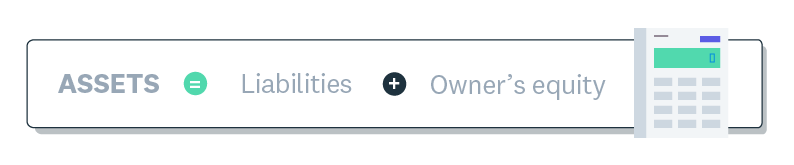
The accounting equation
An asset is anything a business owns or controls that has monetary value. Business assets can include property, equipment, cash, accounts receivable, inventory and raw materials, as well as intangibles such as trademarks, patents and other intellectual property.
What are assets in accounting?
In accounting, assets represent one side of the accounting equation. The accounting equation is: assets = liabilities + owner's equity.
This equation shows that everything a business owns is financed either by borrowing (liabilities) or by the owner's investment (equity). The more a business's assets exceed its liabilities, the more the business is worth.
How assets work
Small businesses use assets to operate day-to-day and generate income. A delivery business needs vehicles, a retailer needs inventory, and a consultancy needs computers and office equipment. Without productive assets, most businesses cannot function.
Assets can also help reduce costs. Owning equipment outright eliminates rental expenses, and maintaining efficient machinery can lower operating costs over time. Understanding the basics of small business accounting helps you track how your assets contribute to profitability.
Lenders often look at business assets when deciding whether to approve financing. Strong asset holdings can make it easier to secure loans or credit lines. Over time, accumulating assets and paying down liabilities builds net worth and strengthens your business's financial position.
Assets vs liabilities
Assets and liabilities sit on opposite sides of the balance sheet. Assets are what a business owns, while liabilities are what it owes.
Liabilities include business loans, unpaid supplier bills, wages owed to employees, and taxes payable. When assets exceed liabilities, the business has positive equity. When liabilities exceed assets, the business may face financial difficulties.
Understanding the relationship between assets and liabilities is essential for assessing your business's solvency and overall financial health.
Personal vs business assets
Personal assets belong to you as an individual, while business assets belong to your company. For sole proprietors and side-hustle owners in the Philippines, keeping these separate is important for accurate record-keeping and legal protection.
Personal assets might include your home, personal savings and private vehicle. Business assets include items purchased for business use, such as commercial equipment, business bank accounts and inventory held for sale.
Mixing personal and business finances can complicate tax filings and make it harder to understand your business's true performance. Maintaining separate accounts helps you track business profitability accurately.
Types of assets
Assets are classified in several ways depending on their characteristics and how the business uses them.
- Current vs fixed assets: current assets are expected to be used or converted to cash within one year and are more liquid, while fixed assets are held for long-term use in the business.
- Tangible vs intangible assets: tangible assets are physical items you can touch, such as machinery and buildings, while intangible assets are non-physical, including copyrights, patents and brand recognition.
- Financial assets: these include investments such as shares and bonds that represent ownership or debt in other entities.
- Operating vs non-operating assets: operating assets are used in daily business activities, while non-operating assets generate income but are not essential to core operations.
Liquidity refers to how easily an asset can be converted to cash. Cash is the most liquid asset, while property and equipment are less liquid. Understanding accounts receivable as a current asset helps you manage cash flow effectively.
Examples of assets
A small business's assets will vary depending on its industry and operations. Here are common examples using a plumbing business as a reference.
- Building: the premises owned by the business (not rented properties)
- Inventory: products and parts held for sale to customers
- Equipment: tools, workbenches, shelving, office furniture and computers
- Cash and receivables: money in the bank plus amounts owed by customers for completed work
How to value your assets
Assets are recorded on the balance sheet at their value, but different types of assets are valued differently.
Fixed assets, such as vehicles and equipment, lose value over time through depreciation. This gradual reduction in value is recorded as an expense, lowering the asset's book value each year.
Other assets may be valued using market value (what someone would pay today) or book value (original cost minus depreciation). For small businesses, accurate asset valuation is important for financial reporting and tax purposes. Xero accounting software can help you manage your fixed assets and track depreciation automatically.
Track your business assets with Xero
Xero accounting software helps Philippine small businesses track assets, monitor depreciation and view the balance sheet in one place. With automated calculations and real-time reporting, you can see your asset values without manual spreadsheets.
Start organising your business finances today and get one month free to experience how Xero simplifies asset tracking.
FAQs on assets
Here are answers to common questions about business assets.
What are the main types of assets?
The main types are current assets (cash, inventory, receivables), fixed assets (property, equipment), tangible assets (physical items), intangible assets (patents, trademarks), financial assets (investments), and operating vs non-operating assets.
What is the difference between current and fixed assets?
Current assets are expected to be used or sold within 12 months, making them more liquid. Fixed assets are held for longer periods and support ongoing business operations rather than being sold.
What are intangible assets?
Intangible assets lack physical form but hold economic value. Examples include patents, copyrights, trademarks, brand reputation and proprietary software.
Is labour an asset?
Labour itself is not recorded as an asset on the balance sheet because employees are not owned by the business. However, the skills and expertise of your workforce contribute to business value and are sometimes referred to as human capital.
What is the difference between assets and liabilities?
Assets represent what a business owns and can use to generate value. Liabilities represent obligations the business must pay, such as loans and bills. Subtracting liabilities from assets gives you the owner's equity in the business.
Related terms
Learn more about assets
Handy resources
Advisor directory
You can search for experts in our advisor directory
Xero Small Business Guides
Discover resources to help you do better business
Fixed assets in Xero
Manage your fixed assets with easy-to-use accounting software
Disclaimer
This glossary is for small business owners. The definitions are written with their requirements in mind. More detailed definitions can be found in accounting textbooks or from an accounting professional. Xero does not provide accounting, tax, business or legal advice.