Cash vs accrual accounting
Learn how cash vs accrual accounting works in Ireland, with € examples and the Revenue and CRO rules that apply.
Published Wednesday 30 September 2026
Table of contents
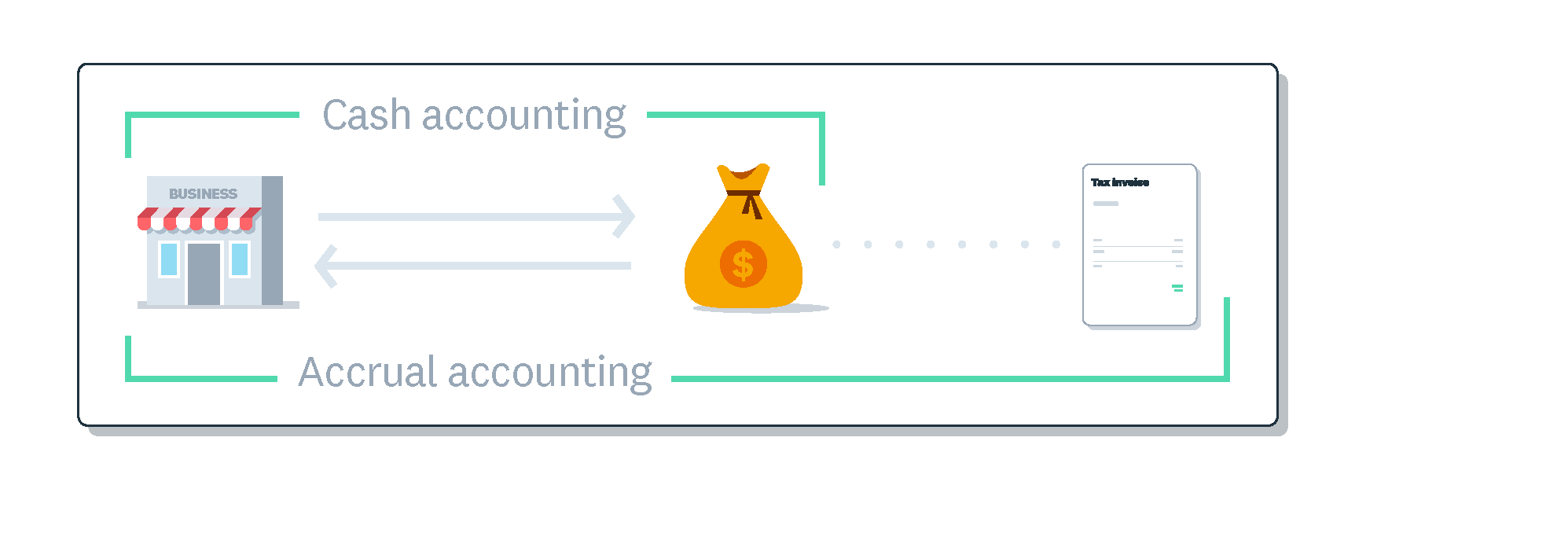
Cash accounting focuses only on cash changing hands, not outstanding bills or invoices.
Key takeaways
- Cash accounting records income and expenses when money moves, while accrual accounting records them when they’re earned or owed
- Revenue generally expects trading profits to be calculated on an earnings (accrual) basis, whatever method you use for day-to-day records
- Businesses with turnover up to €2 million can apply to account for value-added tax (VAT) when customers pay them
- Irish companies prepare accrual-based financial statements, making accrual the natural fit once you incorporate or start borrowing
What is cash basis accounting?
Cash vs accrual accounting is a question of timing: when you record income and expenses in your books. Cash basis accounting records income when you receive payment and expenses when you pay them.
It’s the simpler method, because your books follow your bank account. It suits simple finances, such as a freelancer with a handful of clients and a few regular bills.
Say you’re a freelance designer and you finish a €5,000 project in March. Your client pays in April, so under cash accounting you record €5,000 of April income.
Expenses work the same way. If you buy €500 of software in June and pay the bill in July, you record the expense in July.
What is accrual accounting?
Accrual accounting records income when you earn it and expenses when you incur them, whatever the payment date. It follows the matching principle, which places costs in the same period as the income they helped produce.
Under accrual accounting, that €5,000 design project is March income, because you finished the work in March. The April payment clears what your client owes.
The €500 software bill goes into June, the month you received it. Until you pay in July, it sits in your books as an accrued expense: a cost you’ve taken on but haven’t yet settled. The guide to recording transactions shows how each entry works.
Cash vs accrual accounting: key differences
The main difference is timing, which shapes both your reports and your workload. Here’s how the methods compare across four areas.
Timing of income and expenses
Each method puts the same transaction in a different period.
- Cash basis records a transaction when money arrives in or leaves your account
- Accrual basis records a transaction when you earn the income or take on the cost
- The same month can look very different under each method
- A gap between the two often points to money tied up in unpaid invoices
Picture of performance
Each method answers a different question about your business.
- Cash basis gives you an exact view of the money available right now
- Cash basis leaves out money customers owe you and bills you haven’t paid
- Accrual basis shows your profit for a set period, such as a month or quarter
- Accrual basis makes month-to-month comparisons more reliable
Bookkeeping effort
Cash records are quicker to keep, while accrual records need a few extra steps. With accrual accounting, you track accounts receivable, which is money customers owe you, along with the bills you owe suppliers.
You also make period-end adjustments for items like prepaid costs and accrued expenses.
Reporting standards
In Ireland, limited companies file accrual-based financial statements. Sole traders can keep cash-based records day to day and adjust them for tax.
Pros and cons of cash accounting
Cash accounting keeps your books simple, though it shows only part of your financial position.
Advantages of cash accounting
The main appeal is that your records mirror your bank account.
- Takes less time to set up and maintain
- Shows exactly how much cash you have right now
- Makes reconciling your books to your bank statements straightforward
- Fits well with the VAT moneys received basis if you qualify for it
Disadvantages of cash accounting
Atradius’s 2025 survey of Irish companies found that 58% of sales to business customers are made on credit, usually on terms of 30–60 days. Cash books leave that money out of view, so tracking what customers owe matters more as your sales grow.
- Hides money customers owe you and bills you haven’t yet paid
- Can make a profitable month look like a loss, and the reverse
- Makes planning harder because future commitments stay off your books
- Needs adjusting before it can support company accounts or a tax computation
Pros and cons of accrual accounting
Accrual accounting takes more upkeep, and in return you get a clearer view of profit.
Advantages of accrual accounting
Accrual records give you a fuller picture of how your business is performing.
- Matches income with the costs that produced it, giving a truer view of profit
- Lines up with the accounting standards Irish companies use for their accounts
- Makes it easier to spot trends and compare one month with another
- Gives lenders and investors the kind of figures they expect to see
Disadvantages of accrual accounting
The extra detail comes with some extra work.
- Takes more time to set up and maintain without accounting software
- Can show a healthy profit while your bank balance runs low
- Needs regular tracking of receivables and payables, plus period-end adjustments
- May mean paying an accountant or bookkeeper for extra support
Pairing your accrual reports with a cash flow forecast shows when money will actually land in your account.
Cash vs accrual accounting rules in Ireland
Irish rules set the accounting basis separately for each obligation, so one business can use different bases for different purposes.
Income tax on trading profits
Revenue generally expects profits to be calculated on an earnings basis, which is the Irish term for accrual accounting. Cash basis relief under section 93 of the Taxes Consolidation Act 1997 is a historic provision. It covers only individuals born before 6 April 1919.
If you keep cash-based records, you or your accountant will adjust them to the earnings basis for your tax return.
VAT on the moneys received basis
VAT is where cash accounting has a real role in Ireland. The moneys received basis lets you account for VAT when customers pay you, rather than when you invoice.
You can apply for this basis if your turnover stays at or below €2,000,000 in any continuous 12-month period. You also qualify if at least 90% of your sales go to customers who aren’t registered for VAT or can’t reclaim it in full.
Moving to this basis needs Revenue’s consent, and VAT is then due on money you receive from the approved date. It’s a VAT timing rule only, so your income tax profits still follow the earnings basis.
Financial statements for companies
If you run a limited company, the Companies Act 2014 requires financial statements prepared on an accrual basis. The Companies Registration Office (CRO) lists the options as Financial Reporting Standard 102 (FRS 102), including Section 1A for small companies. Micro companies can use FRS 105, and any company can use International Financial Reporting Standards (IFRS).
Since 1 July 2024, the CRO’s small company limits are €15 million turnover, a €7.5 million balance sheet and 50 employees. These limits affect audit exemption and filing options, while the accrual basis applies to companies of every size.
What is modified cash basis accounting?
Modified cash basis accounting is a hybrid method. You record everyday income and expenses when cash moves, but treat longer-term items like equipment and loans on an accrual basis.
Think of it as cash books with accrual adjustments for big-ticket items. A café owner might record daily takings as cash arrives, but spread a €12,000 coffee machine over several years.
In Ireland, it works as an internal management approach, because your tax computation and company accounts still follow the accrual basis.
How to choose the right accounting method
The right method depends on how your business is set up and where it’s heading. Work through these five factors, and see the guide to choosing an accounting method for more scenarios.
1. Your business structure
If you run a limited company, accrual books save you conversion work at the year end. As a sole trader, cash records work day to day, provided your tax figures are adjusted to the earnings basis.
2. Your VAT turnover
If your turnover is under €2 million, the moneys received basis can ease cash flow, because you pay VAT once customers pay you. Your VAT basis and your bookkeeping method are separate choices.
3. Stock and inventory
If you buy and sell products, accrual accounting matches the cost of stock to the sale it supports. That gives you an accurate gross profit, which is revenue minus the cost of goods sold.
4. Financing plans
Lenders and investors usually ask for recent financial statements. Accrual-based figures show what you’re owed and what you owe, giving them a fuller view.
5. Size and growth plans
A freelancer with simple costs may find cash books quicker to run. If you plan to hire staff or sell on credit terms, accrual accounting gives you a clearer view of profit as you grow.
When to switch from cash to accrual accounting
If you started with cash books, certain changes in your business are good prompts to move to accrual.
Signs it’s time to move to accrual accounting
These changes often mean accrual records will give you a more accurate picture.
- You’re incorporating as a limited company
- You’re starting to buy and sell stock
- You’re offering customers credit terms of 30 days or more
- You’re preparing to apply for a loan or bring in investors
- You’re expecting turnover to pass €2 million
How to make the switch
A clean switch comes down to timing and accurate opening balances. Follow these steps.
- Pick a start date, ideally the first day of a new financial year
- Record opening balances for what customers owe you and what you owe suppliers
- Set up your accounts so every transaction is recorded on both sides
- Check that your VAT basis still fits your turnover
- Review your first month of accrual reports with your accountant
Accrual records rely on double-entry bookkeeping, where each transaction affects two accounts. Revenue asks you to notify it if your turnover is likely to exceed €2 million in any continuous 12-month period.
An accountant can confirm your opening figures before you start, and you can find one in the Xero Advisor Directory.
Track what you’ve earned and what’s in the bank with Xero
Cash accounting shows the money in your account today, while accrual accounting shows what you’ve earned and owe. Irish tax and company rules rely on the accrual view.
Xero keeps your invoices and bills alongside automatic bank feeds, so both views stay up to date. Easy-to-read reports help you plan ahead, and your accountant can work in the same books in real time.
Set up your books the way that suits your business and get one month free when you sign up.
FAQs on cash vs accrual accounting
Here are quick answers to common questions about cash vs accrual accounting in Ireland.
How do I know if I use cash or accrual accounting?
If unpaid invoices and bills appear in your books as amounts owed, you’re using accrual; if only bank payments appear, you’re using cash.
Is accrual accounting harder than cash accounting?
It takes more steps, because you record invoices and bills as well as payments. Software that matches bank payments to open invoices handles much of that extra work.
Can sole traders in Ireland use cash accounting?
Yes, for day-to-day records, but plan for a year-end adjustment that adds unpaid customer invoices and supplier bills for your tax return.
Can I use the VAT moneys received basis with accrual books?
Yes, if you qualify, you can keep accrual books and pay VAT when customers pay. This suits long payment terms, as VAT on outstanding invoices waits until you’re paid.
Do banks prefer cash or accrual accounting?
Lenders often ask for up-to-date management accounts as well as your last filed accounts. Keeping accrual books through the year means those figures are ready as soon as you apply.
Related terms
Learn more about cash vs accrual accounting
Handy resources
Advisor directory
You can search for experts in our advisor directory
Xero Small Business Guides
Discover resources to help you do better business
Financial reporting
Keep track of your performance with accounting reports
Disclaimer
This glossary is for small business owners. The definitions are written with their requirements in mind. More detailed definitions can be found in accounting textbooks or from an accounting professional. Xero does not provide accounting, tax, business or legal advice.