Accrual accounting
Learn what accrual accounting is, how it differs from cash accounting, and when Irish businesses use it.
Published Friday 24 July 2026
Table of contents
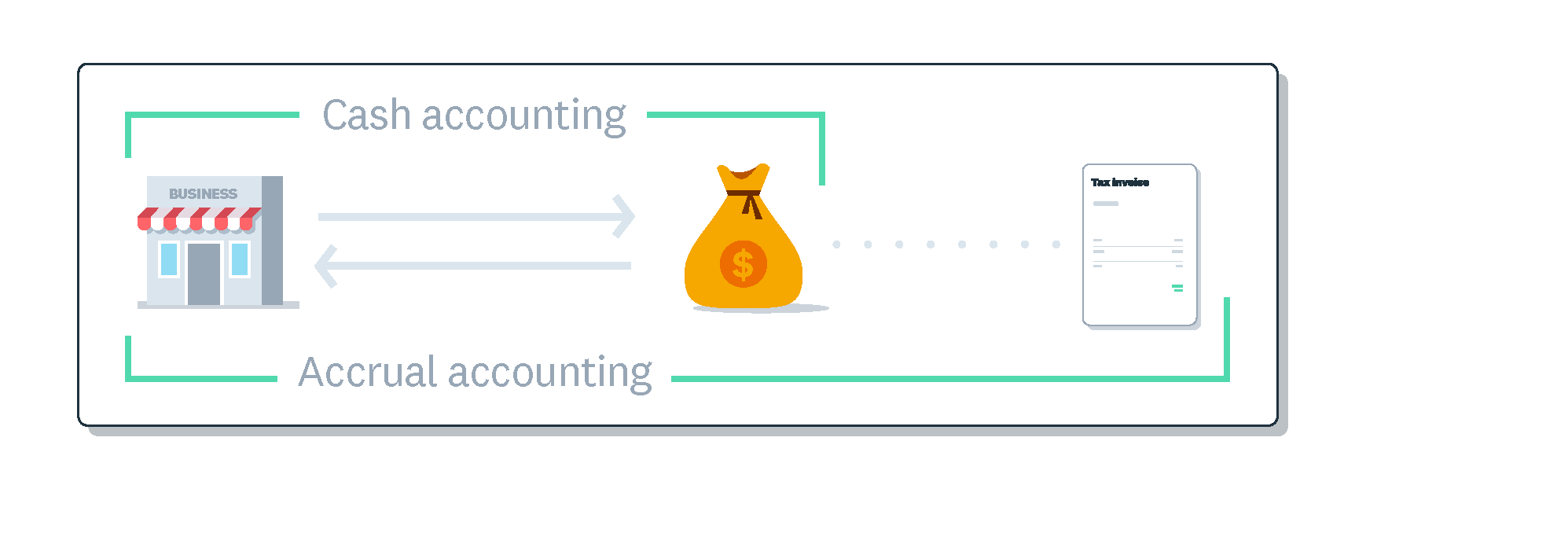
Accrual accounting keeps tabs on bills and sales invoices that are yet to be paid.
Key takeaways
- Accrual accounting records income when you earn it and expenses when you incur them, not when cash actually moves.
- It gives a fuller picture of your finances than cash accounting because it tracks money you're owed and money you owe.
- Irish companies prepare statutory accounts on an accruals basis under standards such as FRS 102 and FRS 105, though small traders can still account for VAT on a cash receipts basis.
- Accrual accounting takes more admin, so many small businesses use software to record invoices and bills automatically.
What is accrual accounting?
Accrual accounting is a method that records income when you earn it and expenses when you incur them, rather than when money reaches or leaves your bank account. It looks beyond your immediate cash position to include invoices you've sent but not yet been paid for, and bills you've received but not yet paid.
The alternative is cash accounting, which simply counts money once it has actually come in or gone out. Because accrual accounting keeps tabs on sales invoices and bills that are still outstanding, it gives a more accurate long-term view of how your business is performing.
How does accrual accounting work?
Accrual accounting works on a principle called matching, which means you record income in the same period as the costs that helped you earn it. In practice, that comes down to three habits.
- Record revenue when it's earned, such as the day you send an invoice, not the day the customer pays
- Record expenses when they're incurred, such as when you receive a supplier bill, not when you settle it
- Match income and related expenses in the same reporting period so your profit figure reflects real activity
The result is a set of accounts that shows what your business actually did in a period, even if some of the cash arrives later.
Accrual accounting vs cash accounting
The difference between the two methods comes down to timing: when you record a transaction. This is the question most business owners ask first, so here's how they compare.
- Accrual accounting records income and expenses when they're earned or incurred, showing money you're owed and money you owe
- Cash accounting records income and expenses only when cash changes hands, showing your available cash
- Accrual accounting suits growing businesses that invoice on credit or carry stock; cash accounting suits very simple, cash-based operations
- Accrual accounting needs more record keeping; cash accounting is quicker but can hide amounts you're owed or owe
For a fuller side-by-side breakdown, see the Xero guide on cash vs accrual accounting.
Types of accruals
An accrual is any amount you've earned or owe but haven't yet received or paid. There are four common types you'll come across.
Accrued revenue
Accrued revenue is income you've earned but not yet been paid for, such as work you've completed and invoiced but the customer hasn't settled. You record it as an asset because the money is owed to you.
Accrued expenses
Accrued expenses are costs you've incurred but not yet paid, such as wages or a utility bill for a period that has already passed. You record them as a liability, closely related to your accounts payable, because you owe the money.
Prepaid expenses
Prepaid expenses are payments you make in advance for something you'll use later, such as annual insurance or software billed up front. You record them as an asset and spread the cost over the period they cover.
Deferred revenue
Deferred revenue, sometimes called unearned revenue, is money a customer pays you before you've delivered the goods or service. You record it as a liability until you've earned it.
A simple accrual accounting example
An everyday example shows how the timing works. Say you run a design studio in Cork and finish a project in March, sending a €2,000 invoice that the client pays in April.
- Under accrual accounting, you record the €2,000 as income in March, when you earned it
- If a €400 software bill arrives in March but you pay it in April, you still record that expense in March
- Your March accounts therefore show the €2,000 income and the €400 expense together, giving a true picture of that month
Under cash accounting, both entries would instead land in April, when the money actually moved.
Advantages and disadvantages of accrual accounting
Accrual accounting gives a more complete view of your finances, but it asks more of you in return. Weigh up both sides before you choose.
The main advantages include:
- A more accurate picture of profit, including money you're owed and bills you haven't paid
- Better decisions, because you can see performance by period rather than just your bank balance
- Greater confidence from lenders and investors, who often expect accounts prepared on this basis
- Alignment with the reporting standards used for statutory accounts
The main disadvantages include:
- More admin, since you track invoices and bills rather than only cash
- A less obvious view of day-to-day cash, so you may need a separate cash flow report
- A possible tax timing mismatch, where you owe tax on income before a customer pays you
Who should use accrual accounting?
Accrual accounting suits businesses that need a full view of their financial position rather than a simple cash tally. It's a good fit if you recognise your business in the situations below.
- You're growing and want accurate performance tracking over time
- You carry stock and need to match sales with the cost of goods sold
- You invoice customers on credit terms and often have outstanding invoices
- You're seeking a loan or investment and need standardised financial statements
Most Irish companies also prepare their statutory accounts on an accruals basis, so this method often becomes necessary as a business formalises.
Accrual accounting and Irish reporting standards
In Ireland, accruals is a core accounting concept behind statutory financial statements, so it matters for compliance as well as good management. A few points are worth knowing.
- Larger and listed groups may instead report under IFRS as adopted by the European Union
- All of these frameworks prepare accounts on an accruals basis, in line with the requirements of the Companies Act 2014
- Separately, VAT-registered traders whose annual turnover does not exceed €2 million can choose to account for VAT on the moneys received (cash receipts) basis, as set out by Revenue
In other words, your statutory accounts usually rely on accruals even if you're allowed to handle VAT on a cash basis. Your accountant can confirm which standard applies to your business.
How accounting software helps with accrual accounting
The extra record keeping is the main reason small businesses find accrual accounting harder, and this is where software helps. Cloud accounting tools record an invoice as income when you raise it and a bill as an expense when you receive it, so your accruals stay up to date without manual entries.
Good software can also show your figures on either a cash or accrual basis, which makes it easier to manage day-to-day cash while still reporting accurately. You can learn the basics in the Xero guide on how to do bookkeeping or the wider small business accounting guide.
Manage accrual accounting with Xero
Accrual accounting gets far simpler when your invoices, bills and reports live in one place. Xero records transactions as they happen and lets you view your accounts on a cash or accrual basis, so you can stay on top of what you're owed and what you owe. See how it works and get one month free.
FAQs on accrual accounting
Here are answers to frequently asked questions about accrual accounting.
What is the difference between cash and accrual accounting?
Cash accounting records income and expenses only when money moves, while accrual accounting records them when they're earned or incurred. Accrual accounting therefore shows amounts you're owed and owe, not just your bank balance.
Is accrual accounting required in Ireland?
Irish companies generally prepare statutory accounts on an accruals basis under standards such as FRS 102 or FRS 105. Your accountant can confirm the exact requirements for your business size and structure.
Can a small business use cash accounting instead?
Very small or simple businesses may use cash-based methods for some purposes, and VAT-registered traders under €2 million turnover can account for VAT on a cash receipts basis. Even so, statutory accounts usually still rely on accruals.
What is an accrual in simple terms?
An accrual is money you've earned or owe but haven't yet received or paid. Businesses use accruals to keep track of what's coming in and going out beyond the current cash position.
What are the four types of accruals?
The four common types are accrued revenue, accrued expenses, prepaid expenses and deferred revenue. Together they capture income and costs that don't line up neatly with cash movements.
Related Terms
Learn more about accrual accounting
Handy resources
Advisor directory
You can search for experts in our advisor directory
How to do bookkeeping
Learn about data entry, bank rec, reporting and tax prep in our guide to doing bookkeeping.
Online accounting with Xero
Automate your accounting in the cloud
Disclaimer
This glossary is for small business owners. The definitions are written with their requirements in mind. More detailed definitions can be found in accounting textbooks or from an accounting professional. Xero does not provide accounting, tax, business or legal advice.