Balance sheet
Learn what a balance sheet is, what it includes, and how to read one for your small business.
Published Monday 17 August 2026
Table of contents
Key takeaways
- A balance sheet summarises what your business owns, what it owes, and the owner's equity at a single point in time.
- It follows the accounting equation, where assets always equal liabilities plus owner's equity.
- Reviewing it helps you judge solvency, track whether your business is gaining or losing value, and support loan or investment decisions.
- Xero generates a balance sheet automatically from your accounting data.
What is a balance sheet?
A balance sheet is a financial report that summarises a business's financial position at a specific point in time, showing what it owns and owes plus owner's equity. It's also known as a statement of financial position and is one of three core financial statements, used alongside the profit and loss statement and the cash flow statement.
What a balance sheet is used for
A balance sheet helps you understand whether your business is financially healthy. It shows if your business can cover its debts, whether it has gained or lost value over time, and how much of the business you truly own.
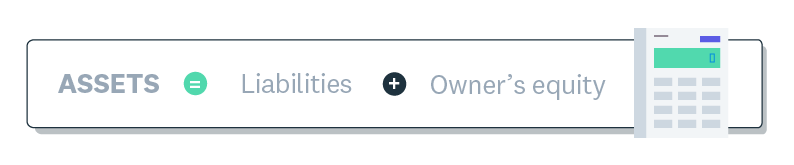
The accounting equation
- Checking solvency (can your business pay what it owes?)
- Comparing with previous balance sheets to see if value is building or declining
- Providing information lenders and investors need to assess financial strength
- Helping you generate financial reports for decision making
The parts of a balance sheet
Every balance sheet has three main sections that work together to show your financial position. These are assets, liabilities, and owner's equity.
- Assets: everything your business owns that has value
- Liabilities: everything your business owes to others
- Owner's equity: the value remaining after subtracting liabilities from assets
Assets and liabilities are typically split into current and non-current categories. Current assets include cash, accounts receivable, and inventory, while non-current assets include property and equipment. Current liabilities cover accounts payable and short-term debt due within a year. Non-current liabilities include long-term debt.
Owner's equity represents the capital you've contributed to the business plus any retained earnings (profits kept in the business rather than withdrawn).
The balance sheet formula
The accounting equation behind every balance sheet is: assets = liabilities + owner's equity. This means that what your business owns must always equal what it owes plus the owner's stake. If your balance sheet doesn't balance, the cause is typically incorrect or missing data that needs to be found and corrected.
Balance sheet example
Here's a simplified balance sheet for a small Irish business.
- Total assets: €80,000 (including €20,000 cash, €15,000 accounts receivable, €10,000 inventory, €35,000 equipment)
- Total liabilities: €50,000 (including €12,000 accounts payable, €38,000 business loan)
- Owner's equity: €30,000
Applying the formula: €80,000 = €50,000 + €30,000. The balance sheet balances, confirming the figures are consistent.
How to read a balance sheet
Reading a balance sheet takes a few simple steps. Follow these to understand what it's telling you about your business.
- Check that it balances. Total assets should equal total liabilities plus owner's equity.
- Review liquidity by comparing current assets with current liabilities. This shows whether you can cover short-term obligations.
- Review solvency by looking at total assets versus total liabilities. This shows whether you can cover all debts.
- Compare with previous periods to see if your business is building or losing value over time.
Simplify your financial reporting with Xero
Keeping your balance sheet up to date doesn't have to be time-consuming. Xero's accounting software generates a balance sheet automatically from your financial data, so you always have an accurate picture of where your business stands. Start using Xero and get one month free.
FAQs on balance sheets
Here are answers to common questions about balance sheets.
What does a balance sheet tell you?
A balance sheet tells you the financial position of your business at a single moment. It reveals how much of your business you truly own after accounting for everything you owe.
What is included in a balance sheet?
A balance sheet includes all assets (cash, receivables, inventory, property, equipment), all liabilities (payables, loans, other debts), and owner's equity. Every item with financial value or obligation appears on it.
Who prepares a balance sheet?
A business owner, bookkeeper, accountant, or accounting software can prepare a balance sheet. Many small businesses use cloud accounting software to generate one automatically.
What is the difference between a balance sheet and a profit and loss statement?
A balance sheet shows your financial position at a specific date, while a profit and loss statement shows income and expenses over a period of time. Together, they give a complete picture of financial health.
Related terms
Learn more about balance sheets
Handy resources
Advisor directory
You can search for experts in our advisor directory
Xero Small Business Guides
Discover resources to help you do better business
Financial reporting
Keep track of your performance with accounting reports
Disclaimer
This glossary is for small business owners. The definitions are written with their requirements in mind. More detailed definitions can be found in accounting textbooks or from an accounting professional. Xero does not provide accounting, tax, business or legal advice.