Basis of accounting
Learn when to record transactions and which accounting method suits your small business.
Published Monday 17 August 2026
Table of contents
Key takeaways
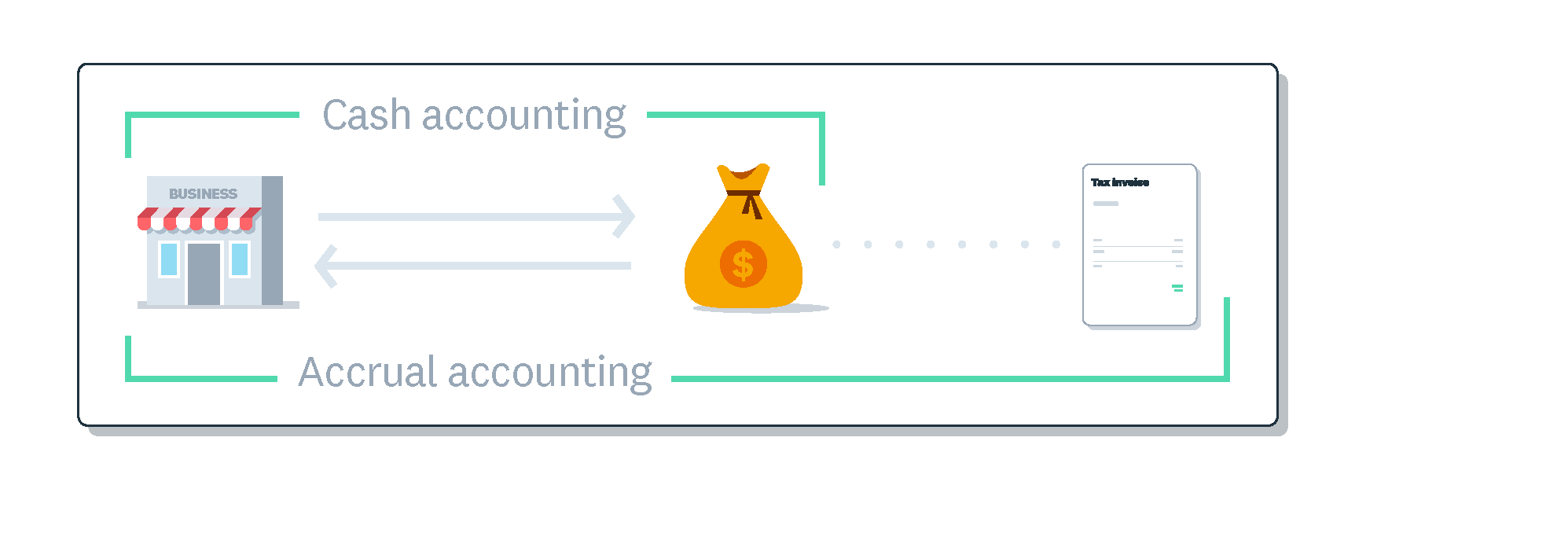
Basis of accounting determines the point at which you recognise transactions.
- The basis of accounting determines when you record income and expenses: either when cash changes hands (cash basis) or when transactions are earned or incurred (accrual basis).
- Cash basis accounting is simpler and shows your real-time cash position, while accrual basis gives a more complete picture of profitability over time.
- Your choice of accounting basis affects tax timing, financial reporting, and how lenders or investors view your business.
- In Ireland, VAT can be accounted for on the moneys received basis (cash receipts basis), subject to eligibility conditions set by Revenue.
What is the basis of accounting?
The basis of accounting is the method you use to determine when to record a financial transaction in your books. The two main options are the cash basis (you record transactions when money changes hands) and the accrual basis (you record transactions when income is earned or expenses are incurred, regardless of when payment happens).
Choosing a basis of accounting affects how your financial statements look at any point in time. It shapes your view of profit, cash on hand, and tax obligations. Understanding the difference helps you pick the right approach for your business size, industry, and goals. For a deeper look at both methods, see this cash vs accrual accounting guide.
Cash basis vs accrual basis: the key difference
The core difference between cash basis and accrual basis accounting is timing. Under the cash basis, you record income when you receive payment and expenses when you pay them. Under the accrual basis, you record income when you earn it (for example, when you send an invoice) and expenses when you incur them (for example, when you receive a bill), even if money has not yet moved.
Here is a quick comparison:
- Cash basis: records revenue when payment is received; records expenses when payment is made; reflects actual cash on hand.
- Accrual basis: records revenue when earned (invoiced); records expenses when incurred (billed); reflects money owed to and by the business.
What is cash basis accounting?
Cash basis accounting records income only when you receive payment and expenses only when you pay them. If you invoice a client in March but they pay in April, you record the income in April.
This method gives you a real-time view of the cash in your bank account. It is straightforward to manage and works well for small businesses with simple transactions and no inventory. However, it does not show money owed to you (accounts receivable) or money you owe others (accounts payable), so it can give an incomplete picture of your overall financial position.
What is accrual basis accounting?
Accrual basis accounting records income when you earn it and expenses when you incur them, regardless of when money moves. If you invoice a client in March, you record the income in March, even if payment arrives in April.
This method uses the matching principle: you match revenue with the expenses that helped generate it within the same period. Accounts receivable (money owed to you) and accounts payable (money you owe) appear on your books, giving you a fuller picture of profitability over time. Accrual accounting is more complex to manage, but it is often required for larger businesses or those seeking outside investment. Keeping accurate records also supports double-entry bookkeeping, which helps you track both sides of every transaction.
Cash basis vs accrual basis: an example
Consider an Irish small business that provides consulting services. In June, you complete a project and invoice your client for €2,000. The client pays in July.
- Cash basis: you record €2,000 in income in July, when the payment lands in your account. Your June books show no income from this job.
- Accrual basis: you record €2,000 in income in June, when you raise the invoice. Your June books reflect the money earned, even though you have not received it yet. In July, when the client pays, you update your accounts receivable to show the balance has been settled.
This timing difference matters for monthly reports, tax returns, and understanding your cash position.
Pros and cons of each method
Both accounting bases have advantages and drawbacks. Your choice depends on your business size, complexity, and goals.
Cash basis advantages:
- Simple to set up and maintain
- Clear view of actual cash on hand
- Easier for businesses with straightforward transactions
- Tax is based on money you have actually received
Cash basis drawbacks:
- Does not show money owed to you or by you
- Can misrepresent profitability if large invoices are unpaid
- Less useful for cash flow forecasting over longer periods
Accrual basis advantages:
- More accurate view of profitability and financial health
- Matches income with related expenses in the same period
- Preferred by lenders and investors evaluating your business
- Required for larger businesses under accounting standards
Accrual basis drawbacks:
- More complex to manage without accounting software
- Tax may be due on income you have not yet received
- Requires tracking accounts receivable and accounts payable
The hybrid (modified cash) basis
Some businesses use a hybrid approach, sometimes called the modified cash basis. This method combines elements of both cash and accrual accounting. For example, you might record day-to-day transactions on a cash basis but use accrual accounting for certain items like inventory or long-term assets.
The hybrid basis can offer flexibility, but it adds complexity. If you are considering this approach, work with an accountant or tax professional to ensure your records are consistent and compliant.
How to choose the right basis for your business
The best accounting basis depends on your business circumstances. Consider these factors when deciding:
- Business size: smaller businesses with simple transactions often find cash basis easier. As you grow, accrual may become necessary.
- Inventory: if you hold stock, accrual accounting tracks inventory costs more accurately.
- Credit terms: if you offer credit to customers or pay suppliers on credit, accrual shows money owed both ways.
- Growth and investment: lenders and investors typically prefer accrual-based financial statements because they give a clearer picture of profitability.
- Regulatory requirements: certain business structures or turnover thresholds may require accrual accounting.
If you are unsure, talk to your accountant. They can help you choose the basis that fits your operations and goals. For a wider grounding in the essentials, see this guide to small business accounting.
Basis of accounting and tax in Ireland
In Ireland, the accounting basis you use can affect when you pay tax. For VAT purposes, Irish businesses may be eligible to use the moneys received basis (also called the cash receipts basis). Under this method, you account for VAT when you receive payment from your customer, rather than when you issue the invoice.
A VAT-registered business may opt for the moneys received basis if its turnover does not exceed, or is not likely to exceed, €2 million in any continuous 12-month period, or if at least 90% of its supplies are to customers who cannot reclaim VAT or are not VAT registered. Full eligibility conditions are set by Revenue. Not all businesses qualify, so check your eligibility with Revenue or discuss it with your accountant.
For income tax and corporation tax, the timing of income and expenses also depends on your accounting basis. Using the cash basis may delay your tax liability until you actually receive payment, while accrual accounting may bring forward your tax obligation. Keep accurate records and seek professional advice to stay compliant.
Simplify your accounting method with Xero
Keeping track of income, expenses, and tax timing is easier with accounting software designed for small businesses. Xero helps you manage your books, reconcile transactions, and generate reports, whether you use cash basis or accrual basis accounting.
Ready to see how it works? Get one month free and discover how Xero can support your business finances.
FAQs on basis of accounting
Here are answers to common questions about cash basis and accrual basis accounting.
What is the difference between cash basis and accrual basis accounting?
Cash basis records transactions when money changes hands; accrual basis records them when income is earned or expenses are incurred, regardless of payment timing.
Which is better, cash basis or accrual basis?
Neither is universally better. Cash basis suits smaller, simpler businesses; accrual basis suits those needing a fuller picture of profitability or seeking outside investment.
Who uses cash basis accounting?
Cash basis is common among sole traders, freelancers, and small businesses with straightforward transactions and no inventory.
What is the hybrid or modified cash basis?
The hybrid basis mixes cash and accrual elements, for example, using cash for daily transactions and accrual for inventory. It requires careful management to stay compliant.
Which basis of accounting is used for VAT in Ireland?
Eligible Irish businesses may use the moneys received basis for VAT, accounting for VAT when payment is received rather than when the invoice is issued. Check eligibility with Revenue or your accountant.
Related terms
Learn more about basis of accounting
Handy resources
Advisor directory
You can search for experts in our advisor directory
How to do bookkeeping
Learn about data entry, bank rec, reporting and tax prep in our guide to doing bookkeeping.
Online accounting with Xero
Automate your accounting in the cloud
Disclaimer
This glossary is for small business owners. The definitions are written with their requirements in mind. More detailed definitions can be found in accounting textbooks or from an accounting professional. Xero does not provide accounting, tax, business or legal advice.