General ledger (GL)
Learn what a general ledger is, what it records and how it powers your business's financial reports.
Published Thursday 6 August 2026
Table of contents
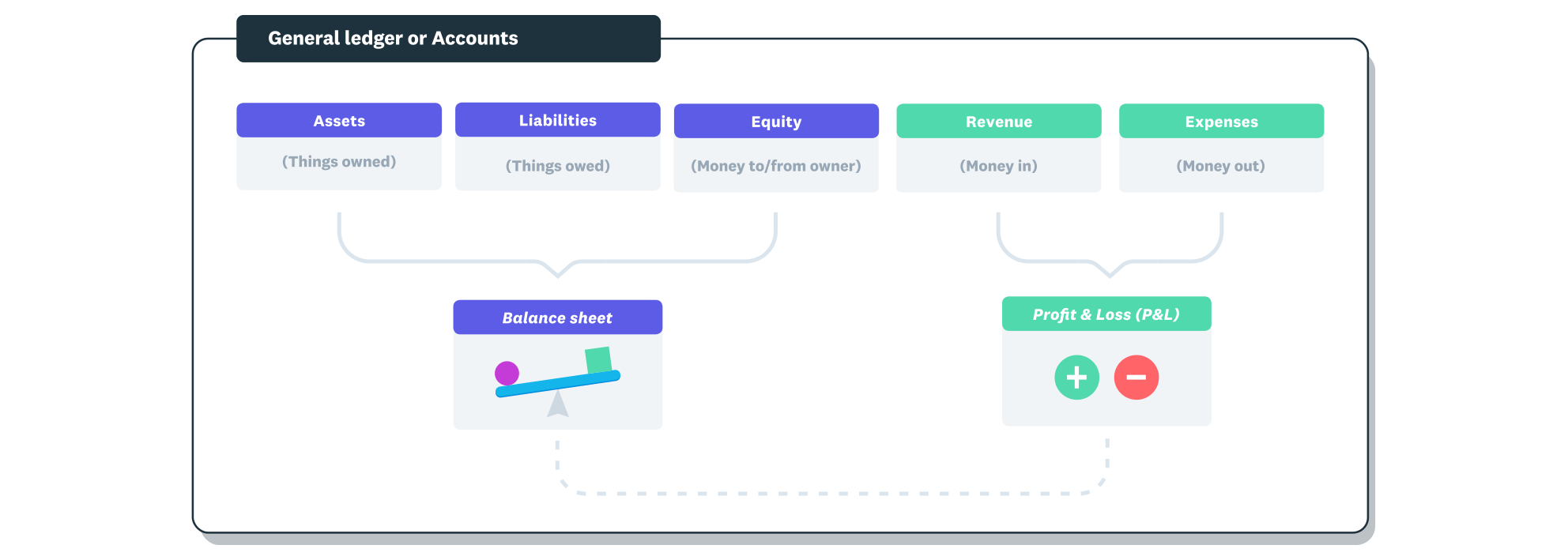
Transactions are entered into the correct account in order to produce the financial reports.
Key takeaways
- A general ledger is the complete record of your business's financial transactions, organised into individual accounts.
- The five main account types are assets, liabilities, equity, revenue and expenses.
- Every transaction is recorded using double-entry bookkeeping, where total debits must equal total credits.
- The general ledger provides the data for your trial balance, balance sheet, profit and loss statement and cash flow statement.
What is a general ledger?
A general ledger (also called the book of final entry) is the complete record of a business's financial transactions, organised into accounts. It serves as the central hub of your accounting system.
Every sale, purchase, payment and receipt flows into the general ledger. From there, you can see the balance of each account at any time and produce accurate financial reports. For small business owners, the general ledger is essential for tracking where money comes from and where it goes.
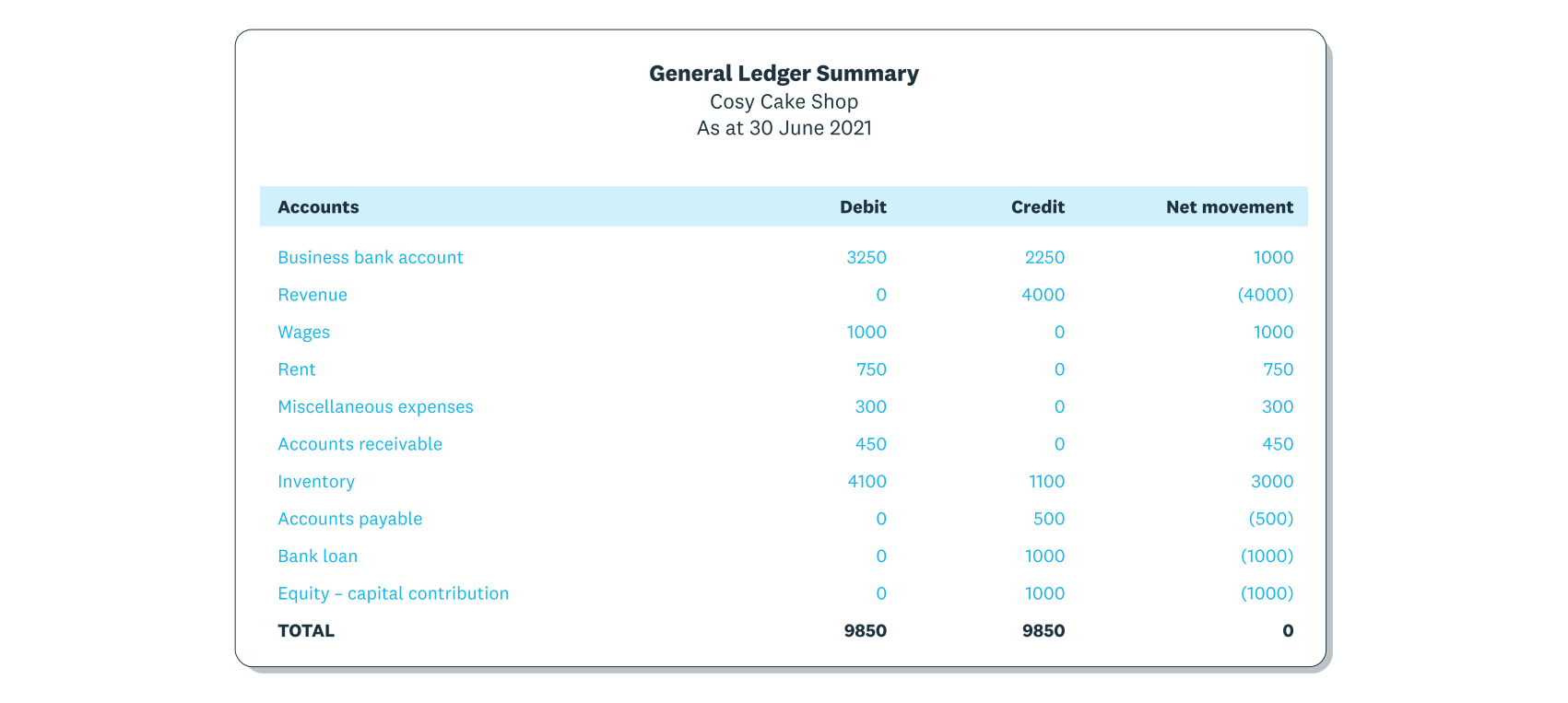
The general ledger summarises the credit and debit transactions for each account.
What is recorded in a general ledger
The general ledger organises all transactions into five main account types. Each type captures a different aspect of your business finances.
- Assets: what your business owns, such as cash, inventory, equipment and accounts receivable
- Liabilities: what your business owes, such as bank loans, credit card balances and accounts payable
- Equity: the owner's stake in the business, including capital contributions and drawings
- Revenue: income your business earns, such as sales, interest received and dividends
- Expenses: costs of running your business, such as rent, wages and utilities
How a general ledger works
The general ledger uses double-entry bookkeeping. Every transaction is recorded as a debit in one account and a credit in another. Total debits must always equal total credits.
This system follows the accounting equation: Assets = Liabilities + Equity. When the equation stays in balance, your books are accurate.
Transactions start in a journal, where they are recorded chronologically. They are then posted to the general ledger, which groups them by account and shows the running balance of each one. This structure makes it easy to see how much cash you have, what you owe, and what you have earned.
General ledger vs journal, subledger and trial balance
Several records work alongside the general ledger. Understanding how they differ helps you keep your books organised.
- A journal entry is the book of original entry, recording transactions in the order they happen
- The general ledger organises those transactions by account, showing the balance of each one
- A subledger (or subsidiary ledger) holds detailed records for a single category, such as accounts receivable, and feeds a control account in the general ledger
- A trial balance lists all general ledger balances to confirm that total debits equal total credits before you prepare financial statements
The general ledger and the chart of accounts
The chart of accounts is the list of numbered account codes that organises the general ledger into the five main categories. When you classify a transaction to a code, you route it to the correct account and, ultimately, to the right line on your reports.
How a general ledger drives reporting
The general ledger is the source of your key financial statements. It feeds the trial balance, which confirms your books are in balance. From there, the data flows into your balance sheet, profit and loss statement and cash flow statement.
These reports show the financial health of your business. They help you understand profitability, track cash and make informed decisions.
Why the general ledger matters
A well-maintained general ledger supports accurate bookkeeping and confident decision-making. Here are the main benefits.
- Accuracy and error detection: the double-entry system highlights discrepancies so you can fix mistakes quickly
- Clear audit trail: every transaction is recorded with details, making it easy to trace and verify entries
- Reliable financial statements: accurate ledger data produces trustworthy reports for you, your accountant and any external parties
- Better business decisions: real-time visibility into your finances helps you plan ahead with confidence
General ledger example
Imagine your business pays HK$1,000 in rent. Using double-entry bookkeeping, you record the transaction in two accounts.
- Debit the rent expense account by HK$1,000 (expenses increase with debits)
- Credit the bank account by HK$1,000 (assets decrease with credits)
The general ledger shows both entries. Total debits equal total credits, keeping the books in balance. Over time, the ledger summarises all the debit and credit transactions for each account, giving you a clear picture of your finances.
Simplify your general ledger with Xero
Xero's online accounting software keeps your general ledger accurate and up to date automatically. Bank transactions flow in, entries are matched, and your accounts stay balanced with less manual work.
See how Xero can help you stay on top of your books and get one month free.
FAQs on general ledgers
Here are answers to common questions about general ledgers.
What is the difference between a general ledger and a journal?
A journal records transactions in the order they occur, while the general ledger groups those transactions by account. The journal is the first point of entry; the ledger organises the data for reporting.
Is a general ledger the same as a balance sheet?
No. The general ledger is a detailed record of all transactions across every account. The balance sheet is a summary report, drawn from ledger data, that shows assets, liabilities and equity at a specific point in time.
What are the five types of general ledger accounts?
The five types are assets, liabilities, equity, revenue and expenses. Together, they capture everything your business owns, owes, earns and spends.
What is a chart of accounts?
A chart of accounts is a numbered list of all the accounts in your general ledger. It provides a standardised structure so every transaction is coded to the correct category.
Can a small business use a general ledger?
Yes. Every business, regardless of size, benefits from a general ledger. Accounting software can handle the ledger for you, making it straightforward to track finances and produce accurate reports.
Related terms
Learn more about general ledgers
Handy resources
Advisor directory
You can search for experts in our advisor directory
Xero Small Business Guides
Discover resources to help you do better business
Online accounting with Xero
Automate your accounting in the cloud
Disclaimer
This glossary is for small business owners. The definitions are written with their requirements in mind. More detailed definitions can be found in accounting textbooks or from an accounting professional. Xero does not provide accounting, tax, business or legal advice.