What is a balance sheet?
Learn what a balance sheet is, its three parts, and what it tells you about your Hong Kong business.
Published Friday 24 July 2026
Table of contents
Key takeaways
- A balance sheet shows what your business owns and owes at a single point in time.
- It has three parts: assets, liabilities, and owner’s equity, with assets and liabilities split into current and non-current items.
- The accounting equation must always balance: assets equal liabilities plus owner’s equity.
- It shows whether your business can cover its debts and how its value changes over time.
Balance sheet (definition)
A balance sheet is a financial statement that shows what your business owns and owes at a single point in time. It sets out the value of your assets, liabilities, and owner’s equity on a given date.
A balance sheet may also be called a statement of financial position, which is the term used under the Hong Kong Financial Reporting Standards (HKFRS) and HKAS 1.
You can put one together quickly with a free balance sheet template. It works alongside your profit and loss statement and cash flow statement to give a full picture of your finances.
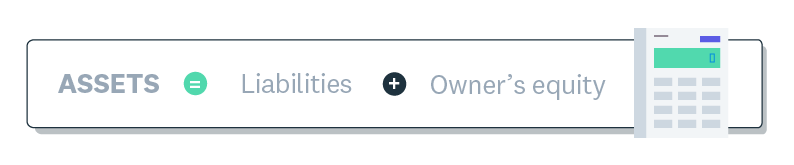
The accounting equation
The parts of a balance sheet
A balance sheet has three main parts, and each one answers a different question about your finances. Here is what each part covers:
- Assets: what your business owns, from cash to equipment
- Liabilities: what your business owes to others, such as loans and unpaid bills
- Owner’s equity: the capital the owner has put in, plus retained earnings kept in the business
Assets and liabilities are each split into current and non-current items, based on whether they will be converted to cash or settled within 12 months.
- Current assets: cash and items you expect to turn into cash within 12 months, such as inventory and money owed by customers
- Non-current assets: longer-term items such as property, equipment, and vehicles
- Current liabilities: amounts due within 12 months, such as supplier bills and short-term loans
- Non-current liabilities: amounts due after 12 months, such as long-term bank loans
The accounting equation
Every balance sheet is built on one formula, and it must always hold true. That formula is the accounting equation:
assets = liabilities + owner’s equity
What your business owns is funded either by what it owes or by the owner’s stake, so the two sides always match. If they don’t balance, some data has been recorded incorrectly or is missing.
Why a balance sheet matters
Your balance sheet shows whether your business can pay its debts and how its value is changing over time. That makes it a practical tool for everyday decisions.
By comparing balance sheets from different dates, you can see whether your business is gaining or losing value and whether you hold enough assets to cover what you owe. That helps you decide when to invest, borrow, or cut costs. Keeping regular financial reports keeps this picture current.
In Hong Kong, you must keep your business records for at least 7 years under the Inland Revenue Ordinance, so accurate balance sheets also support your compliance.
Track your balance sheet with Xero
Xero pulls your transactions into clear reports, so your balance sheet stays up to date without manual work. You can check your financial position whenever you need it.
Sign up for Xero and get one month free.
FAQs on balance sheets
Here are answers to frequently asked questions about balance sheets.
How often should a small business prepare a balance sheet?
Many small businesses prepare one monthly or quarterly, and at least once a year for tax and reporting. More frequent balance sheets give you a clearer view of your position before big decisions.
What is the difference between a balance sheet and a profit and loss statement?
A balance sheet shows your financial position on a single date, while a profit and loss statement shows income and expenses over a period. You need both to understand performance and position together.
Why does the current and non-current split matter?
Separating current from non-current items shows how much you can pay in the short term versus the long term. It helps you judge whether you can meet bills due within the next 12 months.
Related terms
Learn more about balance sheets
Handy resources
Advisor directory
You can search for experts in our advisor directory
Xero Small Business Guides
Discover resources to help you do better business
Financial reporting
Keep track of your performance with accounting reports
Disclaimer
This glossary is for small business owners. The definitions are written with their requirements in mind. More detailed definitions can be found in accounting textbooks or from an accounting professional. Xero does not provide accounting, tax, business or legal advice.