Accrual accounting
Learn what accrual accounting is and how it differs from cash accounting for Hong Kong businesses.
Published Friday 24 July 2026
Table of contents
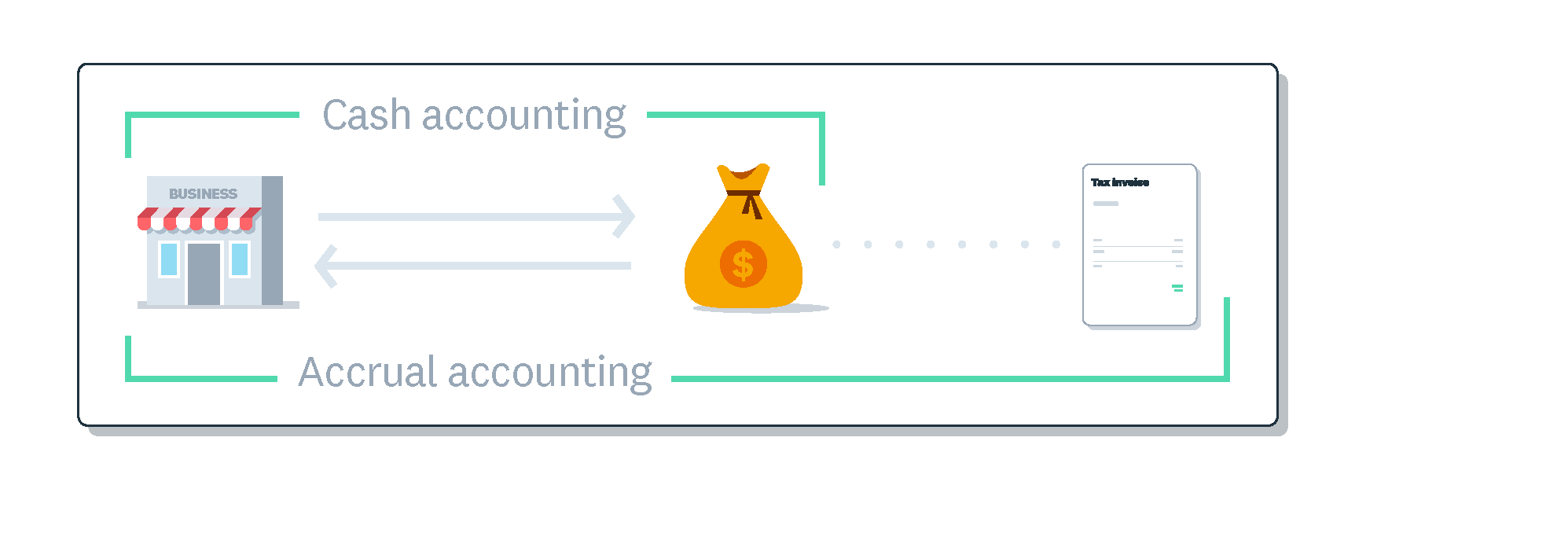
Accrual accounting keeps tabs on bills and sales invoices that are yet to be paid.
Key takeaways
- Accrual accounting records revenue when you earn it and expenses when you incur them, whatever the cash timing.
- It follows the matching principle, so income and the costs that produced it land in the same period.
- Cash accounting is simpler, but accrual gives a truer view of profit and what you're owed.
- In Hong Kong, accrual accounting underpins financial statements prepared under HKFRS and supports your Inland Revenue Department record-keeping.
What is accrual accounting?
Accrual accounting is a method that records income when it's earned and expenses when they're incurred, regardless of when money changes hands. It gives you a clearer picture of how your business is really performing.
The method rests on the matching principle. You match the cost of doing something to the revenue it helps create, so both appear in the same accounting period.
That timing is the difference from simply tracking cash in and out. A sale counts the day you deliver the goods or service, even if the customer pays weeks later.
How does accrual accounting work?
Under accrual accounting, each transaction is recorded when the underlying activity happens. The timing depends on 2 things: earning revenue and incurring costs.
When you earn revenue but haven't been paid, you record it as income and create an account receivable. When you incur a cost but haven't paid it, you record the expense and create an account payable.
Both entries are then matched to the period they belong to. Here's a short worked example that shows the mechanics.
Say you invoice a client HK$10,000 in March for design work you finished that month, and they pay you in April. Under accrual accounting, you record HK$10,000 of revenue in March and show a HK$10,000 receivable until the payment arrives.
The same logic applies to costs. If you receive a supplier bill in March but settle it in April, the expense sits in March, matched against the work it supported.
Accrual accounting vs cash accounting
The 2 methods differ on when you record a transaction. Cash accounting records money only when it moves, while accrual records activity as it happens.
To see the contrast, picture a HK$5,000 invoice you raise in June and get paid for in July. The methods treat it differently, as the points below show.
- Cash accounting records the HK$5,000 as income in July, when the payment lands
- Accrual accounting records the HK$5,000 as income in June, when you earn it
- Cash accounting suits very small operations with simple, paid-on-the-spot transactions
- Accrual accounting suits businesses that sell on credit, hold stock, or want an accurate profit view
For a fuller side-by-side, see the Xero guide to cash vs accrual accounting, or read the definition of cash accounting.
Types of accruals
Accruals are the adjustments that keep income and expenses in the right period. There are 4 common types, each shown below with a quick example.
- Accrued revenue: income you've earned but not yet billed, such as consulting work delivered before you send the invoice
- Accrued expenses: costs you've incurred but not yet paid, such as staff wages owed at month-end
- Prepaid expenses: costs you've paid in advance, such as a full year of insurance recorded month by month
- Deferred revenue: money received before you deliver, such as an upfront annual software subscription earned across 12 months
Advantages and challenges of accrual accounting
Accrual accounting gives you a more accurate view of your finances, though it asks more of your bookkeeping. Weighing both sides helps you decide if it fits your business.
On the upside, matching income to costs shows your true profit for a period. It also captures what you're owed and what you owe, which lenders and investors want to see before backing you.
The trade-off is complexity. You track receivables, payables, and adjusting entries, so it can take more time and often calls for accounting software or help with recording accounting transactions.
Accrual accounting in Hong Kong
In Hong Kong, accrual accounting is the basis for preparing financial statements that comply with local standards. Understanding the framework helps you keep your books ready for reporting and tax.
Financial statements follow the Hong Kong Financial Reporting Standards (HKFRS), issued by the Hong Kong Institute of Certified Public Accountants (HKICPA). HKFRS is converged with the International Financial Reporting Standards (IFRS), and it's built on the accrual basis.
Qualifying smaller companies can report under the SME Financial Reporting Standard (SME-FRS), a simpler framework set by the HKICPA. It still uses accrual accounting, so the timing principles above continue to apply.
Accrual records also support your profits tax obligations. The Inland Revenue Department (IRD) expects businesses to keep sufficient records of income and expenses. Under the Inland Revenue Ordinance, you must retain business records for at least 7 years.
How to choose the right accounting method
The right method depends on how your business runs and what your reporting needs to show. A few practical factors point you towards accrual or cash accounting.
- Size and complexity: larger or growing businesses usually need the accuracy of accrual accounting
- Credit sales: selling on invoice terms is easier to track when you record receivables
- Inventory: holding stock generally calls for accrual accounting to match costs to sales
- Reporting and lender needs: banks and investors expect accrual-based financial statements
- Statutory requirements: financial statements prepared under HKFRS rely on the accrual basis
Manage accrual accounting with Xero
Accrual accounting keeps your numbers accurate, but it means more entries to track and reconcile. The right software takes that weight off your day.
Xero records invoices, bills, and payments in one place, so receivables and payables stay up to date and your reports reflect the right period. You get a real-time view of profit and cash flow without the manual admin, and you can try it all when you get one month free.
FAQs on accrual accounting
Here are answers to some frequently asked questions about accrual accounting for Hong Kong small businesses.
What's the difference between accrual and cash accounting?
Accrual accounting records income and expenses when they're earned or incurred, while cash accounting records them only when money moves. Accrual gives a truer profit picture; cash is simpler.
What are the main types of accruals?
The 4 common types are accrued revenue, accrued expenses, prepaid expenses, and deferred revenue. Each shifts an amount into the period it actually belongs to.
Is accrual accounting required in Hong Kong under HKFRS?
Yes, financial statements prepared under HKFRS use the accrual basis. Qualifying smaller companies can use the simpler SME-FRS, which is also accrual-based.
What are the advantages and disadvantages of accrual accounting?
The advantage is an accurate view of profit and of what you're owed and owe. The disadvantage is added complexity, which can take more time or professional help.
Do small businesses need to use accrual accounting?
It depends on whether you sell on credit, hold stock, or need lender-ready statements. Many Hong Kong small businesses choose accrual because it reflects performance more accurately.
Related terms
Learn more about accrual accounting
Handy resources
Advisor directory
You can search for experts in our advisor directory
Margin calculator
Calculate your gross profit margin with this simple calculator to check you’re hitting your targets.
Online accounting with Xero
Automate your accounting in the cloud
Disclaimer
This glossary is for small business owners. The definitions are written with their requirements in mind. More detailed definitions can be found in accounting textbooks or from an accounting professional. Xero does not provide accounting, tax, business or legal advice.