Financial statement guide for small businesses
Learn how financial statement insights boost cash flow, cut waste, and drive smarter growth for your small business.
Written by Jotika Teli—Certified Public Accountant with 24 years of experience. Read Jotika's full bio
Published Thursday 12 March 2026
Table of contents
Key takeaways
- Use all four financial statements together to get a complete picture of your business health, as focusing only on profit can leave you vulnerable to cash flow problems you didn't see coming.
- Compare your financial statements across multiple periods to identify trends in revenue, expenses, and liabilities, then use these patterns to invest in what's working and address underperforming areas.
- Track the difference between revenue and cash carefully, as money you've recorded from sales may not have reached your bank account yet, which can create unexpected cash shortages.
- Calculate key financial ratios like the current ratio and quick ratio from your balance sheet to evaluate whether you have enough cash to cover short-term obligations and make better business decisions.
What is a financial statement?
A financial statement is a formal report that summarises your business's financial activities and performance over a specific period. Lenders and investors use financial statements to assess your business's financial health and earnings potential.
Financial statements typically cover a month or a quarter, and international accounting standards require a complete set of statements to be presented at least annually.
Types of financial statements
There are four main types of financial statements that give you a complete picture of your business's financial health:
- Balance sheet: shows what you own and owe at a point in time
- Income statement: tracks revenue and expenses over a period
- Cash flow statement: records cash moving in and out of your business
- Statement of changes in equity: shows how retained earnings change over time
Each statement serves a different purpose.
Balance sheet
A balance sheet is a snapshot of your business's financial position at a specific point in time. It compares what you own (assets) with what you owe (liabilities).
Assets include machinery, patents, intellectual property, and cash. Liabilities include long-term debts and accounts payable.
The difference between assets and liabilities is your business's equity, which is often used as a starting point for valuing a business.
Use this formula to find the equity.

This formula helps you evaluate your business's financial stability.
Income statement/Profit and loss statement
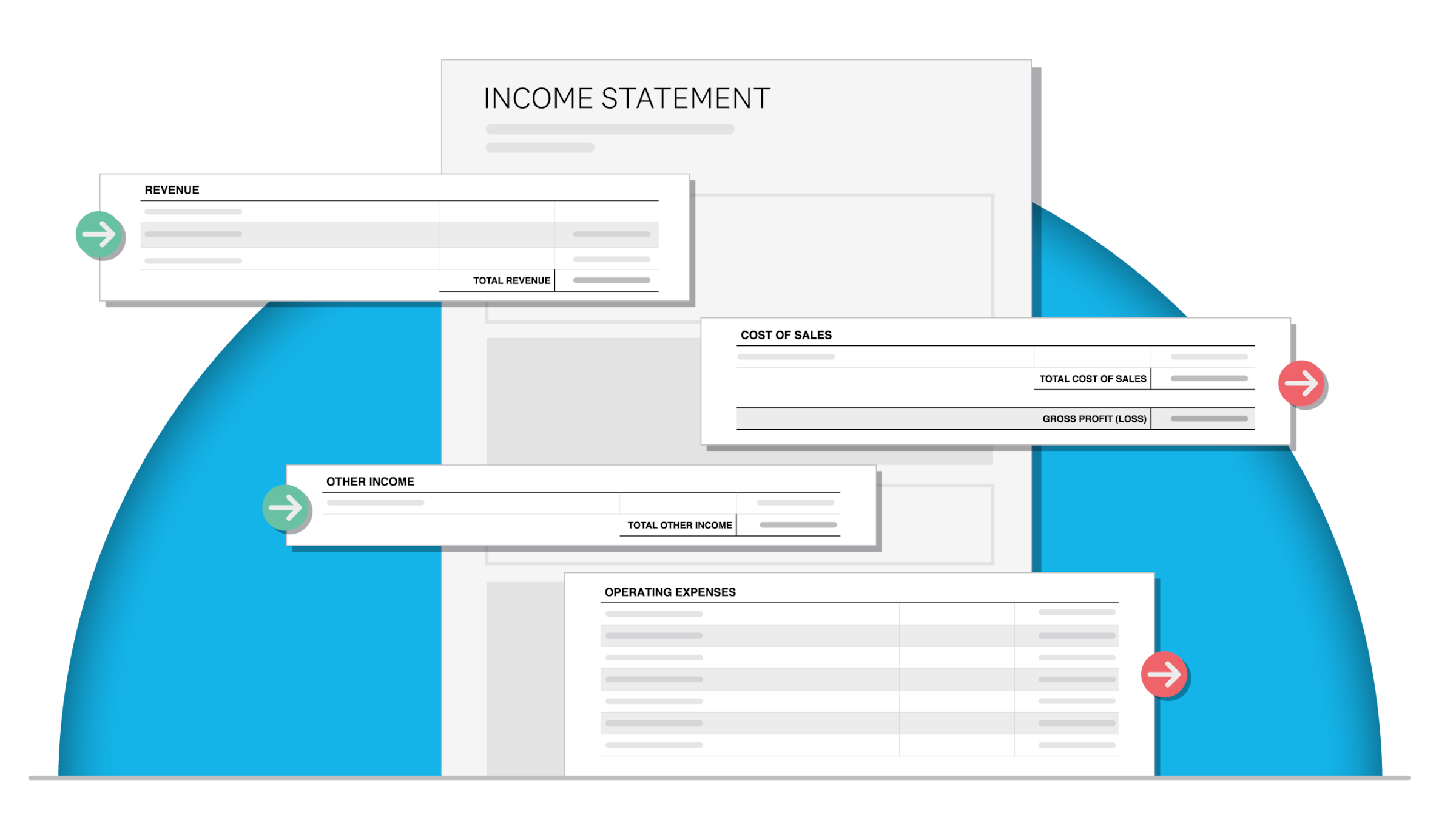
The income statement (also called a profit and loss statement) shows your business's revenues and expenses over a period. Subtract expenses from revenues to calculate your net income.
Here's an example for a manufacturing business:
- Revenue: R150,000
- Operating expenses: R50,000 (office hire, utilities)
- Cost of sales: R70,000 (materials, labour)
- Net income: R30,000
Cash flow statement
The cash flow statement tracks cash moving in and out of your business over a period. It shows whether you can cover short-term expenses like bills and payroll.
Cash flow statements record three types of activity:
- Operating activities: cash from customer sales and day-to-day operations
- Investing activities: cash from buying or selling assets like machinery
- Financing activities: cash from loans, investments, or dividends
Statement of changes in equity
The statement of changes in equity (also called a retained earnings statement) shows how much profit your business keeps after paying costs and dividends. It demonstrates your business's growth potential over time.
Businesses typically retain earnings to:
- repay debt
- reinvest in growth
- build a cash reserve for unexpected costs
Why financial statements are important for small businesses
Financial statements help you make smarter decisions about your business. When you understand your financial position, you can spot problems early and plan for growth. Only about half of these businesses see their fifth anniversary. When you understand your finances, you can communicate clearly with investors and lenders.
Here's how financial statements support your business:
- Assess financial health: See your profitability, cash position, and equity at a glance to make stronger financial decisions.
- Attract investors and secure loans: Show lenders and investors that your business is profitable and can repay debts.
- Meet tax and reporting requirements: Provide tax authorities with the information they need and stay confident you're complying with regulations.
- Track business performance: Spot trends over time, identify what's working, and decide where to invest.
- Manage cash flow: Plan for expenses, payroll, and unexpected costs with clear visibility into your cash position.
How to use financial statements to analyse your business
Each type of financial statement gives you different insights into your business. Use them together to assess performance, plan for growth, and stay compliant with tax requirements.
Analyse financial performance with the income statement
Use the income statement to:
- Evaluate profitability: See your total revenue and net income to determine whether your business is making money.
- Monitor expenses: Identify where you're overspending by reviewing cost categories like goods sold and operating costs.
- Track growth trends: Compare current and past statements to assess revenue growth, cost efficiency, and profit margin changes.
The income statement helps you calculate three key metrics:
- Gross profit: revenue minus cost of goods sold
- Operating income: gross profit minus operating expenses
- Net income: your final profit after all expenses
These figures show whether you need to adjust prices or reduce costs to be more profitable.
Manage assets and plan for growth with the balance sheet
The balance sheet helps you:
- Assess liquidity: Compare current assets to current liabilities using ratios like the current ratio and quick ratio to see if you can cover short-term obligations.
- Evaluate solvency: Examine long-term liabilities and equity to gauge financial stability. A high debt-to-equity ratio may signal risk.
- Track asset management: Review how efficiently you're using inventory, property, and equipment to generate revenue.
Your balance sheet provides the data you need to calculate liquidity and solvency ratios. These ratios show whether your business has enough cash to pay its bills. Learn more about liquidity ratios.

The cash ratio liquidity formula helps you figure out if you have enough cash to cover payroll, expenses, and loan payments in the coming year.
-calculation-2.1708626946541.png)
The quick ratio measures whether you can cover your core costs over the next three months.

The current ratio formula, unlike the quick ratio, includes your business's inventory value (from your balance sheet). Use the current ratio to make decisions about your expenses and cash on hand.
Manage your cash flow with the cash flow statement
The cash flow statement shows whether your business can meet its financial obligations. Use it to identify cash flow problems early and take action.
Here's how to use the cash flow statement:
- Analyse operating cash flow: Check whether core business activities generate enough cash to sustain operations. Consistent negative cash flow signals a problem, even if profits look healthy.
- Evaluate investment quality: Track cash spent on equipment or expansion to see whether you're reinvesting for future growth.
- Monitor financing activities: Review cash from loans, equity financing, or dividends to understand how external funding affects your cash position.
Analyse growth with the retained earnings statement
The retained earnings statement helps you assess two key areas:
- Evaluate growth potential: Growing retained earnings suggest your business can reinvest profits without borrowing, whether for new equipment or paying off debts.
- Monitor financial health: Declining retained earnings may indicate your business is using profits to cover losses or debts, which is a warning sign.
Ways to use your financial statements
Here are practical ways to get the most from your financial statements.
Consider the big picture, not just profit
Review all your financial statements together to get a complete picture of your business's financial health. Focusing only on net income can leave you vulnerable to cash flow problems you didn't see coming.
Pay attention to your cash flow
Check your cash flow statement regularly to track liquidity and confirm you have enough cash to cover short-term costs. Even profitable businesses can run into cash shortages if they overlook cash flow.
Know the difference between revenue and cash
Revenue and cash are not the same thing. Revenue you've recorded from sales may not have reached your bank account yet.
Track accounts receivable separately so you always know the difference between what you've earned and what you can actually spend.
Analyse trends by comparing your financial statements
Compare your financial statements across multiple periods to identify patterns in revenue, expenses, and liabilities. Use these trends to invest in what's working and address areas that are underperforming.
Get across your financial ratios
Financial ratios are calculations that reveal insights into your business's liquidity, profitability, and overall health.
Key ratios like the current ratio and quick ratio help you evaluate your financial position and make better decisions.
Financial statement templates for your business
Pre-made templates make creating financial statements faster and easier. Use them to build balance sheets, income statements, and cash flow statements without starting from scratch each time.
Get started with Xero's free financial statement templates.
Streamline your financial statements with Xero
Xero accounting software automates financial statement creation, gives you real-time insights into your business, and integrates payroll and invoicing in one platform. Spend less time on financial admin and more time growing your business.
Get one month free and see how Xero simplifies your financial reporting.
FAQs on financial statements
Here are answers to common questions about financial statements for small businesses.
What's the difference between the income statement and cash flow statement?
Your income statement tracks profitability by showing revenue and expenses. The cash flow statement tracks the actual movement of money in and out of your business. A business can be profitable on the income statement but still have cash flow problems.
Does my small business need all four types of financial statements?
You likely need the three core statements: the balance sheet, income statement, and cash flow statement. These give you a solid understanding of your financial position.
The retained earnings statement is useful if you plan to reinvest profits in growth projects or to repay debt.
How often should I prepare financial statements?
Prepare financial statements monthly, quarterly, or annually, depending on your business needs. Regular reporting helps you spot opportunities and problems faster.
Can I automate my financial statements?
Yes. Accounting software like Xero automates financial statement creation. This saves time, reduces errors, and simplifies tax compliance.
What are the five main financial statements?
Some sources list five financial statements by including the statement of comprehensive income. This aligns with international standards, which define a complete set of financial statements as comprising the balance sheet, income statement (which includes comprehensive income), cash flow statement, and statement of changes in equity. For most small businesses, the four statements covered in this guide provide everything you need to understand your financial position.
Disclaimer
Xero does not provide accounting, tax, business or legal advice. This guide has been provided for information purposes only. You should consult your own professional advisors for advice directly relating to your business or before taking action in relation to any of the content provided.
Start using Xero for free
Access Xero features for 30 days, then decide which plan best suits your business.