Owner’s equity: definition, formula, how to calculate
Learn how owner’s equity reveals your stake, improves decisions, and helps you plan smarter for growth.
Written by Jotika Teli—Certified Public Accountant with 24 years of experience. Read Jotika's full bio
Published Wednesday 1 April 2026
Table of contents
Key takeaways
- Calculate your owner's equity by subtracting total liabilities from total assets to get an accurate picture of your business's net worth at any time.
- Track your owner's equity regularly (at least quarterly) to measure business growth, assess financial health, and make informed decisions about loans, investments, and partnerships.
- Use your owner's equity figure when applying for loans or attracting investors, as lenders and investors rely on this metric to evaluate your business's ability to handle debt and generate returns.
- Review your balance sheet to find your current owner's equity, and use the statement of changes in equity to understand how profits, withdrawals, and investments affect your business value over time.

What is owner's equity?
Owner's equity is the book value, or net worth, of your business. It shows what your business is worth on paper after subtracting what you owe from what you own. For example, if you have a real estate project valued at $500,000 with a loan of $400,000, your owner's equity is $100,000.
Owner's equity doesn't predict what your business would sell for. You won't know that until you negotiate with a buyer. But it gives you a reliable figure you can calculate at any time.
Why owner's equity matters
Owner's equity shows the financial health of your business and plays a key role in major business decisions. Here's why it matters:
- Applying for loans: Lenders review your equity to assess whether your business can handle debt. Higher equity often means better loan terms.
- Measuring growth: Tracking equity over time shows whether your business is building value or losing ground.
- Valuing your business: If you're selling or bringing in partners, owner's equity provides a starting point for negotiations.
- Attracting investors: Investors look at equity to gauge risk and potential returns before committing funds.
Understanding your owner's equity helps you make confident decisions about financing, growth, and the future of your business.
How to calculate owner's equity
To calculate owner's equity, subtract your total liabilities from your total assets. The basic accounting formula expresses this as Assets – Liabilities. The result is your equity.
Here's what to include:
- Assets: everything your business owns, including cash, equipment, inventory, and accounts receivable
- Liabilities: everything your business owes, such as loans, unpaid bills, and tax obligations
Use this formula to calculate your owner's equity.
Owner's equity formula
Accuracy matters when calculating owner's equity.
Statement shows closing equity is equal to the opening equity plus the year’s net profit, minus owner withdrawals and taxes.
When calculating owner's equity
Statement shows closing equity is equal to the opening equity plus the year’s net profit and money introduced, minus owner withdrawals and taxes.
Make sure you count all your assets and liabilities accurately. Check your financial records and include all current values for a complete picture of your business position.
Statement shows closing equity is equal to the opening equity plus the year’s net profit and money from investors, minus owner withdrawals and taxes.
What's included in owner's equity?
Owner's equity includes everything your business owns minus everything it owes. Here's what falls into each category:
Assets (what you own):
- Cash and bank balances
- Accounts receivable (money customers owe you)
- Inventory and stock
- Equipment, vehicles, and property
- Intangible assets like trademarks or patents
Liabilities (what you owe):
- Business loans and credit lines
- Accounts payable (bills you haven't paid yet)
- Wages owed to employees
- Tax obligations
The difference between your total assets and total liabilities equals your owner's equity.
Examples of owner's equity
Here's a simple example of how owner's equity works.
If you own a house worth $300,000 but have a $120,000 mortgage, your equity is $180,000. The house is your asset, the mortgage is your liability, and the difference is your equity.
Business example of owner's equity
Here's how owner's equity works for a small business.
A repair shop owns:
- a garage worth $600,000
- machinery worth $50,000
- inventory worth $50,000
Total assets: $700,000
The shop owes $300,000 on the premises. Owner's equity equals $400,000 ($700,000 − $300,000).
Where to find owner's equity
Owner's equity appears on your balance sheet, listed after assets and liabilities. It's also tracked on the statement of changes in equity, which shows how your equity moves over time.
What is a statement of changes in equity?
A statement of changes in equity is one of the four main financial statements, alongside the:
- profit and loss (P&L)
- balance sheet
- cash flow statement
This statement connects your P&L and balance sheet, showing how annual earnings and other transactions affect the value of your owner's equity. For instance, international accounting standards specify that when a company swaps debt for equity, you recognise any difference in value in profit or loss.
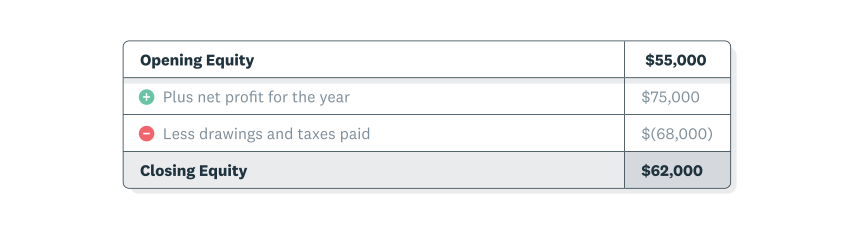
Statement shows closing equity is equal to the opening equity plus the year's net profit, minus owner withdrawals.
The following example shows how a sole proprietor's equity changes over a year.
Example of statement of changes in equity for a sole proprietor
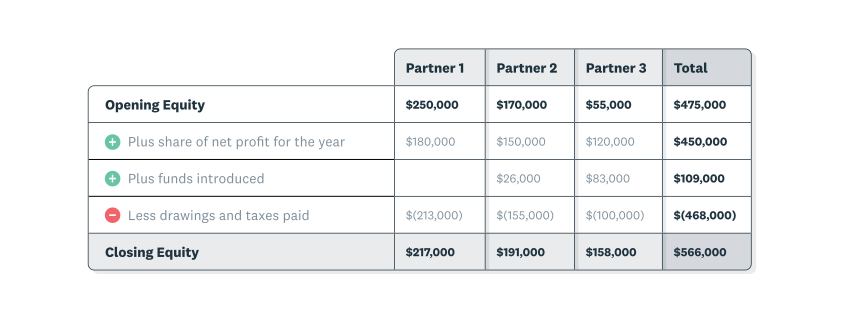
Statement shows closing equity is equal to the opening equity plus the year's net profit and money introduced, minus owner withdrawals.
Partnerships track equity similarly, but account for multiple owners.
Example of statement of changes in equity for a partnership
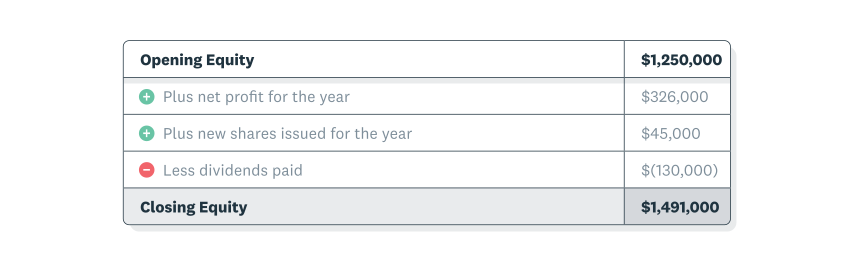
Statement shows closing equity is equal to the opening equity plus the year's net profit and money from investors, minus owner withdrawals.
Companies include additional elements like investor contributions.
Example of statement of changes in equity for a company
Understanding how to use this statement helps you track business value.
How the statement of changes in equity is used
The statement of changes in equity tracks how your business value shifts over time. However, most small business owners focus on the profit and loss statement and balance sheet for day-to-day decisions, as these reports offer more actionable insights.
FAQs on owner's equity
Still have questions about owner's equity? Here are answers to common concerns.
Is shareholder's equity the same thing as owner's equity?
Yes, shareholder's equity and owner's equity mean the same thing. Sole proprietors and partnerships typically use "owner's equity," while companies and corporations call it "shareholder's equity."
How do I calculate the owner's equity statement?
The owner's equity statement tracks changes in your business value over time. To create it, start with your opening equity balance, add net profit and any capital contributions, then subtract owner withdrawals and distributions. Your accounting software can generate this statement automatically from your balance sheet data.
Can owner's equity be negative?
Yes, owner's equity can be negative. This happens when your liabilities exceed your assets, often due to accumulated losses or heavy borrowing. Negative equity signals financial stress and may make it harder to secure loans or attract investors.
How often should I check my owner's equity?
Review your owner's equity at least quarterly, or monthly if your business is growing quickly or managing significant debt. Regular checks help you spot trends early and make informed decisions. Accounting software like Xero updates your equity automatically, so you can check it anytime.
What best describes owner's equity?
Owner's equity is what you'd have left if you sold everything your business owns and paid off all its debts. Think of it as your stake in the business, representing the value you've built over time through profits, investments, and growth.
Disclaimer
Xero does not provide accounting, tax, business or legal advice. This guide has been provided for information purposes only. You should consult your own professional advisors for advice directly relating to your business or before taking action in relation to any of the content provided.
Start using Xero for free
Access Xero features for 30 days, then decide which plan best suits your business.