Recession-proof business ideas and tips to stay strong
Learn how to build a recession proof business with smart cash flow, lower costs, and steady sales.
Written by Lena Hanna—Trusted CPA Guidance on Accounting and Tax. Read Lena's full bio
Published Wednesday 1 April 2026
Table of contents
Key takeaways
- Focus on businesses that provide essential services or meet non-discretionary needs, such as healthcare, accounting, childcare, food services, and home repairs, as these maintain steady demand regardless of economic conditions.
- Prepare for economic downturns by matching your supply to current demand levels, sending invoices immediately, and chasing overdue payments proactively to protect your cash flow.
- Build recession resistance by maintaining manageable overhead costs, diversifying your customer base, and adapting quickly to changing customer priorities during tough times.
- Monitor your cash flow closely and maintain adequate reserves, as the median small business only holds enough cash to support 27 days of typical expenses.
What is a recession-proof business?
A recession-proof business maintains stable demand regardless of economic conditions. These businesses typically provide essential services or products that people need whether times are good or bad.
Every business faces some economic risk. However, some industries consistently outperform others when consumer spending drops. They share common traits:
- Essential services: Products or services people can't easily cut from their budgets
- Non-discretionary spending: Needs that persist regardless of income changes
- Consistent demand: Customer bases that remain stable through economic cycles
Understanding what makes a business recession-resistant helps you evaluate opportunities, whether you're starting something new or strengthening what you already have.
What's the difference between a slowdown and a recession
A slowdown happens when consumer spending starts to level off. A recession occurs when that spending goes backwards for six months or more.
Both are a natural part of the economic cycle. Marc Cowling, professor of economics and productivity at Oxford Brookes University, notes there are generally more ups than downs.
"Recessions, for example, are felt for about 12–18 months, then they're followed by a 2-year recovery, a 4-year boom, a year of overheating, and then a new recession."
What happens during a slowdown
The first symptom of a slowdown is a drop in sales. Whether you experience a slowdown or a full recession, the effects follow a similar pattern.
Xero economist Louise Southall explains the chain reaction:
- Sales decline: Customers spend less, which usually immediately takes revenue and profits with it
- Revenue masks the problem: Businesses raising prices to cover inflation may see revenues hold up initially
- Profits take a hit: An ongoing period of slowing sales eventually means revenues stop growing as quickly as expenses
Specialist small business consultant Grant Anderson says dwindling profits then hit cash flow. "Money dries up and businesses tighten their belts. They start cutting costs, carrying less inventory, and limiting payroll where they can."
Mark Koziel, president of Allinial Global, notes that slowdowns eventually cool off inflation. "Declining sales allow under-pressure supply chains to catch up with demand and alleviate prices."
But he warns it could be a wild ride. "Sales have to drop before prices will, so businesses will feel the twin effects of shrinking sales and inflationary prices for a while."
Characteristics of recession-proof businesses
Recession-resistant businesses share several key traits that help them maintain revenue when consumer spending drops. Understanding these characteristics helps you identify opportunities and strengthen your existing business.
- They provide essential services: Healthcare, food, childcare, and basic repairs remain necessary regardless of economic conditions
- They meet non-discretionary needs: Working parents still need childcare; homeowners still need plumbing repairs
- They offer affordable alternatives: During recessions, consumers often repair rather than replace, or choose budget-friendly options
- They adapt quickly: Flexible businesses pivot their offerings to match changing customer priorities
- They operate with manageable overhead: Lower fixed costs mean more resilience when revenue dips
- They serve recurring needs: Subscription-based or repeat-purchase models provide steadier income
These traits can significantly improve your odds of weathering economic uncertainty.
10 recession-proof businesses you can start or pivot to
Some industries consistently perform well during economic downturns. If you're considering starting a business or pivoting your existing one, these sectors offer more stability than most.
Accounting and bookkeeping services
Businesses need financial guidance more than ever during uncertain times. Accountants and bookkeepers help clients manage cash flow, cut costs, and stay compliant with tax obligations. Demand often increases as businesses seek professional help navigating economic challenges.
Healthcare and medical services
People need medical care regardless of economic conditions. For instance, a study of US hospitals found that while nonprofit margins declined in 2008 during the recession, they had returned to pre-recession levels by 2011, demonstrating the sector's resilience. From general practice to specialised services, healthcare remains essential. Allied health services like physiotherapy and mental health support also see steady demand.
Childcare and daycare services
Working parents need childcare whether the economy is booming or struggling. Quality childcare providers maintain consistent demand because families can't simply stop working when times get tough.
Food and essential grocery businesses
People always need to eat. While dining out may decline, grocery stores, food delivery services, and affordable meal options often see increased demand as consumers shift spending from restaurants to home cooking.
Home repair and maintenance services
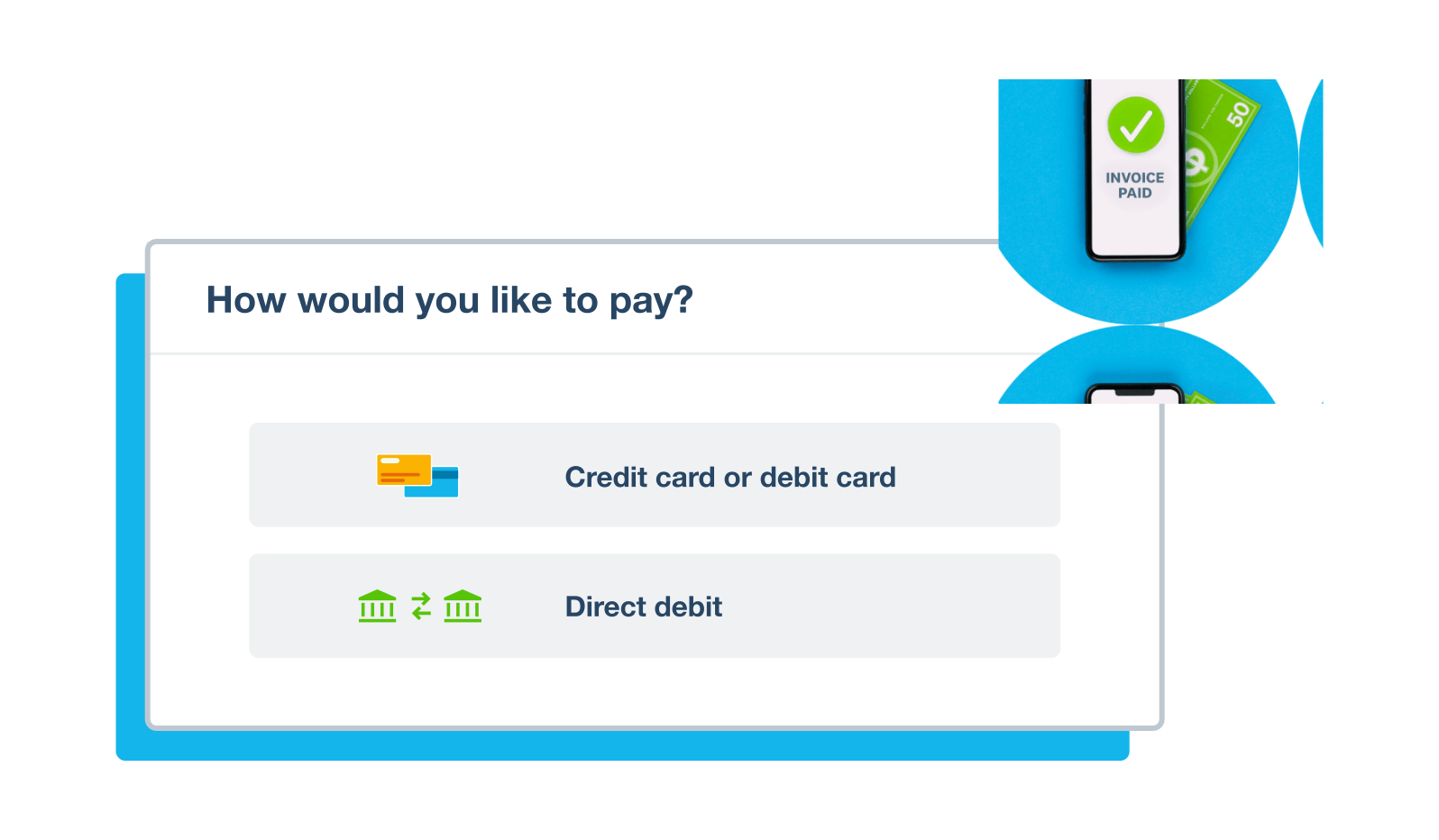
Online invoices allow customers to click straight through and pay instantly, which can reduce wait times for the vendor.
During recessions, consumers repair rather than replace. Plumbers, electricians, appliance repair technicians, and handypeople often see steady or increased demand as homeowners extend the life of existing items.
Delivery and logistics services
E-commerce continues growing, and delivery services remain essential. Courier services, last-mile delivery, and logistics businesses benefit from the ongoing shift to online shopping.
Personal care services
Basic grooming remains necessary. Haircuts, basic beauty services, and personal care don't disappear during downturns, though consumers may trade down from premium to more affordable options.
IT support and cybersecurity
Businesses rely on technology regardless of economic conditions. IT support, cybersecurity services, and tech maintenance remain essential as companies can't afford system failures or security breaches.
Financial advisory and planning services
Economic uncertainty drives demand for financial guidance. Advisors who help individuals and businesses navigate challenging times often see increased interest during downturns.
Online education and skill training
People invest in skills during uncertain times, hoping to improve their job security or pivot careers. Online courses, professional development, and skill-based training often see increased enrolment during recessions.
How to make your existing business more recession-resistant
Every business faces some economic risk, but some are more resilient than others. Cowling notes exporters are often protected because they spread their risk across multiple economies.
For the rest, preparation and strategy make the difference. Whether you're choosing a recession-resistant business to start or strengthening the one you already run, our experts share practical ways to build resilience.
1. Preparing for a sales downturn
Customers stop buying as much during a downturn and become more cost-conscious with the purchases they make. This shift can work against small businesses.
"Covid reintroduced people to small businesses but it might have been short-lived," observes Cowling. "Customers are drifting back to the big chains that can offer lower prices."
How to protect your business against declining sales
Here are three strategies to protect your business when sales decline:
- Match supply to current demand: "Make sure you're supplying goods and services at the level of current demand, not what demand used to be," advises Southall. Avoid blanket cuts to all products and services as they won't be affected equally.
- Watch for unexpected opportunities: Small luxury items like chocolate actually boomed during the global financial crisis of 2008 because they were an affordable indulgence. Look for similar opportunities in your business.
- Lean on customer loyalty: Small businesses built goodwill with local communities during the pandemic. Koziel recommends introducing locals packages or customer appreciation days. "Small business customers are incredibly loyal and they will respond."
2. Coping with delayed payments
Economic crunches slow down invoice payments from customers to suppliers. A 2022 report confirmed this widespread issue, finding that 87% of businesses reported their invoices get paid after the due date. Xero's software tracks the time between when an invoice is issued and when it's paid, revealing clear patterns.
- Payment wait times leapt 11% after the 2018 US-China trade tensions
- Payment wait times leapt 15% after the first Covid outbreak, while broader research from the Certified Public Accountants (CPA) showed a staggering 209% increase in late payments since the pandemic began
Southall notes the problem is self-perpetuating. "A business that's paid late will then struggle to pay their bills on time, and so the problem spreads quickly."
How to protect your business against delayed payments
Here are three ways to protect your business against delayed payments:
- Send invoices immediately: The clock doesn't start until you've sent the bill. Track how long it takes to get paid and take action if things start to slip.
- Chase overdue invoices proactively: "Seek payment on overdue invoices and if you start to suffer delays from your customers then seek similar relief from the people you owe," says Koziel. "It's not uncommon to ask suppliers for more time to pay."
- Offer instant online payment options: "Our data shows that you can reduce wait times by issuing invoices with instant online payment options," says Southall. Supporting this, research shows that businesses using accounts receivable (AR) software are three times more likely to get paid before an invoice's due date. Use apps that automatically issue payment reminders when invoices are overdue.
3. Working through cash flow crunches
Many small businesses have limited cash reserves. A JPMorgan Chase & Co. study found that the median small business holds a cash buffer large enough to support 27 days of typical outflows. When sales take a 10% dive and customers start paying late, the cash situation gets difficult fast.
Businesses with poor cash flow struggle to pay employees, suppliers, and utilities on time. This creates a cascade of problems that can threaten business survival.
FAQs on recession-proof businesses
Here are answers to common questions about building and maintaining a recession-proof business.
What makes a business recession-proof?
Recession-proof businesses provide essential services or products that people need regardless of economic conditions. They typically serve non-discretionary needs, maintain manageable overhead, and adapt quickly to changing customer priorities. While no business is completely immune to economic downturns, these characteristics significantly improve resilience.
Which industries perform best during recessions?
Healthcare, accounting services, childcare, food and grocery, home repair, IT support, and financial advisory services tend to perform well during recessions. These industries provide essential services that people and businesses can't easily eliminate from their budgets, even when times are tough.
How can I make my existing business more recession-resistant?
Focus on matching supply to current demand, diversifying your customer base, maintaining strong cash reserves, and building customer loyalty. Monitor your cash flow closely, send invoices immediately, and chase overdue payments proactively. Consider offering more affordable alternatives or payment plans to retain price-sensitive customers.
How long do recessions typically last?
According to economic research, recessions are typically felt for about 12–18 months, followed by a 2-year recovery period, a 4-year boom, a year of overheating, and then a new recession. However, each economic cycle varies based on specific circumstances and policy responses.
Should I start a new business during a recession?
Starting a business during a recession can be advantageous if you choose a recession-resistant industry. Costs may be lower, competition may be reduced, and you can build a business model designed for tough economic conditions. Focus on essential services, manageable overhead, and solving problems that persist regardless of the economic climate.
Disclaimer
Xero does not provide accounting, tax, business or legal advice. This guide has been provided for information purposes only. You should consult your own professional advisors for advice directly relating to your business or before taking action in relation to any of the content provided.
Start using Xero for free
Access Xero features for 30 days, then decide which plan best suits your business.