Petty cash: definition, how it works and management
Learn how to set up and manage petty cash so you control spending and track receipts with less effort.

Written by Lena Hanna—Trusted CPA Guidance on Accounting and Tax. Read Lena's full bio
Published Wednesday 1 April 2026
Table of contents
Key takeaways
- Establish a petty cash fund with $100-$500 to cover small business expenses like office supplies, postage, and refreshments, setting clear spending limits of $50-$100 per transaction to keep purchases genuinely small.
- Require receipts for every petty cash transaction and reconcile your fund weekly by counting physical cash against recorded expenses to prevent theft and maintain accurate records.
- Designate one person as the petty cash custodian to manage the fund, collect receipts, and track all transactions in a petty cash book or spreadsheet with columns for date, description, amount, and running balance.
- Record petty cash transactions properly in your accounting system by debiting the appropriate expense account and crediting petty cash for each purchase to maintain accurate financial records for tax purposes.
What is petty cash?
Petty cash is a small reserve of physical cash that businesses keep on hand to pay for minor, everyday expenses. Instead of writing cheques or processing card payments for small purchases, employees can use petty cash for quick transactions.
Petty cash definition
A petty cash fund is a fixed amount of money, typically stored in a lockbox or cash drawer, managed by a designated custodian. This system is a practical application of the principles found in the Internal Control-Integrated Framework, first issued in 1992. The custodian tracks all spending, collects receipts, and requests replenishment when funds run low.
Petty cash vs cash on hand
These terms are often confused, but they serve different purposes:
- Petty cash: a small, fixed fund specifically for minor business expenses like office supplies or postage
- Cash on hand: the total cash a business has available, including petty cash, cash registers, and bank deposits awaiting processing
Why businesses use petty cash
Petty cash saves time and simplifies small purchases that would otherwise require formal payment processing. Here's why it's useful:
- Speed: Pay for minor expenses immediately without waiting for approvals or card transactions
- Convenience: Handle unexpected costs like emergency supplies or last-minute deliveries
- Simplicity: Avoid processing fees and paperwork for small-value transactions
- Flexibility: Empower employees to make quick decisions for low-risk purchases
For most small businesses, petty cash reduces administrative burden while keeping accurate records of everyday spending.
Common petty cash expenses
Petty cash typically covers small, routine purchases that don't justify formal payment processing. Here are common examples:
- Office supplies: pens, paper, staples, printer ink
- Refreshments: tea, coffee, milk for the staffroom
- Postage: stamps, courier fees, packaging materials
- Minor repairs: replacement light bulbs, batteries, cleaning supplies
- Employee recognition: birthday cards, small gifts, thank-you tokens
- Emergency purchases: last-minute supplies when regular ordering isn't possible
- Transport: parking fees, public transport fares for business errands
Most businesses set a per-transaction limit, typically $50–$100, to keep petty cash for genuinely small expenses.
How does petty cash work?
Petty cash works through a simple cycle: set a fund amount, spend from it, track every expense, and replenish when funds run low. Most businesses keep between $100–$1,000 on hand, depending on their size and needs.
Here's how the cycle works:
- Set up the fund: Withdraw cash from your business bank account and record the transaction in your general ledger. Debit your petty cash account and credit your bank account.
- Make purchases: When someone needs to make a small purchase, they either:
- Track expenses: The person managing petty cash (the custodian) keeps all receipts and logs each expense in a petty cash book or spreadsheet.
- Replenish the fund: When funds run low, the custodian tallies receipts against the remaining cash to confirm everything balances. The bookkeeper then withdraws more cash and updates the general ledger with the new expenses.
If you're a solo business owner, you'll handle all these steps yourself, from handing out cash to updating your records.
How to set up a petty cash fund
Setting up petty cash takes about 30 minutes and creates a system you can use indefinitely. Follow these steps to get started:
- Determine the fund amount: Estimate your monthly small expenses and set aside enough to cover 2–4 weeks of purchases. Most small businesses start with $100–$500.
- Withdraw cash from your business account: Take the starting amount from your bank and record the transaction in your accounting system. Debit petty cash and credit your bank account.
- Designate a custodian: Choose one person to manage the fund, hand out cash, collect receipts, and track the balance. This creates accountability and reduces errors.
- Create a petty cash policy: Set clear rules for what petty cash can be used for, the maximum amount per transaction, and receipt requirements.
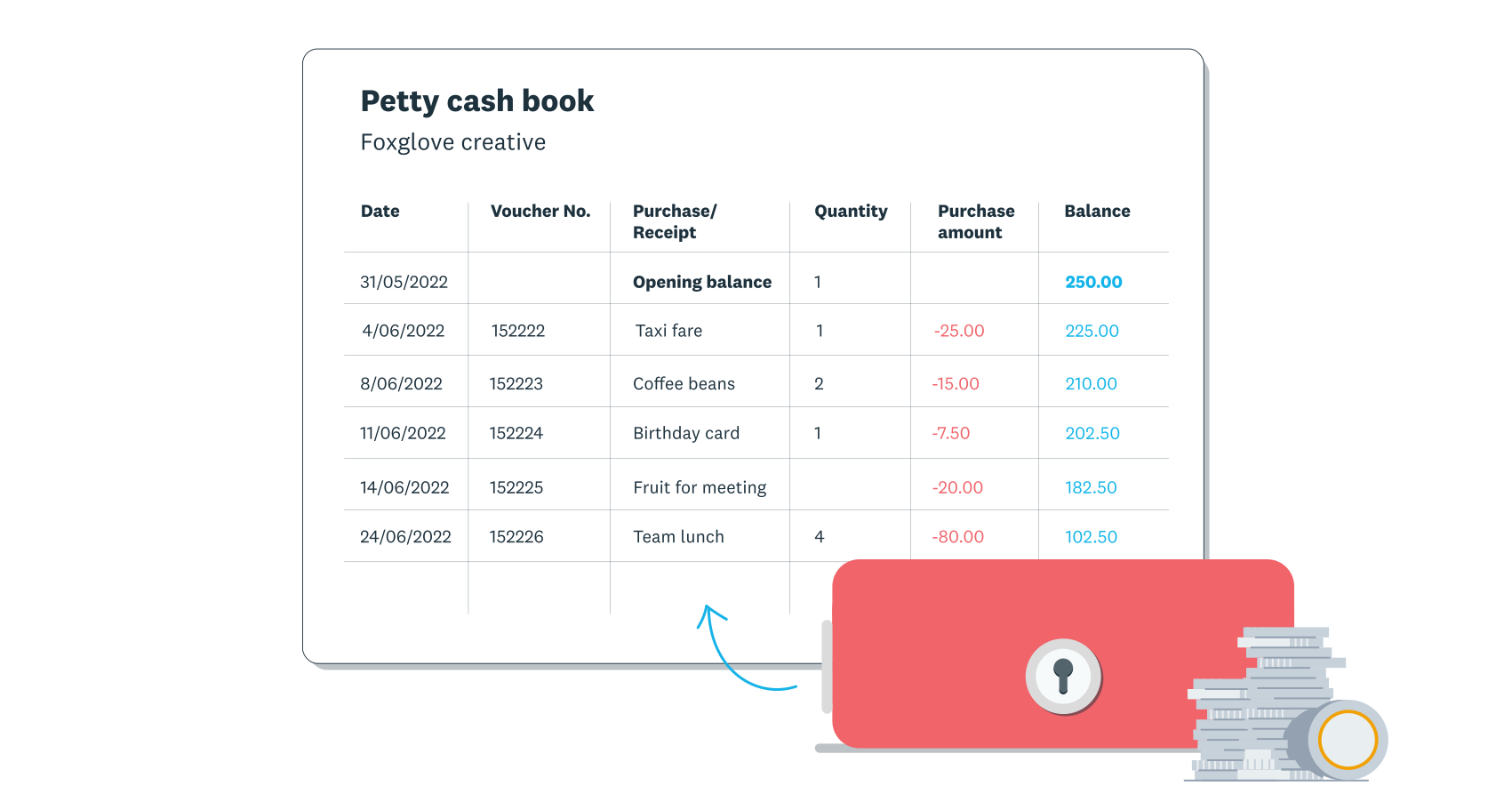
- Set up your record-keeping system: Create a petty cash book or spreadsheet to log every transaction. Include columns for date, description, amount, and running balance.
- Secure the cash: Store petty cash in a lockbox or locked drawer with limited access.
How to record petty cash
Recording petty cash requires three key documents: vouchers for each transaction, a petty cash book to track the running balance, and general ledger entries to update your accounts.
Here's what each one does:
- Petty cash voucher: record the expense amount, business purpose, employee name (if reimbursing), and attach the receipt
- Petty cash book: track the running balance by logging every expense paid out and every cash top-up received
- General ledger entry: credit petty cash and debit the appropriate expense account for each purchase (for example, $20 spent on pencils means credit petty cash $20 and debit office supplies $20)
Example of petty cash book or spreadsheet format
A petty cash book is a simple log that tracks every transaction in your petty cash fund. It shows the date, description, amount spent, and running balance. Here's an example format:
Best practices for managing petty cash
Effective petty cash management prevents theft, reduces errors, and keeps your records accurate. For public companies in the US, strong cash controls are a legal requirement under the Sarbanes-Oxley Act of 2002. Follow these guidelines:
Require receipts for every transaction
No receipt, no reimbursement. This rule protects against misuse and ensures you have documentation for tax purposes.
Reconcile regularly
Count the cash and compare it to your petty cash book at least weekly. The physical cash plus recorded expenses should equal your starting fund amount.
Set clear spending limits
Define a maximum amount per transaction, typically $50–$100. Larger purchases should go through your normal payment process.
Limit access
Only the custodian should have access to the petty cash. This creates a clear chain of accountability.
Replenish at a consistent level
Top up the fund when it drops to a set threshold, such as 25% of the starting amount. This prevents running out unexpectedly.
Separate personal and business expenses
Never use petty cash for personal purchases, even if you plan to repay it later.
Use Xero to simplify petty cash management
Xero simplifies petty cash tracking. Xero's accounting software helps you record expenses, reconcile your fund, and keep accurate records for tax time, all in one place.
With Xero, you can:
- log petty cash transactions as you go
- match receipts to expenses automatically
- generate reports showing where your petty cash is spent
- keep your books accurate without manual data entry
Get one month free and see how Xero simplifies your bookkeeping.
FAQs on petty cash
Here are answers to common questions about managing petty cash.
Is petty cash an asset or expense?
Petty cash is an asset. It appears on your balance sheet as a current asset, and accounting principles such as the IAS 7 Cash Flow Statements guide its handling. The individual purchases made from petty cash are recorded as expenses.
How much petty cash should a small business keep?
Most small businesses keep $100–$500 in petty cash. Base your amount on 2–4 weeks of typical small expenses, and adjust if you find yourself replenishing too frequently or rarely using the fund.
How often should I reconcile my petty cash fund?
Reconcile at least once a week. Count the physical cash, add up recorded expenses, and confirm the total matches your starting fund amount. More frequent reconciliation catches errors early.
What if my petty cash doesn't balance?
First, review all receipts and entries for calculation errors or missing transactions. Check for receipts that weren't logged or expenses recorded twice. If you still can't find the discrepancy, record the difference as a cash shortage or overage in your accounts.
Do I need receipts for all petty cash expenses?
Yes, receipts are essential for accurate record-keeping and tax compliance. Without receipts, you may not be able to claim deductions and you'll have gaps in your financial records. If a receipt isn't available, create a petty cash voucher documenting the expense details.
Disclaimer
Xero does not provide accounting, tax, business or legal advice. This guide has been provided for information purposes only. You should consult your own professional advisors for advice directly relating to your business or before taking action in relation to any of the content provided.
Start using Xero for free
Access Xero features for 30 days, then decide which plan best suits your business.