Cash vs accrual accounting
Cash accounting records money when it moves; accrual records it when earned. See which suits your Singapore business.
Published Wednesday 30 September 2026
Table of contents
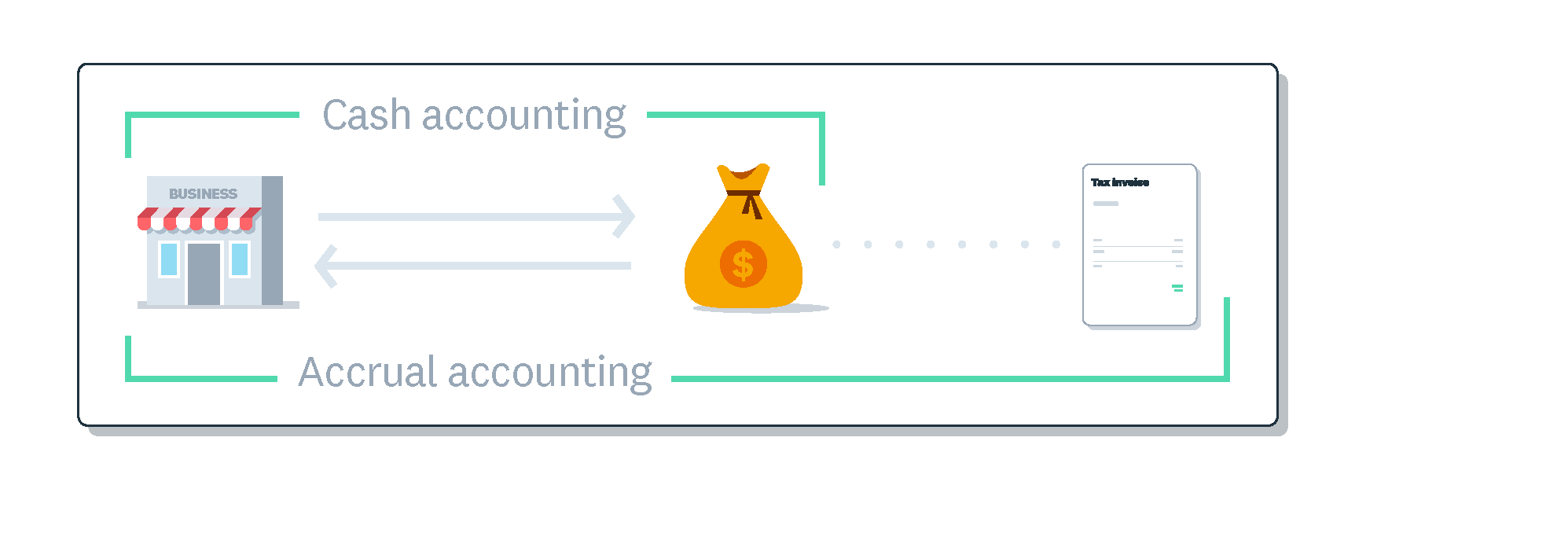
Cash accounting focuses only on cash changing hands, not outstanding bills or invoices.
Key takeaways
- Cash basis accounting records income and expenses when money moves, while accrual accounting records them when they’re earned or incurred
- Singapore companies report under accrual-based Singapore Financial Reporting Standards (SFRS), and the Inland Revenue Authority of Singapore (IRAS) expects accrual accounts from small businesses
- The IRAS Goods and Services Tax (GST) Cash Accounting Scheme only changes when eligible businesses account for GST
- Cash tracking suits simple day-to-day money management, while accrual gives a truer view of profit as you hire, hold stock or seek finance
What is cash basis accounting?
Cash basis accounting records income when you receive payment and expenses when you pay them. Cash vs accrual accounting comes down to this timing question: when does a sale or cost count in your books?
Unpaid invoices and bills stay out of your books until the cash moves, which makes it quick to learn. If you finish a S$5,000 design project in March and your client pays in April, cash basis records April income.
What is accrual accounting?
Accrual accounting records income when you earn it and expenses when you incur them, even if no money has changed hands. To do this, it tracks unpaid customer invoices as accounts receivable and unpaid supplier bills as accounts payable.
Using the same example, the S$5,000 project is March income, because that’s when you earned it. Lining up income with the costs that produced it is called the matching principle.
Cash vs accrual accounting: key differences
The main difference is timing: cash basis follows payments, while accrual follows the work and the obligations behind it. That one difference flows through to five areas of your finances.
Timing of revenue and expense recognition
Each method records the same transaction at a different point.
- Cash basis records a sale when the customer pays
- Accrual basis records a sale when you deliver the goods or service
- Cash basis records a cost when you pay the supplier
- Accrual basis records a cost when you receive the goods or service
Financial accuracy
Accrual gives a truer view of profit for any month, because it matches income with related costs. Cash basis can show a loss in a busy month because customers pay on 30-day terms.
Balance sheet and cash flow visibility
An accrual balance sheet shows receivables, payables and accrued costs alongside cash. That lets you and your lender compare current assets with current liabilities. A cash basis balance sheet mostly shows your bank balance, which is clear today but thin for planning.
Complexity
Cash basis is simpler because you only record money in and out. Accrual adds invoices, bills and period-end adjustments, which accounting software records as you work.
Reporting standards in Singapore
Singapore’s financial reporting standards are accrual-based, so company financial statements use accrual accounting. IRAS also expects accrual accounts from sole proprietors, as the Singapore rules section explains.
Cash vs accrual accounting example
A multi-month project shows how far apart the two methods can drift. Say your agency signs a S$12,000 contract, works on it evenly for three months from March, and gets paid in June.
You also buy S$1,800 of software for the project in March and pay the supplier in May. Here’s what cash basis shows.
- March shows S$0 income and S$0 expenses
- April shows S$0 income and S$0 expenses
- May shows S$0 income and a S$1,800 expense, so a S$1,800 loss
- June shows S$12,000 income, so a S$12,000 profit
Accrual basis spreads the same contract across the months you did the work.
- March shows S$4,000 income and a S$1,800 expense, so a S$2,200 profit
- April shows S$4,000 income, so a S$4,000 profit
- May shows S$4,000 income, so a S$4,000 profit
- June shows S$0 income, as the payment clears the S$12,000 receivable
Both methods reach the same S$10,200 profit over four months. Cash basis makes May look like a loss and June a windfall, while accrual shows the steady work behind them.
Pros and cons of cash accounting
Cash accounting suits very simple businesses and gives a narrower view as you grow. Its strengths come from that simplicity.
- Takes little time to set up and needs little bookkeeping knowledge
- Matches your bank balance, so you always know your cash position
- Suits businesses paid on the spot, such as food stalls or personal services
- Mirrors the timing of the IRAS GST Cash Accounting Scheme, which eligible businesses can apply for
The trade-offs show up as sales on credit terms increase.
- Leaves unpaid invoices and bills out of your reports
- Makes profit swing with payment dates, as the May and June example shows
- Needs converting to accrual for company financial statements and IRAS statements of accounts
- Gives you less to plan with when customers pay later
Pros and cons of accrual accounting
Accrual accounting gives a fuller picture of your business and takes more upkeep. Here’s what it does well.
- Matches income with the costs that produced it, for a truer view of profit
- Meets Singapore’s accrual-based financial reporting standards
- Shows what customers owe you and what you owe suppliers
- Supports forecasting and lending decisions with complete figures
Accrual accounting also asks more of you.
- Takes more time to maintain without accounting software
- Can show a healthy profit while your bank balance runs low
- Can mean paying tax on sales before the customer pays you
- May need an accountant’s help with period-end adjustments
Cash and accrual accounting rules in Singapore
Singapore’s rules point to accrual accounting for statutory and tax accounts. The main cash-based option, the GST Cash Accounting Scheme, only changes when you account for GST.
Companies
Unless exempt, directors must prepare financial statements that follow Accounting Standards Committee standards and give a true and fair view. The Accounting and Corporate Regulatory Authority (ACRA) links this to section 201 of the Companies Act 1967 in its guide to directors’ duties.
These standards are all accrual-based. SFRS(I) is aligned with International Financial Reporting Standards (IFRS) and used by listed companies, while other companies use SFRS or SFRS for Small Entities.
SFRS for Small Entities suits non-publicly accountable companies that meet two of three size tests, including revenue up to S$10 million, per IAS Plus. The others, assets of S$10 million or less and up to 50 employees, match ACRA’s small company audit exemption, assessed over two consecutive years.
Sole proprietors and partnerships
Sole proprietors and partners follow IRAS’s business income rules: a 2-line statement for revenue of S$200,000 or less, and a 4-line statement above that.
Either way, IRAS’s Simplified Record Keeping guide expects the statement of accounts behind these figures to use the accrual basis.
GST and the Cash Accounting Scheme
IRAS registration rules require GST registration if taxable turnover passes S$1 million in a calendar year, or you expect it to within 12 months. Registered businesses charge GST at 9%, the current GST rate.
The GST Cash Accounting Scheme is open to businesses with taxable supplies up to S$1 million, and each approval lasts three years. Once IRAS approves you, you can stay on for the full period even if supplies grow past that level.
On the scheme, you account for GST on sales when customers pay you and claim GST on purchases when you pay suppliers. Your bookkeeping and income tax accounts still follow the company or sole proprietor rules.
Record keeping
Companies must keep business records and accounts for at least five years from the relevant Year of Assessment, according to IRAS record-keeping requirements. Sole proprietors and self-employed people must keep their records for the same minimum period.
How to choose the right accounting method
The right method depends on how your business is set up and where it’s heading. Weigh these five factors.
Business structure and legal requirements
If you run a Singapore company, your financial statements need to be accrual-based, so accrual is the practical default for your books. Sole proprietors can keep simpler records, though IRAS expects year-end accounts on an accrual basis.
Business size and growth plans
A one-person business paid on the spot may find cash tracking enough day to day. If you plan to hire or offer credit terms, accrual shows the income and costs you’ve committed to. Paired with cash flow forecasting, it helps you spot tight months early.
Inventory
If your business buys and sells products, accrual accounting lets you match inventory costs to the sales they generate. Cash basis turns a big stock purchase into one expensive month, even if the goods sell over the next quarter.
Financing and investor expectations
Banks and investors want statements showing what you’re owed and what you owe. Accrual-based accounts give them that, which makes your application easier to assess.
GST registration
Once you’re GST-registered, IRAS’s time of supply rules mean you normally account for GST at the earlier of issuing an invoice or receiving payment, which fits accrual records. If cash timing matters more, check whether you qualify for the GST Cash Accounting Scheme.
How to tell which method you’re using
You can usually tell your method from your reports in a few minutes. Work through these checks.
- Open your balance sheet and look for accounts receivable and accounts payable balances; if they’re there, you’re using accrual
- Find a recent unpaid invoice and check whether it already appears as income in your profit and loss report
- Compare monthly income with the deposits in your bank reconciliation; if they always match, you’re likely on cash basis
- Check your GST return settings, as you may use the GST Cash Accounting Scheme while your books run on accrual
When to switch from cash to accrual accounting
The best time to move to accrual is when you need a full view of what you’re owed and what you owe. These signs suggest it’s time.
- You’re incorporating a company, which needs accrual-based financial statements
- You’re holding stock and want to track the cost of goods sold
- You’re applying for a loan or bringing in investors
- You’re offering credit terms, so payments arrive weeks after the work
Follow these steps to keep your records consistent.
- Pick the start of a financial year as your switch date, so each year uses one method
- Record opening balances for unpaid customer invoices, unpaid bills and accrued costs
- Work with your accountant, or find a Xero advisor, to review the opening figures
- Ask your accountant to apply the change under the Singapore Financial Reporting Standard that fits your business
Track your finances with confidence using Xero
Accrual accounting gives you the clearest view of profit, and it’s the basis Singapore’s reporting rules expect. Xero records invoices and bills as you create them, so receivables and payables stay current without extra admin.
Automated bank feeds bring in your transactions, and real-time reports show where you stand. See it for yourself and get one month free.
FAQs on cash vs accrual accounting
Here are quick answers to common questions about cash vs accrual accounting in Singapore.
Do Singapore companies have to use accrual accounting?
Yes, unless exempt, directors must prepare financial statements under Singapore’s accrual-based standards. Keeping accrual books all year saves your accountant a conversion at year end.
What is the GST Cash Accounting Scheme?
It’s an IRAS scheme that lets eligible GST-registered small businesses account for GST when cash is received or paid. To stay on after your approval period, you submit a new application before it ends.
Can you switch from cash to accrual accounting?
Yes. Your accountant adjusts your opening balances so income and costs straddling the switch date are counted once.
What is modified cash basis accounting?
As AccountingTools explains, it’s a general concept that uses cash basis for most transactions and accrual for items like fixed assets. Singapore’s financial reporting standards don’t recognise it for statutory financial statements.
Do banks prefer cash or accrual accounting?
Banks generally prefer accrual accounting. Accrual statements show whether money customers owe you will cover your upcoming bills, which helps a lender judge repayment risk.
Related terms
Learn more about cash vs accrual accounting
Handy resources
Advisor directory
You can search for experts in our advisor directory
Xero Small Business Guides
Discover resources to help you do better business
Financial reporting
Keep track of your performance with accounting reports
Disclaimer
This glossary is for small business owners. The definitions are written with their requirements in mind. More detailed definitions can be found in accounting textbooks or from an accounting professional. Xero does not provide accounting, tax, business or legal advice.