Cash accounting
Learn what cash accounting is, how it works, and when to use it for your small business.
Published Monday 17 August 2026
Table of contents
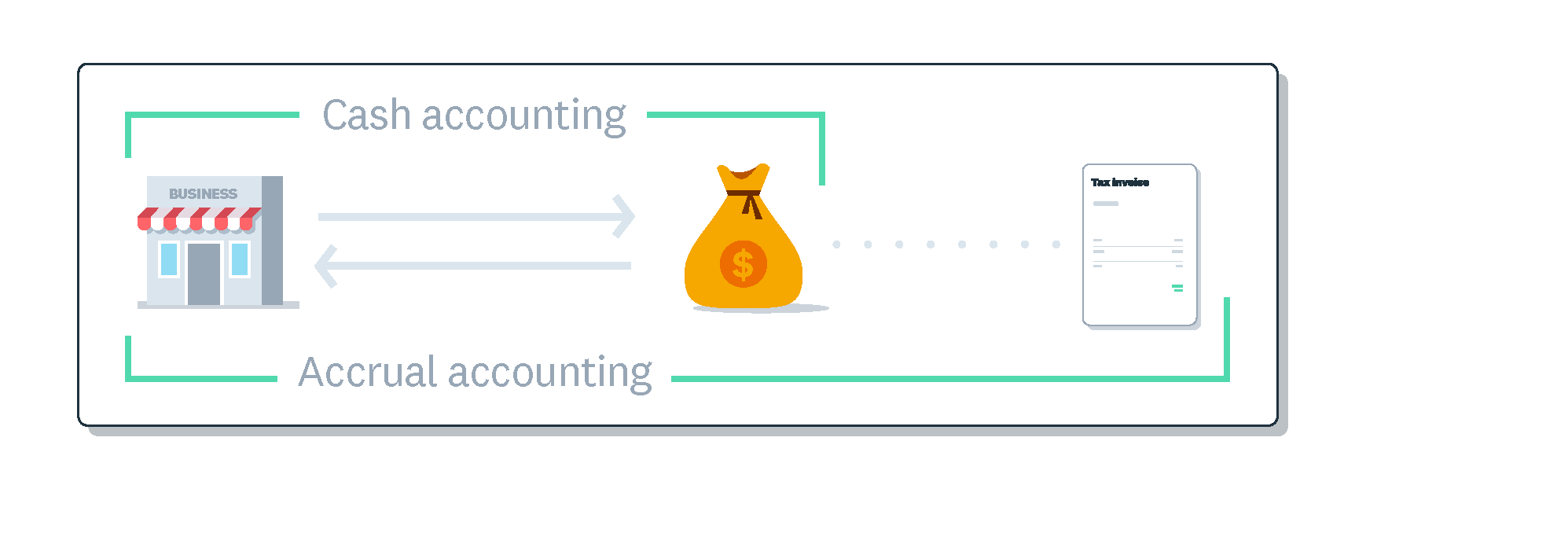
Cash accounting focuses only on money, not bills or invoices.
Key takeaways
- Cash accounting records income when you receive payment and expenses when you pay them, giving you a clear view of actual cash on hand.
- This method suits sole proprietors, freelancers, and small service or retail businesses with straightforward transactions and no inventory.
- Unlike accrual accounting, cash accounting ignores unpaid invoices and bills, which can make your financial picture less complete.
- Larger businesses and those required to follow financial reporting standards typically use accrual accounting instead.
What is cash accounting?
Cash accounting (also called cash basis accounting) records income when money is actually received and expenses when money is actually paid. It ignores unpaid invoices and bills until they are settled. This method is one of two main approaches to a basis of accounting.
How does cash accounting work?
Cash accounting tracks money only, not the invoices you issue or the bills you receive. Here's how it works in practice.
- You record income the moment a customer pays you, not when you send an invoice
- You record expenses when you pay a bill, not when you receive it
- Accounts receivable (what customers owe you) and accounts payable (what you owe suppliers) don't appear in your books until settled
This approach keeps your records aligned with your bank balance, making it easier to see how much cash you have available right now. It simplifies cash flow management for day-to-day decisions.
Cash accounting example
Consider a simple scenario to see cash accounting in action.
You invoice a client RM5,000 in March for a completed project. The client pays you in April. Under cash accounting, you record the RM5,000 as income in April (when paid), not March (when invoiced). Similarly, if you receive a supplier bill for RM1,000 in March but pay it in May, you record that expense in May.
Cash accounting vs accrual accounting
The key difference between these two methods comes down to timing. Accrual accounting records income and expenses when they are earned or incurred, regardless of when cash changes hands. Cash accounting records them only when payment happens. See the guide on cash vs accrual accounting for a deeper comparison.
- Cash accounting: you record a sale when the customer pays
- Accrual accounting: you record a sale when you deliver the goods or service
- Cash accounting: you record an expense when you pay the bill
- Accrual accounting: you record an expense when you receive the goods or service
Accrual accounting gives a fuller picture of your business performance over time, which is why financial reporting standards require the accrual basis. However, cash accounting can be simpler for day-to-day management in smaller operations.
Advantages of cash accounting
Cash accounting offers several benefits, particularly for smaller businesses with straightforward finances.
- Simplicity: it's easier to understand and maintain than accrual accounting
- Clear cash position: your books reflect actual cash on hand at any time
- Tax timing: you're taxed on money actually received, not money owed to you
- Less admin: fewer adjusting entries and no need to track receivables or payables in detail
Disadvantages of cash accounting
While simple, cash accounting has limitations that may affect your financial decisions.
- Short-term view: it only shows your current cash position, not your overall financial health
- Incomplete picture: ignoring unpaid invoices and bills can overstate or understate how well your business is doing
- Less useful for external parties: lenders and investors often prefer accrual-based figures to assess your business
- Not aligned with standards: it doesn't meet the requirements of accrual-based financial reporting frameworks
Who can use cash accounting?
Cash accounting suits sole proprietors, freelancers, and small service or cash-based retail businesses with simple transactions and no inventory. If your business model involves straightforward sales and purchases settled quickly, cash accounting can meet your needs.
Larger businesses and companies typically use accrual accounting, including for financial reporting. In Malaysia, companies generally prepare financial statements under MASB-approved standards (MFRS or MPERS), which are accrual-based. Some businesses cannot use cash basis for tax purposes either. Confirm your tax obligations with LHDN (the Inland Revenue Board of Malaysia) or a registered tax agent.
Can you switch between cash and accrual accounting?
Yes, businesses often switch as they grow, take on inventory, or seek funding from lenders or investors. Moving from cash to accrual accounting (or vice versa) requires care to avoid double-counting income or expenses. You'll usually need help from an accountant to make the transition smoothly and ensure your records stay accurate.
Simplify cash accounting with Xero
Whether you use cash accounting or plan to move to accrual, keeping your books accurate matters. Xero accounting software helps you track money in and out, automate bank reconciliation, and see your cash position in real time. Ready to take control of your finances? Get one month free and see how Xero makes bookkeeping easier.
FAQs on cash accounting
Here are answers to common questions about cash accounting.
Is cash accounting the same as cash basis accounting?
Yes. Cash accounting and cash basis accounting are two names for the same method. Both record transactions only when cash is received or paid.
Cash or accrual accounting: which is better for a small business?
It depends on your business. Cash accounting is simpler and suits businesses with straightforward transactions, while accrual accounting gives a more complete view and is often required as you grow or seek external funding.
Can I use cash accounting for tax in Malaysia?
Some businesses can use cash basis for tax purposes, but eligibility depends on your business structure and circumstances. Check with LHDN or a registered tax agent to confirm what applies to you.
Can I switch from cash to accrual accounting?
Yes, many businesses switch as they expand or need more detailed financial reporting. Work with an accountant to handle the transition and avoid errors like double-counting transactions.
What kind of businesses should use cash accounting?
Sole proprietors, freelancers, and small service or retail businesses with simple, cash-based transactions are well suited to cash accounting. If you carry inventory or have complex billing, accrual accounting may be more appropriate.
Related terms
Learn more about cash accounting
Handy resources
Advisor directory
You can search for experts in our advisor directory
How to do bookkeeping
Learn about data entry, bank rec, reporting and tax prep in our guide to doing bookkeeping.
Online accounting with Xero
Automate your accounting in the cloud
Disclaimer
This glossary is for small business owners. The definitions are written with their requirements in mind. More detailed definitions can be found in accounting textbooks or from an accounting professional. Xero does not provide accounting, tax, business or legal advice.