Gross profit vs net profit
The difference between gross profit and net profit, how to calculate each, and what makes a healthy margin.
Published Thursday 6 August 2026
Table of contents
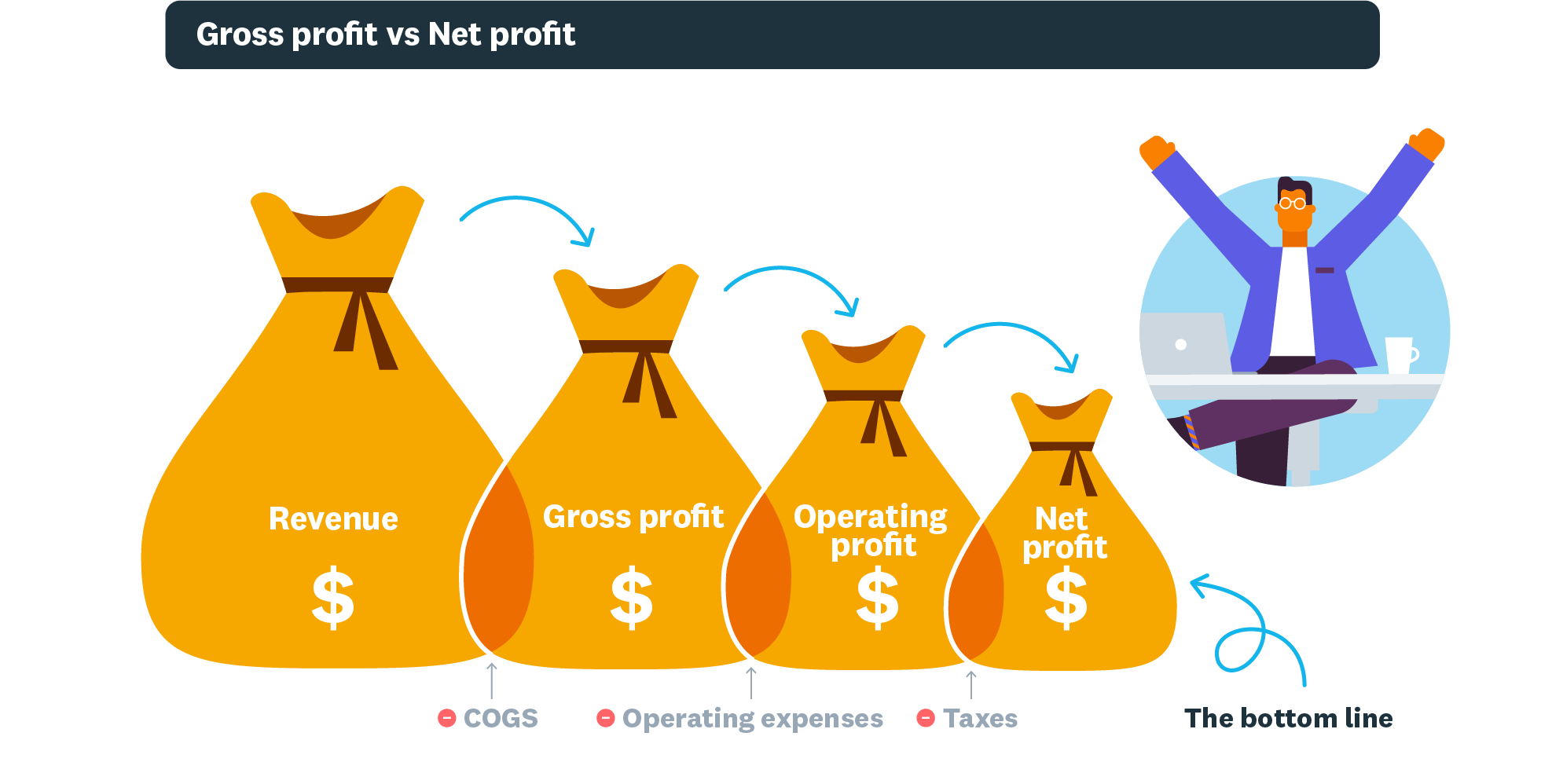
The difference between gross profit and net profit is operating expenses and taxes
Key takeaways
- Gross profit is revenue minus the cost of goods sold (COGS), while net profit is what remains after subtracting all operating expenses, interest and taxes from gross profit.
- The gross profit formula is: revenue minus cost of goods sold. The net profit formula is: gross profit minus operating expenses minus interest minus taxes.
- Gross profit shows whether your pricing covers direct production costs, while net profit reveals your actual bottom line and what you can reinvest or distribute to owners.
- In Hong Kong, Profits Tax applies to net profit (assessable profits), not gross profit.
What is gross profit?
Gross profit is the revenue your business earns from sales minus the cost of goods sold (COGS). It measures how much money you make from your core products or services before accounting for other business expenses.
COGS includes direct costs tied to producing your goods or services: raw materials, direct labour and manufacturing overhead such as factory utilities. COGS excludes general operating expenses like management salaries, office rent and advertising. According to the Corporate Finance Institute, gross profit reflects the efficiency of your production process and pricing strategy. For a step-by-step walkthrough, see how to calculate your gross profit.
What is net profit?
Net profit is the amount left after you subtract all remaining expenses from gross profit. This includes operating expenses (rent, utilities, marketing, administrative salaries), interest on loans and taxes.
Net profit is your true bottom line. It's the money available for owners to take as distributions, reinvest in the business or hold as reserves, and it's the figure that sits at the foot of your financial reports.
Gross profit vs net profit: what's the difference?
While both metrics measure profitability, they tell you different things about your business health. Here's how they compare.
Gross profit focuses on your core operations:
- Measures revenue minus direct production costs only
- Shows how efficiently you produce and price your products or services
- Creates a pool of cash available for running the rest of the business
- A positive gross profit does not guarantee a net profit
Net profit reflects the whole business:
- Measures what remains after all expenses, interest and taxes
- Shows overall business viability and financial health
- Represents the surplus you can distribute to owners or reinvest
- A negative net profit (loss) means your total expenses exceeded your gross profit
How to calculate gross profit and net profit
Both calculations start with your revenue figure. Here are the formulas and a worked example using Hong Kong dollars, and you can check your figures with a net profit margin calculator.
Gross profit = revenue − cost of goods sold
Net profit = gross profit − operating expenses − interest − taxes
Example:
- Revenue: HK$500,000
- Cost of goods sold: HK$300,000
- Gross profit: HK$500,000 − HK$300,000 = HK$200,000
- Operating expenses: HK$80,000
- Interest: HK$10,000
- Taxes: HK$18,150
- Net profit: HK$200,000 − HK$80,000 − HK$10,000 − HK$18,150 = HK$91,850
What is a good gross and net profit margin?
Profit margins express your profits as a percentage of revenue, making it easier to compare performance over time and against industry benchmarks. Xero's guide to profit margin covers this in more depth.
Gross profit margin = (gross profit ÷ revenue) × 100
Net profit margin = (net profit ÷ revenue) × 100
As a general rule of thumb, and recognising this varies widely by industry and company size, a 10% net profit margin is often considered average, 20% high, and 5% low. This guidance comes from Corporate Finance Institute and Brex. For context, US publicly traded companies averaged about a 9.7% net margin (NYU Stern, January 2026); Hong Kong small businesses may differ based on sector and scale.
Why gross and net profit both matter for your business
Tracking both metrics gives you a complete picture of your financial performance, and together they help you measure your profitability. Each one answers a different question about your business.
Gross profit tells you whether your pricing strategy and direct costs are sustainable. If your gross margin is shrinking, you may need to raise prices, negotiate better supplier terms or reduce production waste. Net profit shows overall viability. It's the figure that determines what you, as an owner, can take home, distribute to partners or reinvest in growth.
In Hong Kong, Profits Tax is charged on assessable (net) profits, not gross profit. This means your tax liability depends on what remains after allowable deductions. For guidance specific to your situation, consult a tax professional or visit the Hong Kong Inland Revenue Department.
Track your profit with Xero
Xero's reporting tools let you view gross and net profit in real time, so you always know where your business stands. With automatic bank feeds and organised expense tracking, you can see exactly how your revenue flows through to your bottom line. Start managing your finances with confidence, and you can get one month free when you sign up.
FAQs on gross profit vs net profit
Here are answers to common questions about gross profit and net profit.
What is the difference between gross profit and net profit?
Gross profit is revenue minus the direct costs of producing your goods or services. Net profit goes further, subtracting all operating expenses, interest and taxes from gross profit to show your true bottom line.
Can net profit be negative if gross profit is positive?
Yes. A business can have healthy gross profit but still report a net loss if operating expenses, interest and taxes exceed that gross profit. This often happens during expansion phases or when overhead costs are high.
Do you pay tax on gross or net profit in Hong Kong?
Hong Kong Profits Tax is calculated on assessable (net) profits, not gross profit. Allowable business expenses are deducted before tax is applied, so lowering your operating costs can reduce your tax bill.
What is cost of goods sold (COGS)?
COGS includes the direct costs of producing your products or services: raw materials, direct labour and production overhead. It excludes indirect costs such as marketing, office rent and administrative salaries.
Why might a business have high gross profit but low net profit?
High overhead expenses are usually the cause. If rent, marketing, salaries, loan interest or taxes consume most of your gross profit, little remains as net profit. Reviewing these costs regularly helps identify areas to optimise.
Related terms
Learn more about gross profit vs net profit
Handy resources
Advisor directory
You can search for experts in our advisor directory
Xero Small Business Guides
Discover resources to help you do better business
Financial reporting
Keep track of your performance with accounting reports
Disclaimer
This glossary is for small business owners. The definitions are written with their requirements in mind. More detailed definitions can be found in accounting textbooks or from an accounting professional. Xero does not provide accounting, tax, business or legal advice.