Operating profit
Learn what operating profit is, how to calculate it step by step, and why it matters for your business.
Published Thursday 6 August 2026
Table of contents

How to calculate operating profit
Key takeaways
- Operating profit is the money left after subtracting operating expenses from gross profit, showing how profitable your core business activities are.
- Operating profit is also called operating income or EBIT (earnings before interest and tax) because it excludes interest and tax expenses.
- To calculate operating profit, subtract cost of sales and operating expenses (such as rent, wages, utilities and depreciation) from total revenue.
- Tracking operating profit helps you compare performance across periods, benchmark against competitors and identify where to improve efficiency.
What is operating profit?
Operating profit is the profit your business earns from its core operations after deducting all operating expenses. The formula is:

Operating profit = Revenue − Operating expenses
You can also express this as gross profit minus operating expenses, since gross profit already accounts for the cost of goods sold.
Operating profit is also known as operating income or EBIT (earnings before interest and tax). Interest and tax are excluded because they relate to financing decisions and tax obligations rather than day-to-day operations. This makes operating profit a useful measure of how well you manage the business activities you control.
Why operating profit matters
Handy resources
Advisor directory
You can search for experts in our advisor directory
How to manage your finances and cash flow
Learn about money management for your small business
Financial reporting
Keep track of your performance with accounting reports
Operating profit gives you a clear view of how your core business is performing, separate from financing costs or tax rates. Here’s why it’s valuable:
- It shows whether your day-to-day operations are profitable before external factors like loan interest or tax rates come into play.
- It helps you compare performance across different time periods, revealing trends in efficiency and cost control.
- It allows you to benchmark against competitors in your industry, since operating profit removes differences in capital structure and tax situations.
- It highlights areas where you can cut costs or improve margins by focusing on expenses within your control.
How to calculate operating profit
Calculating operating profit takes four steps. Work through each one using figures from your profit and loss statement.
- Subtract cost of sales to get gross profit.Cost of sales (or cost of goods sold) includes direct costs like materials, labour and manufacturing expenses tied to producing what you sell.
- Subtract operating expenses. Operating expenses include rent, wages, utilities, marketing, insurance and other costs of running your business.
- Subtract depreciation. Depreciation spreads the cost of assets like equipment or vehicles over their useful life. Include it as an operating expense.
The result is your operating profit. Interest and tax are not included because operating profit measures what the business earns from its operations alone, before financing and tax obligations.
Example of an operating profit calculation
Here’s a worked example using Hong Kong dollars.
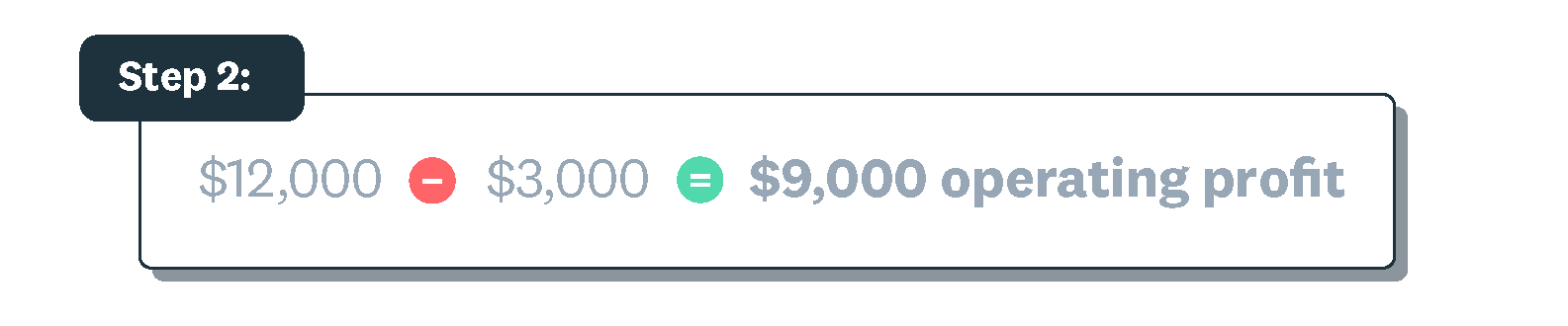
Suppose your business sold HK$20,000 of products and services during the month. It cost HK$8,000 to provide those products and services (your cost of sales). Subtracting this from revenue gives you a gross profit of HK$12,000.
You also paid HK$3,000 in operating expenses for rent, electricity and phone during the same period. Subtracting HK$3,000 from your gross profit of HK$12,000 leaves you with an operating profit of HK$9,000.
How to calculate operating profit margin
Operating profit margin shows what percentage of revenue remains as operating profit. Use this formula:
Operating profit margin = (Operating profit ÷ Revenue) × 100
For example, if your operating profit is HK$9,000 and your revenue is HK$20,000, your operating profit margin is 45%.
A higher margin means you keep more of each dollar earned. What counts as a “good” margin varies by industry, so compare your margin to similar businesses in your sector.
Operating profit vs other profit measures
Different profit measures tell you different things about your business. Here’s how they compare:
- Gross profit: revenue minus cost of goods sold. It shows how much you earn from selling products or services before other business costs.
- Operating profit: gross profit minus operating expenses (including depreciation). It shows the profit from core business activities, excluding interest and tax.
- Net profit: operating profit minus interest and tax. It’s the final profit figure after all expenses, representing what’s left for the business owner.
Common mistakes to avoid
When calculating operating profit, watch out for these common errors:
- Including interest or tax in operating expenses. These belong below the operating profit line when calculating net profit.
- Misclassifying one-off or non-operating items as operating expenses. Gains or losses from selling assets, for example, should be excluded.
- Forgetting depreciation. Depreciation is an operating expense and must be subtracted to reach operating profit.
Track your operating profit with Xero
Xero accounting software makes it simple to monitor your operating profit alongside other key figures. You can generate profit and loss reports, track expenses by category and see how your margins change over time. Sign up today and get one month free.
FAQs on operating profit
Here are answers to common questions about operating profit.
Is operating profit the same as EBIT?
Yes, operating profit and EBIT (earnings before interest and tax) refer to the same figure. Both measure profit from core operations before deducting interest and tax.
What does operating profit not include?
Operating profit excludes interest expenses, tax and non-operating items such as gains or losses from asset sales. It focuses only on income and expenses from regular business activities.
What is the difference between operating profit and net profit?
Net profit takes operating profit and subtracts interest and tax. While operating profit shows how your core operations perform, net profit shows what remains after all obligations are paid.
Why is depreciation included in operating profit?
Depreciation represents the gradual cost of using long-term assets like equipment. It’s a real operating expense that reduces profit, even though no cash leaves the business that period.
Related terms
Learn more about operating profit
Handy resources
Advisor directory
You can search for experts in our advisor directory
Profit & Loss template
Download Xero’s profit and loss statement template to show how much money you business is making
Financial reporting
Keep track of your performance with accounting reports
Disclaimer
This glossary is for small business owners. The definitions are written with their requirements in mind. More detailed definitions can be found in accounting textbooks or from an accounting professional. Xero does not provide accounting, tax, business or legal advice.