Payroll
Payroll is how you pay employees: working out pay, taking off deductions, and remitting them to the CRA.
Published Thursday 23 July 2026
Table of contents
Key takeaways
- Payroll is the process of paying your employees, including working out their pay, taking off deductions, and sending those deductions to the Canada Revenue Agency (CRA).
- In Canada, mandatory payroll deductions include Canada Pension Plan (CPP) contributions, Employment Insurance (EI) premiums, and federal and provincial income tax.
- As an employer, you also pay your own share of CPP and EI, and you need to keep accurate payroll records.
- You can run payroll by hand, outsource it, or use payroll software to save time and reduce errors.
What is payroll?
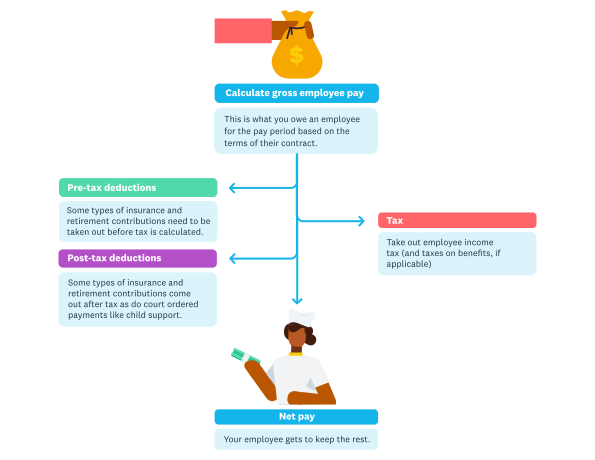
Payroll is what happens each payday and involves sending the right amounts of money to the employee, but also to a number of other locations.
Payroll is the process of paying your employees for the work they do. It can also mean the list of people you pay or the total amount you pay them in a given period.
In practice, payroll covers everything from working out each person's pay to taking off deductions and paying the right amounts to the CRA.
Why payroll matters for your business
Getting payroll right matters for more than paying people on time. It keeps you on the right side of the rules, builds trust with your team, and helps you manage one of your biggest costs.
- Compliance: you're legally required to deduct and remit the correct amounts to the CRA and to follow the rules in your province
- Employee trust: paying the right amount on the right day gives your team confidence and helps you keep good people
- Cost: wages and payroll are often one of the largest expenses a small business has, so accurate figures protect your cash flow
Key components of payroll: gross pay, deductions, and net pay
Every pay run comes down to 3 parts: gross pay, deductions, and net pay. Here's what each one means.
- Gross pay: the total an employee earns before anything is taken off, including wages, salary, overtime, and vacation pay
- Deductions: the amounts you subtract from gross pay, such as CPP contributions, EI premiums, and income tax
- Net pay: the amount left after deductions, which is the take-home pay that reaches your employee's bank account
Payroll deductions in Canada
In Canada, you're required to take certain amounts off every employee's pay and send them to the CRA. These mandatory deductions fall into 3 groups.
- Canada Pension Plan (CPP) contributions: a portion of eligible earnings that goes toward an employee's future pension
- Employment Insurance (EI) premiums: payments that give employees access to benefits if they lose their job or take certain kinds of leave
- Federal and provincial income tax: amounts based on an employee's earnings and the details on their TD1 form
As the employer, you also pay your own share of CPP and EI on top of what you deduct from employees. You then remit these deductions and your employer contributions to the CRA on a set schedule, which is a core part of staying on top of payroll compliance.
You might also handle voluntary deductions that an employee chooses, such as contributions to a retirement plan or a benefits scheme.
The payroll process step by step
Once you know the parts of payroll, the process itself follows a clear order. Here are the main steps to run payroll for each pay period.
- Track hours and work out pay: record the hours worked or confirm salaries, then calculate each person's gross pay
- Calculate deductions: work out CPP, EI, and income tax, along with any voluntary deductions
- Pay your employees: pay each person their net pay by direct deposit, cheque, or another method
- Remit deductions and taxes to the CRA: send the deductions and your employer contributions to the CRA by the due date
- Keep your records: save the details of each pay run so you can report and reference them later
For a fuller walkthrough, see our guide to running payroll for a small business.
Payroll records you need to keep
You need to keep records for every employee and every pay run. The CRA requires businesses to keep payroll records so you can support the amounts you've reported.
- Employee details, including their Social Insurance Number (SIN)
- TD1 forms that show each employee's tax credits
- Hours worked and wages paid
- Deductions taken from each pay
- Pay dates for each period
- T4 slips that summarize annual earnings and deductions
How often to run payroll
How often you run payroll is called your pay frequency, and you can pick the schedule that suits your business and your team. Common options in Canada include:
- weekly, so employees are paid every week
- biweekly, so employees are paid every 2 weeks
- semi-monthly, so employees are paid twice a month
- monthly, so employees are paid once a month
Ways to run payroll: by hand, outsourcing, or software
You have 3 main ways to run payroll, and the right choice depends on your time, your budget, and how many people you employ.
- By hand: you work out pay and deductions yourself, which costs little but takes time and carries more risk of error
- Outsourcing: you pay a bookkeeper or payroll provider to run payroll for you, which frees up your time
- Software: you use payroll software to automate the calculations and remittances, which saves time and supports accuracy
If you run the business on your own, you'll also want to plan how to pay yourself alongside any staff.
Simplify payroll with Xero
Payroll takes time, but it doesn't have to take over your week. Xero payroll software works out pay and deductions, keeps your team's details organized, and stores your records together so you can spend less time on admin and more on running your business.
You can see how it fits your business before you commit, so get one month free.
FAQs on payroll
Here are answers to some frequently asked questions about payroll to help you run it with confidence.
What are payroll deductions?
Payroll deductions are the mandatory and voluntary amounts you subtract from an employee's pay before they receive it. Mandatory deductions include CPP, EI, and income tax, while voluntary ones might include benefit or pension contributions.
What payroll taxes do employers have to pay in Canada?
On top of the amounts you deduct from employees, you pay your own employer share of CPP contributions and EI premiums. You remit both your share and the employee deductions to the CRA.
How often should I run payroll?
You can run payroll weekly, biweekly, semi-monthly, or monthly. Many small businesses choose biweekly, but the best schedule depends on your cash flow and what your employees expect.
What is the difference between gross pay and net pay?
Gross pay is what an employee earns before deductions, and net pay is what they take home after deductions. The gap between them is the total you deduct and remit to the CRA.
Can I run payroll myself?
Yes, you can run payroll by hand or with software, though doing it by hand takes more time and carries more risk of mistakes. Payroll software or a provider can handle the calculations and remittances for you.
Related terms
Learn more about payroll
Handy resources
Advisor directory
You can search for experts in our advisor directory
Your guide to hiring
Learn tips for hiring, onboarding and paying an employee, while keeping everyone happy
Payroll with Xero
Learn how Xero can help with your payroll requirements
Disclaimer
This glossary is for small business owners. The definitions are written with their requirements in mind. More detailed definitions can be found in accounting textbooks or from an accounting professional. Xero does not provide accounting, tax, business or legal advice.