Gross profit vs net profit
Learn the difference between gross profit and net profit, how to calculate each and why both matter.
Published Thursday 23 July 2026
Table of contents
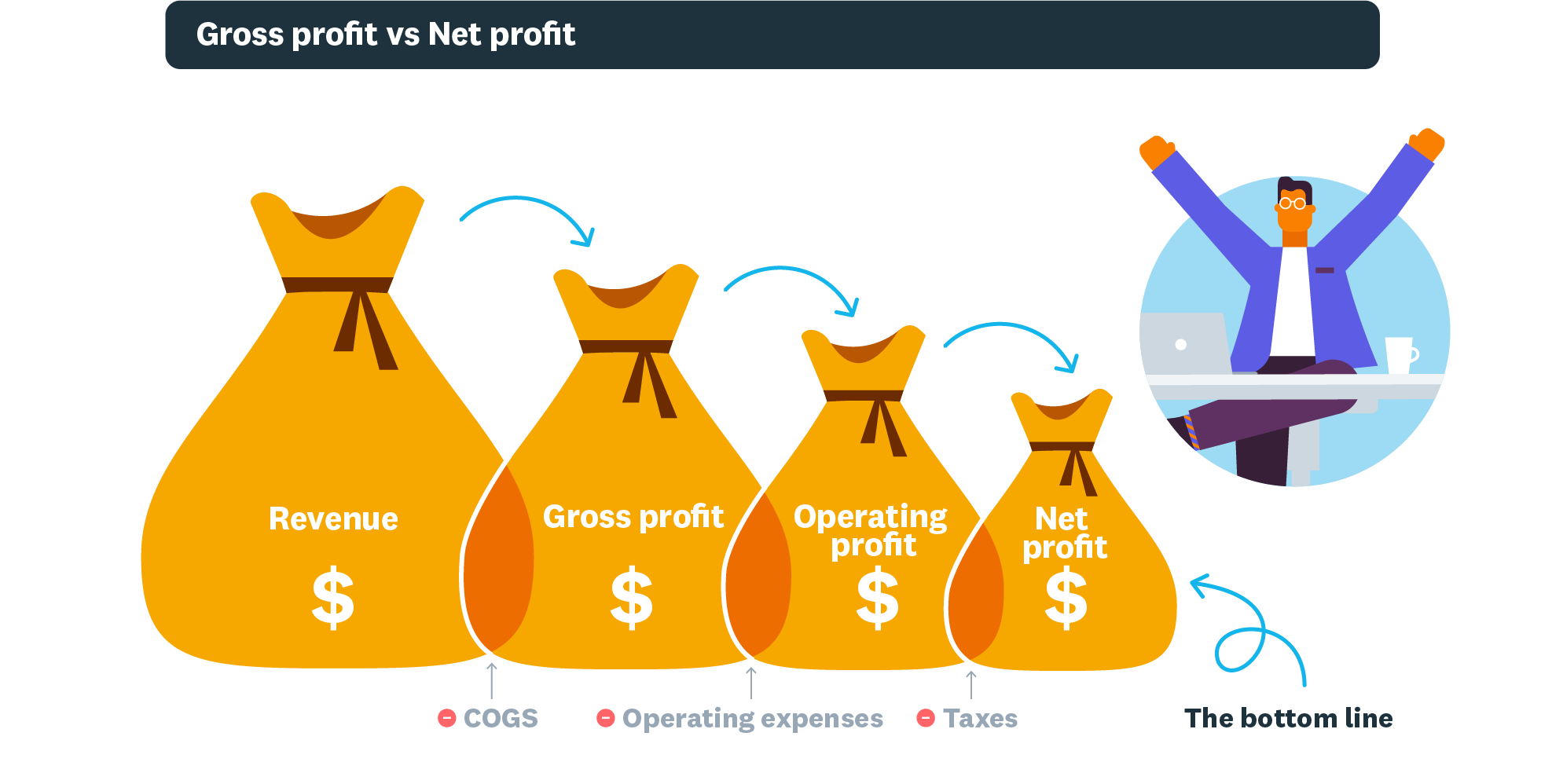
The difference between gross profit and net profit is operating expenses and taxes
Key takeaways
- Gross profit is revenue minus the cost of goods sold (COGS), so it shows how profitably you make and sell your products or services.
- Net profit is gross profit minus all other operating expenses, interest, and taxes, so it shows what you actually keep at the bottom line.
- Gross profit is almost always higher than net profit, because net profit comes after every remaining cost is subtracted.
- Watching both figures together tells you whether your pricing works and whether your running costs are under control.
What is gross profit?
Gross profit is your revenue minus the cost of goods sold (COGS). It measures how much money is left from sales once you cover the direct costs of producing what you sell.
COGS covers the direct costs tied to making your products or delivering your services. This includes raw materials, the wages of staff who produce the goods, packaging, and freight to bring in stock. These direct costs are also known as the cost of sales, and they exclude overheads like rent, marketing, or office admin.
What is net profit?
Net profit is your gross profit minus all other operating expenses, interest, and taxes. It's the amount your business truly keeps once every cost is accounted for.
Where gross profit only subtracts direct production costs, net profit accounts for the full picture. It takes out overheads such as rent, salaries, utilities, and marketing, then subtracts interest on any borrowing and the tax you owe. Net profit is the figure that lands at the bottom of your income statement, which is why it's often called the bottom line.
Gross profit vs net profit: the key difference
The key difference is how many costs each figure subtracts. Gross profit steps in early and only removes direct production costs, while net profit removes everything else on top to show what you keep.
Here's how the two compare at a glance:
- Gross profit subtracts only COGS; net profit subtracts COGS plus all other operating expenses, interest, and taxes
- Gross profit shows how profitably you make and sell; net profit shows overall business profitability
- Gross profit sits near the top of the income statement; net profit sits at the very bottom
- Gross profit is almost always the higher number; net profit is the smaller, final figure
How to calculate gross profit and net profit
You can work out both figures from the same starting point: your total revenue. The steps below run through a simple example for a business with $200,000 in annual revenue.
- Start with total revenue of $200,000 for the year.
- Subtract COGS of $120,000 to get a gross profit of $80,000.
- Subtract operating expenses of $40,000, such as rent, wages, and utilities, which leaves $40,000.
- Subtract interest of $5,000 on a business loan, which leaves $35,000.
- Subtract tax of $7,000 to reach a net profit of $28,000.
In this example, gross profit is $80,000 and net profit is $28,000. The gap between them is the total of your overheads, interest, and taxes.
Gross profit margin vs net profit margin
Margins turn your dollar profits into percentages, which makes it easier to compare periods or benchmark against other businesses. Both use revenue as the base, so you can see how much of every sales dollar you keep.
Gross profit margin is gross profit divided by revenue, multiplied by 100. Using the figures above, that's $80,000 divided by $200,000, which gives a 40% gross profit margin. This signals how efficiently you produce and price what you sell.
Net profit margin is net profit divided by revenue, multiplied by 100. That's $28,000 divided by $200,000, which gives a 14% net profit margin. This signals your overall profitability after every cost, and it's the number lenders and investors watch most closely.
Why gross profit and net profit both matter
Each figure answers a different question, so watching only one can hide a problem. Together they show whether your core offering is profitable and whether your wider running costs are under control.
Gross profit tells you if your pricing and production costs stack up. Net profit tells you if the whole business is sustainable once overheads, interest, and taxes are paid. Lenders and investors look at both when they assess your business, and you'll need accurate figures when you report your business income to the Canada Revenue Agency.
How to improve your gross profit and net profit
You can lift both figures by working on the costs and prices behind them. Small, steady changes across pricing, direct costs, and overheads tend to add up over time.
- Review your pricing to make sure it reflects the value you deliver and rising input costs
- Negotiate with suppliers or buy in volume to bring down your direct costs
- Cut waste in production to protect your gross profit margin
- Trim overheads such as subscriptions, rent, and admin to lift your net profit
- Focus your sales effort on your most profitable products or services
Track your profit with Xero
Keeping an eye on gross profit and net profit is far easier when your numbers update in real time. Xero brings your revenue, costs, and expenses together in one place, so you can see your profit at a glance and make confident decisions. Try it for yourself and Get one month free.
FAQs on gross profit vs net profit
Here are answers to some frequently asked questions about gross profit vs net profit.
Which is higher, gross profit or net profit?
Gross profit is almost always higher, because it's calculated before operating expenses, interest, and taxes are taken out. Net profit sits lower on the income statement once all those costs come out.
Is net profit before or after tax?
Net profit is after tax, since it subtracts all operating expenses, interest, and taxes from gross profit. The figure before tax is usually called pre-tax profit, or profit before tax.
What is the difference between gross profit and gross profit margin?
Gross profit is a dollar amount, while gross profit margin expresses that same figure as a percentage of revenue. The margin makes it easier to compare profitability across periods or against other businesses.
Why might a business have high gross profit but low net profit?
High overheads, interest payments, or tax can eat into a healthy gross profit and leave little net profit behind. It's usually a sign the products sell profitably, but the running costs need attention.
Related terms
Learn more about profit
Handy resources
Advisor directory
You can search for experts in our advisor directory
Xero Small Business Guides
Discover resources to help you do better business
Financial reporting
Keep track of your performance with accounting reports
Disclaimer
This glossary is for small business owners. The definitions are written with their requirements in mind. More detailed definitions can be found in accounting textbooks or from an accounting professional. Xero does not provide accounting, tax, business or legal advice.