Basis of accounting
Learn what the basis of accounting is and how cash and accrual methods change when you record income.
Published Monday 17 August 2026
Table of contents
Key takeaways
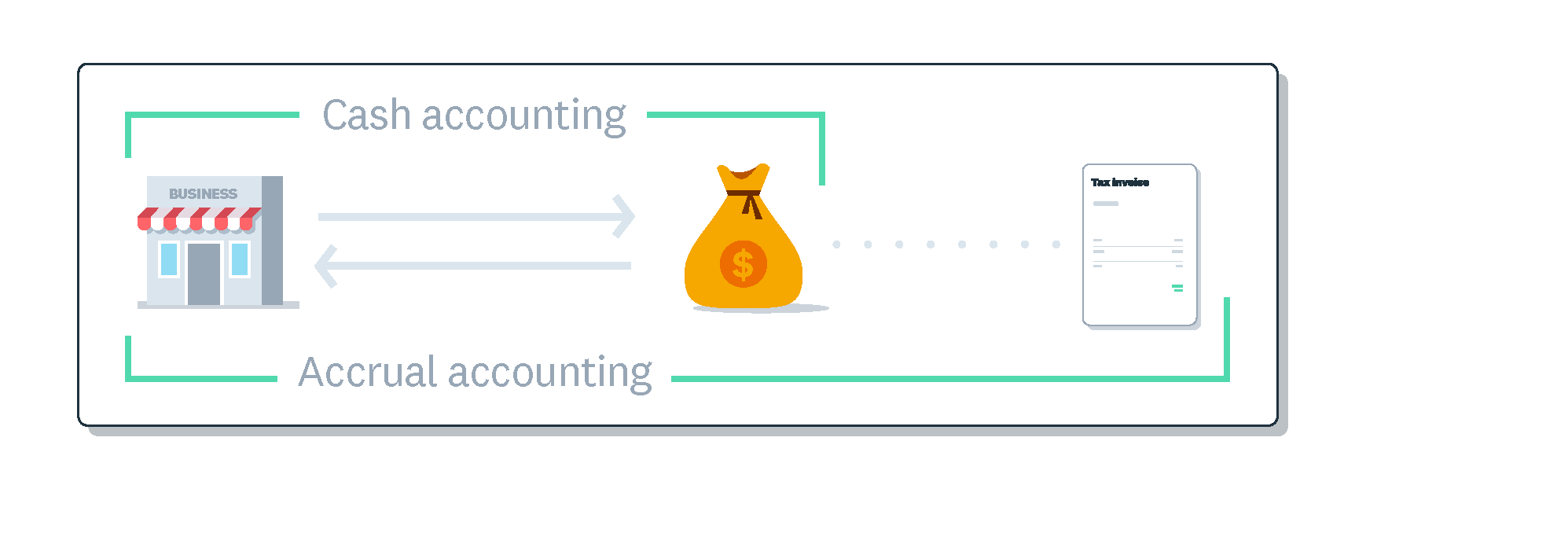
Basis of accounting determines the point at which you recognise transactions.
- The basis of accounting determines when you record income and expenses in your books, not whether you record them.
- Cash basis records transactions when money changes hands, while accrual basis records them when they're earned or incurred.
- A hybrid basis mixes both methods and can be legally complex, so it typically requires guidance from an accountant.
- Your choice of accounting basis affects how you report taxable income and how you see your business's financial health.
What is the basis of accounting?
The basis of accounting is the set of rules that determines when you record income and expenses in your financial records. It doesn't change what you record, only the timing.
This timing matters because it shapes how you view your business finances. A cash-based view shows money in and out of your bank account. An accrual-based view shows profitability by matching revenue with the expenses that generated it. The method you use also affects when income appears on your tax return.
Cash basis accounting explained
Cash basis accounting records income when you receive payment and expenses when you pay them. If a customer pays you in July, you record the income in July, regardless of when you sent the invoice.
This method suits sole traders, freelancers, and simple service businesses with no inventory. It's straightforward to maintain and gives you a clear picture of available cash. For more on keeping your records organised, see small business bookkeeping.
Cash basis has strengths and limits:
- Simple to understand and maintain
- Shows actual cash available at any time
- Doesn't match revenue with related expenses
- May not reflect true profitability in a given period
Accrual basis accounting explained
Accrual basis accounting records income when you earn it and expenses when you incur them, regardless of when payment happens. If you complete work in June but receive payment in August, the income belongs to June.
This method suits growing businesses, those with inventory, and businesses that offer credit terms or seek financing. It gives a clearer picture of profitability by matching revenue with the costs that produced it. To keep your records accurate under this method, learn how to record accounting transactions correctly.
Accrual accounting has its own trade-offs:
- Shows profitability more accurately
- Required by lenders and investors in many cases
- Requires tracking receivables and payables
- May show profit even when cash is low
Cash vs accrual: the key differences
The core difference is timing. Both methods record the same total income and expenses over time, but they place them in different periods.
Consider a graphic designer who invoices a client ₱50,000 in March but receives payment in April. Under cash basis, the income appears in April when the money arrives. Under accrual basis, the income appears in March when the work was completed and invoiced. The total is the same, but the monthly reports look different.
Here are the main distinctions:
- Cash basis ties records to bank transactions
- Accrual basis ties records to invoices and bills
- Cash basis is simpler but less informative for planning
- Accrual basis is more complex but preferred by lenders
For guidance on choosing between these approaches, see when to use each method.
The hybrid basis of accounting
A hybrid basis of accounting records some transactions on a cash basis and others on an accrual basis. For example, a business might track sales on accrual but handle certain operating expenses on cash.
This approach can be legally complex and may create compliance challenges. It should only be used with guidance from an accountant or tax professional who understands Philippine tax rules. For foundational bookkeeping principles, see the guide to bookkeeping.
Which basis of accounting is right for your business?
The right choice depends on how your business operates and who needs to see your financial information.
- If your business is simple with few transactions, cash basis may be enough
- If you carry inventory or offer credit terms, accrual gives a clearer picture
- If you plan to seek loans or investors, they often require accrual-based reports
- If you want to forecast cash needs, start with a cash flow forecast alongside your accounting records
Basis of accounting and tax in the Philippines
The National Internal Revenue Code (Section 43) recognises both the cash method and the accrual method of accounting. A taxpayer generally computes taxable income using the method they regularly employ in keeping their books.
The Bureau of Internal Revenue (BIR) may require a method that clearly reflects income if the current method does not. Once you choose a method, you should apply it consistently. Changing methods may require approval from the BIR.
Check with an accountant or tax adviser to confirm which basis is appropriate for your business.
Manage cash and accrual accounting with Xero
Xero lets you switch between cash and accrual views in your reports, so you can see both perspectives without maintaining separate records. You can track invoices, bills, and bank transactions in one place. To try it for your business, get one month free and see how it fits your workflow.
FAQs on basis of accounting
Here are answers to common questions about the basis of accounting and how it affects your business.
What is the difference between cash basis and accrual basis accounting?
Cash basis records income when you receive payment and expenses when you pay them. Accrual basis records income when earned and expenses when incurred, regardless of when money moves.
What is the hybrid basis of accounting?
A hybrid basis uses cash accounting for some transactions and accrual for others. It requires careful management and professional guidance to stay compliant.
Which basis of accounting is better for a small business?
It depends on your operations. Cash basis is simpler for straightforward service businesses, while accrual is better for businesses with inventory, credit sales, or plans to seek financing.
Does the basis of accounting affect my taxes?
Yes. The basis you use determines which period income and expenses fall into, which directly affects your taxable income for each year.
Can you switch from cash basis to accrual basis accounting?
You can switch, but the process may require adjustments to your books and, in some cases, approval from tax authorities. Consult an accountant before making the change.
Which basis of accounting is used in the Philippines?
Both cash and accrual methods are recognised under Philippine tax law. The method you use should consistently reflect your income, and the BIR may require a specific method if yours does not clearly do so.
Related terms
Learn more about basis of accounting
Handy resources
Advisor directory
You can search for experts in our advisor directory
How to do bookkeeping
Learn about data entry, bank rec, reporting and tax prep in our guide to doing bookkeeping.
Online accounting with Xero
Automate your accounting in the cloud
Disclaimer
This glossary is for small business owners. The definitions are written with their requirements in mind. More detailed definitions can be found in accounting textbooks or from an accounting professional. Xero does not provide accounting, tax, business or legal advice.