Online business ideas for beginners: how to start
Learn online business ideas that suit your skills and budget, and see how to turn them into income.

Written by Lena Hanna—Trusted CPA Guidance on Accounting and Tax. Read Lena's full bio
Published Thursday 2 April 2026
Table of contents
Key takeaways
- Start with service-based online businesses like freelancing or virtual assistance if you're a beginner, as these require minimal upfront investment and let you monetise skills you already have.
- Focus on niche markets rather than broad offerings, since the internet connects you with customers worldwide who share specific interests, making it easier to stand out from competitors.
- Validate your business idea before launching by researching competitor pricing, reading customer reviews, and testing interest through social media or small ads to ensure people actually buy what you plan to sell.
- Build your reputation through referrals by delivering quality work and actively asking satisfied customers for recommendations, as this drives sustainable growth for most online businesses.
Is starting an online business right for you?
An online business lets you sell products or services through the internet, often with lower overhead than traditional retail. This model suits people seeking flexibility, location independence, or additional income alongside existing work.
Online businesses work well if you:
- want flexible hours: set your own schedule and work around other commitments
- have limited startup capital: many online models require minimal upfront investment
- prefer working remotely: manage everything from home or anywhere with internet access
- enjoy learning new skills: digital marketing, customer service, and basic technology are essential
Success requires self-discipline, consistent effort, and adaptability, especially in the early stages. Most take six to 12 months before generating reliable income.
What type of online business could you set up?
Online businesses fall into four main categories. Understanding these helps you identify which model fits your skills and goals.
- Retail: Sell products through an online shop or marketplace.
- Services: Provide remote services such as training, teaching, consulting, or managing.
- Apps and SaaS: Create software or apps for sale or subscription.
- Content and media: Produce podcasts, videos, blogs, or other content that earns through sales, subscriptions, or advertising.
Best online business ideas
Here are proven online business ideas you can start with minimal investment. Each suits different skills, interests, and time availability.
Retail and product-based ideas:
- E-commerce store: Sell products in a specific niche through your own website or platforms like Shopify
- Dropshipping business: Sell products without holding inventory by partnering with suppliers who ship directly to customers
- Print-on-demand products: Create custom designs for t-shirts, mugs, or phone cases that are printed and shipped when ordered
- Handmade goods: Sell crafts, art, or homemade products through Etsy or your own store
- Subscription boxes: Curate and ship themed product collections monthly to subscribers
Service-based ideas:
- Freelance writing or design: Offer content creation, graphic design, or web design services to businesses
- Virtual assistant: Provide administrative support remotely for busy entrepreneurs or executives
- Online tutoring or coaching: Teach skills or subjects you know well through video calls
- Social media management: Handle content creation and posting for businesses that lack time or expertise
- Bookkeeping services: Manage financial records for small businesses remotely
Digital product ideas:
- Online courses: Package your expertise into video lessons that customers purchase and complete independently
- Digital templates: Create and sell spreadsheets, planners, design templates, or documents
- Stock photography or graphics: License your photos or illustrations through stock platforms
- E-books or guides: Write and sell downloadable content on topics you know well
Other models:
- Affiliate marketing: Earn commissions by promoting other companies' products through your website or social media
- App or software development: Build tools that solve specific problems for consumers or businesses
Where to find online business ideas and inspiration
Finding your online business idea starts with research. Look at what's already selling, what problems people discuss online, and where gaps exist in the market.
Here are proven sources of inspiration:
- online marketplaces: check trending items on Amazon, Etsy, eBay, Google Shopping, Facebook Marketplace, and AliExpress
- social media platforms: search hashtags on Instagram, Facebook, and Pinterest related to your interests
- crowdfunding sites: browse Indiegogo and Kickstarter to see what ideas attract funding
- app stores: review top sellers and new releases to identify problems being solved
- YouTube and podcasts: listen to what creators discuss, sell, and recommend
Online retail business ideas
According to Xero research, the most common online retail categories include:
- Fashion and clothing: 25% of online small businesses
- Electronics: 21% of online small businesses
- Hair and beauty: 18% of online small businesses
- Groceries and food: 17% of online small businesses
- Toys, hobbies, and crafts: 17% of online small businesses
- Health: 17% of online small businesses
Make something yourself
Handmade products let you turn hobbies and skills into income. This approach works well if you enjoy creating and want full control over your product.
Photography skills? Sell prints, cards, or calendars featuring your images. Love knitting? Handmade pet clothing has a dedicated market. The key is finding buyers who value unique, personally crafted items.
Get something made
Contract manufacturing lets you sell products without making them yourself. This works well if you have product ideas but prefer to focus on marketing and sales.
Work with manufacturers to customise existing products or design something from scratch. Many contract manufacturers offer small batch production at reasonable costs, making it easier to test your idea before scaling.
Resell products
Reselling involves buying products from suppliers and selling at a markup. This traditional retail model requires less creativity in product development but more focus on marketing and customer experience.
To stand out when selling the same products as competitors:
- build a distinctive brand: create memorable shop branding and packaging
- target a specific audience: become the go-to source for a particular customer type
- improve the buying experience: offer better service, faster shipping, or curated selections
Try dropshipping
Dropshipping is a retail model where you sell products without holding inventory. When customers order from your store, you pass the order to a supplier who ships directly to them.
This approach suits people with strong marketing skills who want to avoid inventory management. You focus on attracting customers and building your brand while suppliers handle storage and fulfilment. Learn more in the guide to dropshipping.
Sell print-on-demand products
Print-on-demand (POD) lets you sell custom-designed products without holding inventory. You create designs, upload them to a POD platform, and products are printed and shipped only when customers order.
This model works well for artists, designers, or anyone with creative ideas. Common products include:
- apparel: t-shirts, hoodies, and hats
- accessories: phone cases, tote bags, and mugs
- home goods: posters, cushions, and blankets
Popular POD platforms include Printful, Printify, and Redbubble. Most integrate with e-commerce platforms like Shopify, making setup straightforward. Your main focus becomes creating appealing designs and marketing your products.
Online service business ideas
Online service businesses let you monetise existing skills without creating products, a model that is a significant part of the modern economy. In 2023, 38% of the American workforce did some form of freelance work. You deliver value remotely through training, consulting, creating, or managing for clients.
Consider how your current expertise translates online. Administrative skills suit virtual assistant work. Teaching experience converts to online tutoring. Creative abilities support freelance design or writing.
Growing an online service business
Most online service businesses start with one or two foundation clients and grow through referrals. This approach lets you build systems and reputation before scaling. Projections show that by 2028, over half of the U.S. labour force will participate in freelancing.
Olivia Park moved her personal training business online after relocating from Taiwan to South Korea. She continued working virtually with existing clients while building her social media presence with health and wellness content.
As her audience grew, she launched online group programmes through Olivia Park Coaching, expanding her reach significantly.
"It's allowed me to create more products with different tiers of service," she says. "Some people are happy to do the online courses on their own. Others ask for customised routines. And others want one-to-one time. The upshot is that I'm able to deliver twice as much service online as I could when limited to in-person training."
Building your reputation
Referrals drive most online service businesses, just as they do for traditional services. Delivering quality work and actively asking for recommendations builds sustainable growth.
Michael Yared's fully online app development agency, Echobind, grew primarily through referrals.
"We spun off with one anchor client and built up from there," he says. "It was tough for the first couple of years because we never knew if the projects would keep coming. But we just kept asking for referrals and it's still our biggest source of new work."
Echobind eventually grew to 40 fully remote staff.
Other online business models
Beyond retail and services, two other models attract aspiring entrepreneurs: apps and software and content creation. Both offer significant earning potential but require specialised skills or substantial time investment.
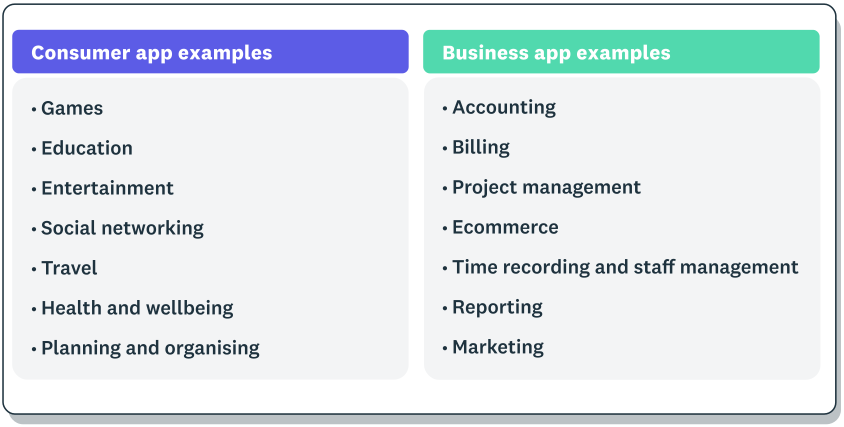
Apps and software automate tasks for consumers or businesses. Successful apps can reach millions of users, but development requires technical expertise or capital to hire developers. Marketing is essential since app stores contain thousands of competing products.
Content creation includes YouTube channels, podcasts, and blogs that earn through advertising, sponsorship, subscriptions, or affiliate marketing. Building an audience takes time, and the market is crowded. Gaming and how-to content tend to attract subscribers, but success depends on consistent output, marketing skills, and often a compelling personality.
Both paths can work, but they typically require more upfront investment or longer timelines than retail or service businesses.
How to compete with big brands
Small businesses compete with big brands through authenticity and personal connection. Small businesses are a powerful economic force, contributing 43.5% of GDP in the U.S., and you can win customers who value personal connection and unique stories.
Marc McKeown of FortBrave recommends making your brand story central to everything you do.
"Put as much of your own story into your product and branding as you can," he says. "Customers will gravitate to you because of your authentic story, even if they have to pay a little bit more."
"Continue that through into your packaging and shipping. Differentiate yourself from the corporate experience. Package products nicely and put a personal note in. Amazon can't compete with that."
This personal touch can even generate free marketing when customers share unboxing experiences on social media.
Niche down
Niche products often perform better online than broad offerings. The internet connects you with customers worldwide who share specific interests, even if those customers are rare in any single location. With smartphones accounting for nearly 80% of all retail website visits worldwide, reaching these niche audiences is more feasible than ever.
Feel confident doing something hyper-specific or unusual. As McKeown explains: "Niche shopping has been enabled by the internet. It's much easier to find out-of-the-ordinary products online than to traipse around town for it, so that's what people do."
Low-budget online business ideas
Many online businesses require minimal startup costs. Here are options you can launch for under $500, and several for almost nothing.
These options require under $100 to start:
- Freelance services: Offer skills you already have through platforms like Upwork or Fiverr
- Social media management: Use free scheduling tools to manage clients' accounts
- Virtual assistant work: Provide administrative support using basic software
- Affiliate marketing: Promote products through a free blog or social media accounts
With a slightly larger budget, you can explore these options under $500 to start:
- Dropshipping store: Pay only for your e-commerce platform subscription and marketing
- Print-on-demand products: Design costs are minimal since printing happens only after sales
- Online tutoring: Invest in a quality microphone and camera for video calls
- Digital products: Create templates, guides, or courses using tools you already own
The main investment for most low-budget online businesses is your time. Expect to spend significant hours building your presence and finding customers before generating consistent income.
How to start an online business
Once you've chosen an idea, follow these steps to launch your online business.
- Validate your idea: Research whether people actually buy what you plan to sell. Check competitor pricing, read customer reviews, and test interest through social media or small ads.
- Research your market: Identify your target customers and understand their needs. Study competitors to find gaps you can fill or ways to differentiate.
- Create a simple business plan: Outline your products or services, pricing, target audience, and marketing approach. Keep it brief but clear.
- Register your business: Choose a business structure and register with relevant authorities. Requirements vary by location, so check local regulations.
- Set up your financial systems: Open a business bank account and choose accounting software to track income and expenses from day one. Xero's cloud-based accounting helps you manage invoicing, expenses, and cash flow as you grow.
- Build your online presence: Create a website or set up shop on an e-commerce platform. Establish social media profiles relevant to your audience.
- Launch and start marketing: Begin selling and actively promote your business through content, social media, paid advertising, or outreach to potential customers.
FAQs on online business ideas
Here are answers to common questions about starting an online business.
Which online business is easiest to start for beginners?
Freelance services and virtual assistant work are typically easiest because they require skills you already have and minimal upfront investment. You can start finding clients immediately through freelance platforms.
How much money do I need to start an online business?
Many online businesses cost under $500 to launch. Freelancing and affiliate marketing can start for almost nothing, while e-commerce stores typically require $100 to $500 for platform fees and initial marketing.
How long does it take to make money from an online business?
Most online businesses take three to 12 months to generate consistent income. Service-based businesses often earn faster since you're paid for completed work, while product-based businesses need time to build traffic and customer trust.
Do I need technical skills to start an online business?
Basic computer skills are enough for most online businesses. E-commerce platforms, website builders, and social media tools are designed for non-technical users. You can learn additional skills as your business grows.
What's the difference between dropshipping and print-on-demand?
Dropshipping sells existing products from suppliers who ship directly to customers. Print-on-demand creates custom products with your designs that are manufactured only when ordered. Both avoid holding inventory, but print-on-demand offers more creative control.
Xero does not provide accounting, tax, business or legal advice. This guide has been provided for information purposes only. You should consult your own professional advisors for advice directly relating to your business or before taking action in relation to any of the content provided.
Disclaimer
Xero does not provide accounting, tax, business or legal advice. This guide has been provided for information purposes only. You should consult your own professional advisors for advice directly relating to your business or before taking action in relation to any of the content provided.
Start using Xero for free
Access Xero features for 30 days, then decide which plan best suits your business.