Dropshipping explained: how it works, pros and cons
Learn how dropshipping helps you launch fast without stock, cut costs, test products, and scale with less risk.
Written by Lena Hanna—Trusted CPA Guidance on Accounting and Tax. Read Lena's full bio
Published Thursday 2 April 2026
Table of contents
Key takeaways
- Research suppliers thoroughly by ordering samples, checking reviews, and testing response times before committing, as your reputation depends entirely on their performance with product quality, shipping times, and customer communication.
- Set realistic profit expectations since dropshipping margins typically range from 10% to 30%, and factor in all costs including advertising, platform fees, transaction charges, and refunds when calculating your final pricing.
- Focus on differentiation rather than competing solely on price by building a recognisable brand, curating unique products, or targeting underserved niches to stand out in the highly competitive dropshipping market.
- Invest in marketing and customer service as essential growth drivers, budgeting for paid advertising while building organic presence through content, and responding quickly to customer enquiries to maintain your business reputation.
What is dropshipping?
Dropshipping is a sales method where you sell products online without holding stock. When a customer places an order, your supplier ships the product directly to them.
You handle marketing, customer service, and order management. Your supplier handles inventory and shipping. This split lets you focus on growing your business instead of managing logistics.
The dropshipping market is growing fast. Global sales are expected to reachUS$476 billion by 2026. Startup costs are low and it's easy to get started. Success requires standing out from competitors and managing margins carefully.
How does dropshipping work?
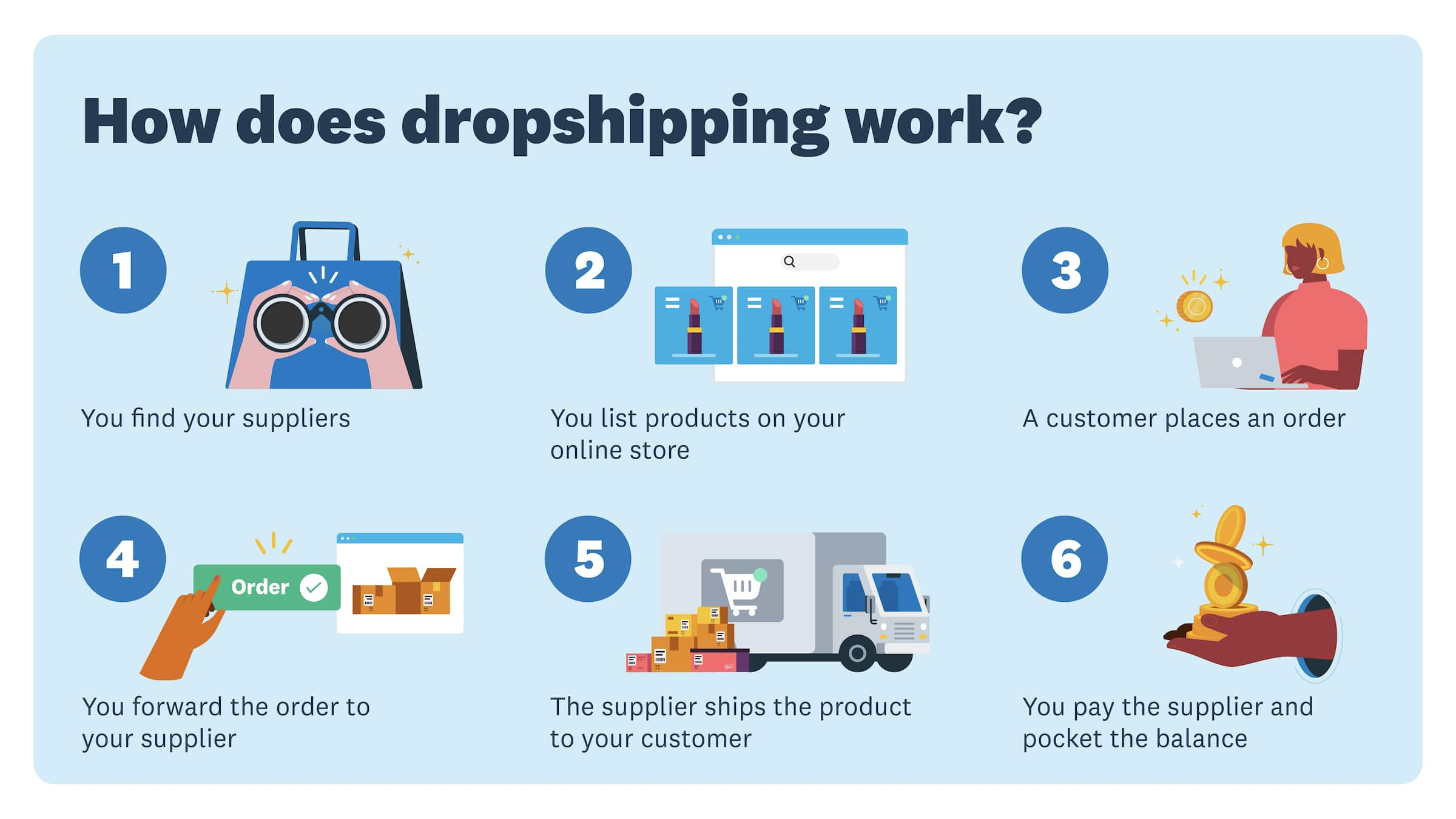
Follow these six steps to run a dropshipping business.
- Find your suppliers
Not all suppliers work with dropshippers. When you find one, check for quality products, competitive prices, and reliable shipping.
Set clear terms upfront for pricing, return policies, and restocking fees. Clear agreements prevent misunderstandings later.
Look for suppliers that offer:
- white-label services that add your branding to products and packaging instead of theirs
- dedicated systems to streamline ordering, like automated integration with your store, dedicated dashboards, or partner-specific email addresses
- List products on your online store
Add products to your store with detailed descriptions, high-quality images, and accurate product specs. Your supplier might give you these, or you can create your own branded versions.
Set your prices carefully, factoring in a markup for your profit margins. Customers can compare prices online in seconds, so keep prices competitive. Be sure to account for hidden costs, like platform fees and transaction charges, when calculating your final price.
- A customer places an order
When a customer orders something, the payment is made directly to you, the dropshipper.
You're now in charge of the transaction, so it's your responsibility to manage refunds and resolve disputes.
- Forward the order to your supplier
Send the order details to your supplier, including the customer's address, product specifications (size, colour, and so on), and any special requests.
- The supplier ships the product to your customer
The supplier packages and ships the product directly to your customer.
- Pay the supplier and pocket the balance
Pay the supplier the agreed wholesale cost and any shipping fees. The difference between what the customer paid and your costs is your profit.

Dropshipping vs traditional retail
Dropshipping differs from traditional retail in three key ways: how you manage inventory, what you invest upfront, and what risks you face.
- Inventory management: Dropshippers never hold or store stock, while traditional retailers must manage and securely store inventory.
- Initial investment: Dropshippers avoid upfront costs for inventory and storage, while traditional retailers must invest in both before selling.
- Operational risks: Dropshippers eliminate unsold stock risk but depend on suppliers for quality and speed. Traditional retailers face risks from unsold inventory, demand shifts, and theft or damage.
Some products work better for dropshipping than traditional retail. Here are a few examples:
- Niche products: Test new or niche items like eco-friendly cleaning supplies or vegan skincare without committing to large stock orders.
- High-value items: Sell expensive products like designer bags or luxury watches without buying, storing, or insuring inventory upfront.
- Trendy or seasonal items: Offer fashion accessories, heated blankets, or holiday ornaments without the risk of unsold stock.
Dropshipping business models
Dropshipping business models determine how you source and fulfil products. Each model has different benefits and trade-offs depending on your goals.
- Wholesale dropshipping: Partner with wholesalers who ship products directly to your customers. Access wide product ranges and test different items with minimal risk.
- Print on demand dropshipping: Produce items like t-shirts, mugs, or phone cases only after customers order them. Test custom designs without investing in large print runs, though shipping times may be longer.
- Retail dropshipping: Source products from retailers like Amazon and ship them to customers. Access a huge range of readily available products, but expect tighter margins since you buy at retail prices. Use this model to test demand or capture price differences between markets.
Dropshipping pros and cons
Dropshipping offers low startup costs and flexibility, but comes with trade-offs like tight margins and supplier dependence. Here's what to weigh before you start.
Dropshipping benefits
Here are the main advantages of dropshipping.
Scalability
Grow your product range, marketing, and customer service without managing inventory or logistics. Your suppliers handle storage and shipping, so you can focus on scaling.
Run your business from anywhere
Work from anywhere with an internet connection. Without a physical storefront or warehouse, you can monitor sales, process orders, and coordinate with suppliers from any location.
Lower costs
Pay suppliers only after you make a sale, so you avoid large upfront inventory investments. Without warehousing or storage costs, your overheads stay low.
Lower costs help your business become profitable faster and make dropshipping accessible even with limited startup funds.
Improved cash flow
Pay suppliers after you receive customer payments, so you don't tie up funds in inventory. This keeps cash flowing through your business. Dropshippers can see profits that are 50% higher than merchants who maintain their own inventory.
Lower environmental impact
Reduce waste and emissions compared to traditional retail. Without unsold stock piling up and with fewer transportation steps, dropshipping can be a more sustainable choice.
Dropshipping drawbacks
Dropshipping has real drawbacks to consider before you start.
Complex shipping arrangements
Working with multiple suppliers makes it hard to give customers exact delivery times. Items from the same order may arrive separately, and international orders can bring delays and fees that hurt your reputation. Research shows over 66% of shoppers expect free shipping.
Lower profit margins
Dropshipping margins require careful management because you buy items individually rather than in bulk. Without wholesale discounts, and with some suppliers charging extra for small orders, you'll have less budget for marketing and growth.
Intense competition
Low barriers to entry attract many sellers, so differentiation and strong branding become essential for success. Stand out by offering unique products, building a strong brand, and delivering exceptional customer service.
Dependence on suppliers
Your reputation depends on your suppliers' performance. Customers hold you responsible for product quality, shipping times, communication, and packaging, so choose suppliers carefully.
Branding limitations
Building a memorable brand requires extra effort when you don't control packaging. Many suppliers don't offer white-labelling, so customers may receive orders in generic packaging that doesn't match your store's branding.
Why dropshippers fail (and how to avoid it)
Many dropshipping businesses struggle due to avoidable mistakes, but you can succeed by learning from common pitfalls.
Here are common challenges and how to overcome them:
- Choosing unreliable suppliers: Vet suppliers carefully by ordering samples, checking reviews, and testing response times before committing.
- Selecting poor products: Research demand using Google Trends and marketplace data. Focus on niches with healthy margins and manageable competition.
- Neglecting marketing: Budget for paid advertising and build an organic presence through content and social media. Traffic drives sales.
- Setting unrealistic profit expectations: Dropshipping margins are tight, as the average margin ranges from 10% to 30% depending on the niche and products. Factor in advertising costs, platform fees, and refunds when projecting profits.
- Providing weak customer service: Respond to enquiries quickly and resolve complaints professionally. Your reputation depends on how you handle problems.
- Lacking differentiation: Compete on more than price. Build a recognisable brand, curate unique products, or target an underserved niche.
FAQs on dropshipping
Here are answers to common questions about starting a dropshipping business.
How much money do you need to start dropshipping?
You can start dropshipping with as little as a few hundred dollars. This covers your website platform fees, initial marketing costs, and your first supplier payments. Unlike traditional retail, you don't need to invest in inventory upfront.
Is dropshipping still profitable?
Yes, dropshipping can be profitable when you choose the right products, suppliers, and marketing strategies. Profit margins typically range from 10% to 30%, so success depends on managing costs and building a strong customer base.
How do you find reliable dropshipping suppliers?
Research suppliers through wholesale directories, trade shows, and online marketplaces. Order samples to test product quality, check reviews from other retailers, and verify their shipping times and communication standards before committing.
What are the best products to dropship?
The best products to dropship are those with healthy profit margins, steady demand, and manageable competition. Niche products, high-value items, and trending products often work well, but research your specific market before committing.
Do you need a business licence for dropshipping?
Business licence requirements vary by location and business structure. Check your local regulations to determine what permits or licences you need to operate legally.
Disclaimer
Xero does not provide accounting, tax, business or legal advice. This guide has been provided for information purposes only. You should consult your own professional advisors for advice directly relating to your business or before taking action in relation to any of the content provided.
Start using Xero for free
Access Xero features for 30 days, then decide which plan best suits your business.