Liabilities
Liabilities are what your business owes. Learn the main types, how to calculate them and how to keep them in check.
Published Wednesday 30 September 2026
Table of contents
Key takeaways
- Liabilities are the debts and obligations your business owes to others, and they sit on the balance sheet alongside assets and equity.
- Current liabilities are due within 12 months, while non-current liabilities fall due after that.
- Tax owed to Revenue (the Irish tax authority), including value-added tax (VAT) you report on your VAT return and payroll taxes, is a current liability until you pay it.
- Reviewing your liabilities every month helps you plan repayments and borrow with confidence.
What are liabilities?
The accounting equation
Liabilities are financial obligations your business owes to other people or organisations, such as loans and unpaid supplier bills. You settle them in the future, usually with cash.
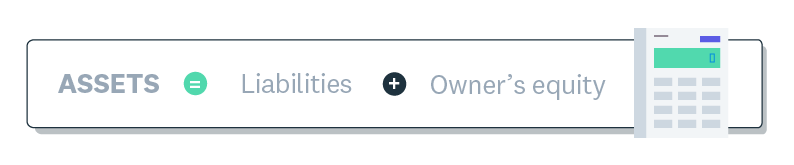
Liabilities are one of the core elements of the balance sheet, alongside assets and equity. They connect through the accounting equation: Assets = Liabilities + Equity.
Think of a café owner who takes out a loan to buy a coffee machine. The machine is an asset, the loan is a liability, and the owner’s stake is the difference between the two. What matters most is knowing what you owe and when each payment is due.
Types of liabilities
Liabilities fall into three groups based on when they’re due and how certain they are. Sorting them this way helps you prioritise which payments come first.
Current liabilities
Current liabilities are amounts you expect to pay within 12 months, usually from day-to-day cash. Common examples include:
- accounts payable: bills from suppliers you haven’t paid yet
- accrued expenses: costs you’ve incurred but haven’t paid yet, for example, wages owed to staff
- short-term loans and overdrafts: borrowing due for repayment within the year
- VAT payable: VAT you’ve charged customers but haven’t yet paid to Revenue
- payroll taxes payable: Pay As You Earn (PAYE), Pay Related Social Insurance (PRSI) and Universal Social Charge (USC), deducted from wages, paid to Revenue monthly
- corporation tax or income tax payable: tax your company or sole trade owes on its profits
- unearned revenue: payments customers have made in advance for work you haven’t delivered yet
Payroll taxes have fixed deadlines. Revenue’s guidance for employers sets the due date as 14 days after the end of each month. If you file and pay through Revenue Online Service (ROS), you get 23 days.
Non-current liabilities
Non-current liabilities are obligations due more than 12 months after the balance sheet date. They usually fund bigger investments that pay off over several years, such as:
- long-term loans: business loans repaid over several years
- commercial mortgages: borrowing secured on business property
- leases: longer-term agreements for premises or vehicles
- deferred tax: tax linked to this year’s accounts that falls due in a later period
- pension obligations: future pension payments promised to employees
The portion of a long-term loan due in the next 12 months counts as a current liability. The rest stays non-current.
Contingent liabilities
Contingent liabilities are possible obligations that depend on a future event, such as a customer’s legal claim or a warranty repair. How you record one depends on how likely it is to become a real payment.
Many Irish small companies prepare their accounts under Financial Reporting Standard 102 (FRS 102), and Section 21 covers these. The FRS 102 rules require a provision when a past event creates a present obligation, payment is probable and the amount is reliably measurable. Otherwise, you disclose it as a contingent liability in the notes to your accounts, unless the chance of payment is remote.
A provision is a liability with an uncertain timing or amount. For example, if a customer sues over faulty work and your solicitor expects the claim to succeed, you’d likely record a provision.
Liabilities vs debt
Debt is money you’ve borrowed and must repay, usually with interest. Every debt is a liability, and liabilities also include amounts you never borrowed, like VAT owed, unearned revenue, supplier bills and wages due.
Lenders often group debt by whether an asset backs it:
- secured debt: backed by an asset the lender can claim if you miss repayments, for example, a commercial mortgage or asset finance
- unsecured debt: backed by your business’s creditworthiness alone, for example, an overdraft or business credit card
Secured debt usually carries a lower interest rate because the lender takes on less risk. Unsecured debt is often quicker to arrange, though it tends to cost more.
Examples of liabilities in business
Picture a landscaping business in Cork reviewing its balance sheet at year end. It owes:
- €8,500 in accounts payable to its equipment supplier
- €3,200 in wages owed to staff
- €1,800 in VAT charged to customers but not yet paid to Revenue
- €45,000 on a van loan
- €120,000 on a commercial mortgage for its yard and office
The first three amounts are current liabilities, totalling €13,500. To keep the maths simple, the full van loan and mortgage count as non-current, totalling €165,000. That brings total liabilities to €178,500.
If the business has €250,000 in assets, its equity is €71,500 (€250,000 − €178,500). So the owner funds about 29% of the business’s assets, and liabilities fund the rest.
Liabilities vs assets
Assets are what your business owns, while liabilities are what it owes. The gap between them is your owner’s equity.
Say you buy a €50,000 van with a €50,000 loan. The van appears as a €50,000 asset and the loan as a €50,000 liability, so your equity stays the same on day one. Over time, the van loses value through depreciation while the loan balance falls with each repayment.
Keeping assets comfortably above liabilities protects your equity. If liabilities ever exceed assets, your business has negative equity, a signal to review your debt with your accountant.
Liabilities vs expenses
An expense is a cost your business incurs in a period, and it appears on your profit and loss statement. A liability is an obligation to pay in the future, and it sits on your balance sheet.
Take a €30,000 car loan. The outstanding loan balance is a liability, while the interest you pay and the car’s depreciation are expenses.
The two often overlap: say an electricity bill arrives and you haven’t paid it yet. The cost is an expense for that month, and the unpaid amount sits in accounts payable. When you pay it, the liability clears, and each entry follows the logic of debits and credits so your books stay balanced.
How to calculate total liabilities
Total liabilities is the sum of everything your business owes on a given date. You can work it out from your records in four steps:
- List every amount you owe at the balance sheet date, including bills, loans, tax and wages
- Split the items into current (due within 12 months) and non-current (due later)
- Add up each group to get your current and non-current subtotals
- Add the two subtotals together to get total liabilities
For the Cork landscaping business, that’s €13,500 + €165,000 = €178,500.
If you already know your assets and equity, rearrange the accounting equation: Liabilities = Assets − Equity. For the same business, €250,000 − €71,500 gives the same €178,500.
How to manage business liabilities
Managing liabilities starts with knowing how much of your business is funded by borrowing. The debt-to-asset ratio shows this: divide total liabilities by total assets.
A ratio of 0.5 means half your assets are funded by debt, and a lower ratio means your business relies less on borrowing. The Cork landscaping business has a ratio of about 0.71 (€178,500 ÷ €250,000).
Comparing current liabilities with current assets shows whether you can cover the bills due this year. The current ratio measures this, and the gearing ratio compares your debt with your equity.
To keep liabilities manageable, you can:
- negotiate longer payment terms with suppliers
- refinance high-interest debt when lower rates are available
- build a cash reserve for upcoming tax bills and loan repayments
- review your liabilities every month
- keep personal and business debts separate
Central Bank of Ireland figures track lending to small and medium-sized enterprises. In Q1 2026, the average interest rate on new loans fell 33 basis points to 4.98%. If your existing loans carry a higher rate, ask your lender or broker whether refinancing would lower your repayments.
A cash flow forecast shows when big repayments and tax bills will land, so you can plan for them early. If repayments start to stretch your cash, an accountant or advisor can help you restructure your debt.
Track your business liabilities with Xero
Knowing what you owe, and when, puts you in control of your cash and your borrowing decisions. Xero keeps your liabilities up to date, so you can see where you stand at any time.
Bank feeds bring your transactions into Xero automatically, and reconciliation matches them to your bills and loans. Your balance sheet updates in real time, and you can schedule and pay bills on time to keep supplier balances under control.
Start tracking your liabilities in one place and get one month free.
FAQs on liabilities
Here are answers to common questions small business owners ask about liabilities.
Is accounts receivable a liability?
No, accounts receivable is an asset because it’s money customers owe you. Its counterpart, accounts payable, is the liability, since it’s money you owe suppliers.
Is VAT a liability?
Yes, VAT you’ve charged on sales is a liability until you pay it to Revenue. You can offset VAT reclaimable on business purchases, and your VAT return shows the net amount owed or due back.
Is owner’s equity a liability?
No, owner’s equity is what’s left for the owners after you subtract liabilities from assets. It reflects the money you’ve invested plus profits kept in the business, so it’s a separate part of the balance sheet.
Are liabilities bad for a small business?
Liabilities are a normal part of running a business, and borrowing to buy equipment or premises can help you grow. Aim to match repayments to the cash you expect to bring in.
Related terms
Learn more about liabilities
Handy resources
Advisor directory
You can search for experts in our advisor directory
Xero Small Business Guides
Discover resources to help you do better business
Financial reporting
Keep track of your performance with accounting reports
Disclaimer
This glossary is for small business owners. The definitions are written with their requirements in mind. More detailed definitions can be found in accounting textbooks or from an accounting professional. Xero does not provide accounting, tax, business or legal advice.