Assets
Learn what assets are, how they’re classified, and why they matter for your business finances.
Published Monday 17 August 2026
Table of contents
Key takeaways
- Assets are resources your business owns or controls that have economic value and provide future benefits.
- The accounting equation (assets = liabilities + owner’s equity) shows what your business owns versus what it owes.
- Assets are classified as current or fixed, tangible or intangible, and operating or non-operating.
- Understanding your assets helps you assess solvency, secure funding, and make confident business decisions.
What are assets?
Assets are resources a business owns or controls that hold economic value and can generate future benefits. They represent the opposite side of the balance sheet from liabilities, which are amounts the business owes.
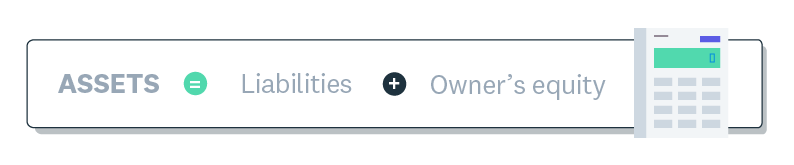
The accounting equation
For something to qualify as an asset, it must meet three criteria: your business must own or control it, it must have measurable economic value, and it must be expected to provide future benefit. Under International Financial Reporting Standards (IFRS), which apply to many Irish businesses, an asset is defined as a present economic resource controlled by the entity as a result of past events. This means the asset must exist now, not just be anticipated.
Assets and the accounting equation
The accounting equation is the foundation of double-entry bookkeeping: assets = liabilities + owner’s equity. This formula shows the relationship between what your business owns and what it owes.
For you as a business owner, the equation reveals your stake in the business. If you subtract liabilities from assets, you get owner’s equity, the portion of the business that belongs to you after all debts are settled.
Types of assets
Assets fall into several categories depending on how quickly they convert to cash, whether they have physical form, and how they’re used in your business. Understanding these classifications helps you analyse your financial position more accurately.
- Current assets: resources you expect to use or convert to cash within 12 months, such as cash, inventory, and amounts owed by customers
- Fixed (non-current) assets: long-term resources held for more than a year, such as property, equipment, and vehicles
- Tangible assets: physical items you can touch, including machinery, buildings, and stock
- Intangible assets: non-physical assets with value, such as patents, trademarks, copyrights, and goodwill
- Operating assets: resources used in day-to-day business operations, like equipment and inventory
- Non-operating assets: resources not essential to core operations, such as investment property or surplus cash held in savings
Examples of assets
Assets vary widely depending on your industry, but most small businesses hold a mix of current and fixed assets. Here are common examples grouped by category.
- Cash and bank balances
- Accounts receivable (money customers owe you)
- Inventory and stock
- Prepaid expenses (rent or insurance paid in advance)
- Office equipment and furniture
- Vehicles
- Property and land
- Machinery
- Patents and trademarks
- Goodwill (the premium paid when acquiring another business)
How assets are valued and depreciated
Assets can be valued in different ways depending on the purpose. The two most common methods are historical cost (the original purchase price) and market value (what the asset would sell for today).
Tangible assets like equipment and vehicles lose value over time through depreciation. Depreciation spreads the cost of an asset over its useful life, reducing its book value each year. For example, a delivery van bought for €30,000 with a five-year useful life might depreciate by €6,000 annually.
Intangible assets with a limited lifespan, such as patents, are reduced in value through amortisation. This works similarly to depreciation but applies to non-physical assets.
How assets appear on the balance sheet
On the balance sheet, assets are listed in order of liquidity, with the most liquid items first. Liquidity refers to how quickly an asset can be converted to cash.
Current assets appear at the top, starting with cash and moving through accounts receivable, inventory, and prepaid expenses. Fixed assets follow, listed from most to least liquid. This ordering helps you and potential lenders quickly assess how much cash or near-cash your business holds.
Why assets matter for your business
Your assets directly affect your business’s financial health and growth potential. They determine your solvency, which is your ability to meet long-term obligations, and influence how lenders and investors view your business.
When applying for a loan, lenders assess your assets to gauge repayment ability. Strong asset holdings can improve your chances of securing finance at favourable terms. Assets also support better decision-making by giving you a clear picture of what resources you have available to invest, expand, or weather slow periods. Tracking your assets over time helps you measure business net worth and monitor whether your financial position is improving.
Manage your assets with Xero
Keeping track of your assets helps you understand your business’s true value and make informed financial decisions. With cloud accounting software, you can record, categorise, and monitor your assets in one place, giving you a clear view of what you own and how it contributes to your bottom line. To see how Xero can help you stay on top of your finances, get one month free and explore the platform for yourself.
FAQs on assets
Here are answers to common questions about assets in accounting.
What is the difference between current and fixed assets?
Current assets are short-term resources you expect to use or convert to cash within 12 months. Fixed assets are long-term resources, such as property or equipment, that you hold for more than a year and use to generate income over time.
What is the difference between tangible and intangible assets?
Tangible assets have physical form, like vehicles or machinery. Intangible assets lack physical substance but still hold value, such as brand recognition, customer relationships represented by goodwill, or intellectual property like patents.
Are employees considered an asset?
No. While employees add value to a business, they cannot be owned or controlled in the way accounting standards require. People are not recorded on the balance sheet because a business cannot guarantee their future economic benefit.
How are assets valued on financial statements?
Most assets are initially recorded at historical cost, the amount you paid to acquire them. Over time, tangible assets are adjusted for depreciation, and some assets may be revalued to fair market value depending on the accounting standards your business follows.
Why do assets matter for a small business?
Assets show what your business owns and can use to generate income or settle debts. A healthy asset base supports loan applications, helps you plan for growth, and gives you a clearer picture of your overall financial position.
Related terms
Learn more about assets
Handy resources
Advisor directory
You can search for experts in our advisor directory
Xero Small Business Guides
Discover resources to help you do better business
Fixed assets in Xero
Manage your fixed assets with easy-to-use accounting software
Disclaimer
This glossary is for small business owners. The definitions are written with their requirements in mind. More detailed definitions can be found in accounting textbooks or from an accounting professional. Xero does not provide accounting, tax, business or legal advice.