Cash vs accrual accounting
Learn how cash and accrual accounting differ and how to choose the right method for your South African business.
Published Wednesday 12 August 2026
Table of contents
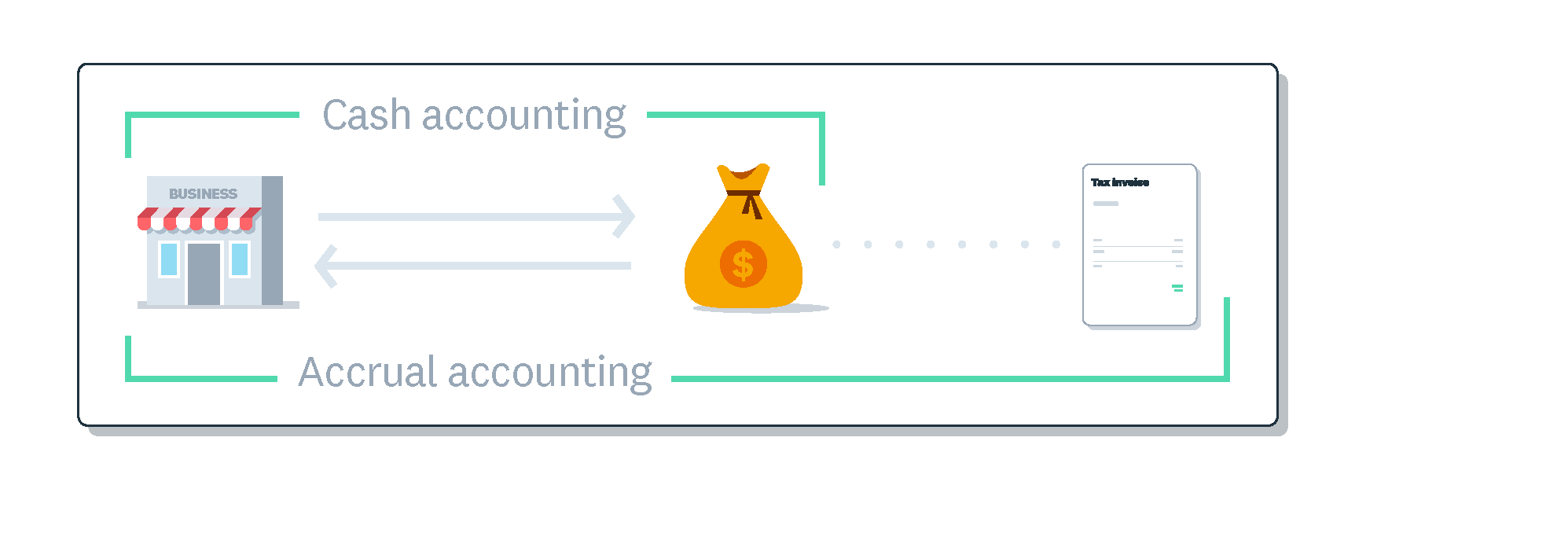
Cash accounting focuses only on cash changing hands, not outstanding bills or invoices.
Key takeaways
- Cash basis accounting records income and expenses when money changes hands, while accrual accounting records them when they are earned or owed, regardless of payment timing.
- Cash accounting is simpler and shows your real-time cash position, while accrual accounting gives a fuller picture of your financial health over time.
- In South Africa, VAT vendors account for VAT on the invoice basis by default, and only limited vendors may apply to SARS to use the payments basis, while company financial statements follow accrual-based IFRS or IFRS for SMEs.
- If your business is growing, carries inventory, or needs financing, accrual accounting is usually the better long-term fit.
What is cash basis accounting?
Cash basis accounting records revenue when you receive payment and expenses when you pay them. It's the simpler of the two methods and focuses on the actual cash flowing in and out of your business.
Most freelancers, sole proprietors, and small service businesses start with cash basis accounting. It's straightforward and doesn't require tracking unpaid invoices or bills separately. If you're just getting started, our guide to small business bookkeeping covers the essentials.
Here's a quick example. Say you're a freelance designer and you finish an R5,000 project in March, but your client pays you in April. With cash accounting, you'd record that R5,000 as April income, because that's when the money reached your bank account.
The same logic applies to expenses. If you buy R500 in software in June but pay the bill in July, you'd record the expense in July.
What is accrual accounting?
Accrual accounting records revenue when you earn it and expenses when you incur them, even if no money has changed hands yet. It gives you a fuller picture of your financial commitments at any point in time.
Growing businesses, companies that carry inventory, and any business that reports under IFRS or IFRS for SMEs typically use accrual accounting. It's also the method most investors and lenders expect to see, and it sits behind good accounting basics.
Using the same example, you finish an R5,000 design project in March and get paid in April. With accrual accounting, you'd record the R5,000 as March income, because that's when you earned it. The payment date doesn't change when the revenue is recognised.
For expenses, that R500 software purchase in June gets recorded in June, even if you don't pay until July. Your books reflect the obligation as soon as it exists.
Cash vs accrual accounting: key differences
The core difference between cash and accrual accounting comes down to timing. Here's how they compare across four key areas.
Timing of revenue and expense recognition
The biggest difference is when each method records a transaction.
- Cash basis records transactions when money is received or paid
- Accrual basis records transactions when they're earned or incurred
- This timing gap can create very different financial snapshots of the same business
Financial accuracy
Each method paints a different picture of how your business is performing.
- Cash basis shows your actual bank balance but may miss money you're owed or bills you haven't paid
- Accrual basis gives a more complete view of profitability by matching revenue with the expenses that created it
- Accrual is generally seen as more accurate for measuring business performance over time
Complexity
The two methods require different levels of bookkeeping effort.
- Cash basis is simpler to set up and maintain, especially for small businesses without an accountant
- Accrual basis requires tracking money you're owed and bills you owe, plus adjusting entries
- Cloud accounting software like Xero makes accrual accounting much easier to manage day to day
Reporting standards
Your choice of method also affects whether your financials meet formal reporting standards.
- Cash basis isn't used for company financial statements under IFRS
- IFRS and IFRS for SMEs are accrual-based, so registered companies report on the accrual basis
- Businesses seeking outside investment or loans usually need accrual-based financials
Cash vs accrual accounting in South Africa
In South Africa, the cash versus accrual choice shows up most clearly in how you account for VAT and how you prepare your company's financial statements.
For VAT, registered vendors account on the invoice basis by default, recognising VAT when an invoice is issued or received, much like accrual accounting. Only limited categories, such as sole proprietors and other natural persons whose taxable supplies do not exceed R2.5 million in a 12-month period, may apply to use the payments basis, which is limited to those categories; it accounts for VAT only when money is actually received or paid, so companies, close corporations, and trusts don't qualify and use the invoice basis instead.
For company accounts, South African companies report under IFRS or IFRS for SMEs, as set out in the Companies Act 71 of 2008 and applied according to a company's public interest score. Both frameworks are accrual-based, so once you operate through a company you will generally prepare accrual-based financial reports, even if you track day-to-day cash separately.
VAT is charged at a standard rate of 15%, and from 1 April 2026 you must register for VAT once your taxable turnover passes R2.3 million in any consecutive 12-month period, according to the South African Revenue Service.
Pros and cons of cash accounting
Cash accounting has clear strengths for small and simple businesses, but it also has limits that can hold you back as you grow.
Advantages of cash accounting
Cash accounting keeps things simple for day-to-day operations.
- Simple to set up and maintain with minimal bookkeeping knowledge
- Shows exactly how much cash you have right now
- Gives you some flexibility on timing by controlling when you receive payments or pay bills
- Works well for businesses with straightforward, pay-as-you-go transactions
Disadvantages of cash accounting
The simplicity of cash accounting comes with some trade-offs.
- Doesn't show money your customers owe you or bills you haven't paid yet
- Can make profitable months look unprofitable, and the reverse, depending on payment timing
- Not suitable for company financial statements under IFRS, which can limit your options for financing or partnerships
- Harder to plan ahead because your books don't reflect future financial commitments
Pros and cons of accrual accounting
Accrual accounting gives you a more detailed financial picture, though it does come with added complexity.
Advantages of accrual accounting
Accrual accounting offers benefits that support long-term growth.
- Matches revenue with the expenses that generated it, giving a truer view of profitability
- Meets IFRS and IFRS for SMEs standards, which investors, lenders, and partners often require
- Makes it easier to spot trends and plan for the future
- Scales with your business as transactions get more complex
Disadvantages of accrual accounting
Accrual accounting does require more hands-on management.
- More complex to set up and maintain, especially without accounting software
- Your profit and loss statement might show strong revenue while your bank balance is low
- Requires tracking money owed to you and by you, plus period-end adjustments
- May need professional help to manage correctly, which adds to your costs
How to choose the right accounting method
The right method depends on your business today and where you want it to go. Think about these five factors before you decide.
Business size and growth plans
If you're a freelancer or sole proprietor with simple finances, cash basis is often enough. If you're planning to hire, expand, or take on bigger projects, accrual gives you a stronger foundation.
Inventory
If your business buys and sells products, accrual accounting tracks the cost of your inventory properly and matches it against sales. This is one of the clearest triggers for moving to accrual.
Your VAT accounting basis
If you're a registered VAT vendor, your basis is largely set for you. Most vendors account on the invoice basis, which lines up with accrual accounting, while only eligible vendors may apply to SARS for the payments basis, which lines up with cash accounting.
Financing and lender expectations
Banks and investors typically want to see accrual-based financial statements. If you're planning to apply for a business loan, seek funding, or bring on partners, accrual accounting makes your financials more credible.
Reporting requirements
If your business structure requires formal financial statements, accrual is your only option. This applies to registered companies reporting under IFRS or IFRS for SMEs.
When to switch from cash to accrual accounting
Many small businesses start with cash accounting and move to accrual as they grow. Here are a few signs it might be time to make the change.
Signs it's time to switch to accrual
Watch for these indicators that cash accounting no longer fits your needs.
- You're carrying inventory and need to track the cost of goods sold
- Your taxable turnover is approaching the R2.3 million VAT registration threshold
- You're applying for business loans or looking for investors
- Your cash flow timing makes it hard to see true profitability
- You need formal financial statements for contracts or partnerships
How to make the switch
Switching method takes a bit of planning so that nothing is counted twice or missed. For VAT, you apply to SARS to move between the invoice and payments basis, and only if you qualify for the basis you want.
For your company accounts, apply your IFRS or IFRS for SMEs framework consistently from one year to the next. It helps to plan the change at the start of a new financial year and to work with an accountant. Cloud accounting software like Xero can make the transition smoother by tracking what you're owed and what you owe from day one.
Track your finances with confidence using Xero
Whether you use cash or accrual accounting, the right software makes managing your books faster and easier. Xero gives you real-time visibility into your finances, automates everyday tasks like bank reconciliation and invoicing, and grows with your business as your needs change. Sign up to get one month free and see your numbers update as you work.
FAQs on cash vs accrual accounting
Here are answers to frequently asked questions about cash vs accrual accounting.
Is IFRS accrual or cash basis?
IFRS and IFRS for SMEs are accrual-based, so revenue and expenses are recorded when they're earned or incurred rather than when cash moves. South African companies preparing formal financial statements report on the accrual basis, as set out in the IFRS jurisdiction profile for South Africa.
Which VAT basis should a South African small business use?
Most VAT vendors use the invoice basis, which is the default and lines up with accrual accounting. Eligible vendors, mainly sole proprietors and other natural persons under the turnover limit, can apply to SARS for the payments basis, which can ease cash flow when customers pay slowly.
Can you switch from cash to accrual accounting?
Yes. For VAT you apply to SARS to change your accounting basis, and for company accounts you apply your reporting framework consistently. It's best to make the switch at the start of a new financial year and to work with an accountant.
What is modified cash basis accounting?
Modified cash basis is a hybrid that records day-to-day transactions on a cash basis but uses accrual methods for longer-term items like fixed assets and loans. It isn't a formal reporting framework, but some small businesses find it a practical middle ground.
Do banks prefer cash or accrual accounting?
Banks generally prefer accrual accounting when reviewing loan applications, because accrual-based financials give a more complete picture of your revenue, expenses, and overall financial health. Having accrual-based statements can strengthen your application.
Related terms
Learn more about small business accounting
Handy resources
Advisor directory
You can search for experts in our advisor directory
Xero Small Business Guides
Discover resources to help you do better business
Financial reporting
Keep track of your performance with accounting reports
Disclaimer
This glossary is for small business owners. The definitions are written with their requirements in mind. More detailed definitions can be found in accounting textbooks or from an accounting professional. Xero does not provide accounting, tax, business or legal advice.