Operating profit (calculation)
Learn what operating profit is, the formula, and how to calculate it with a simple worked example.
Published Monday 17 August 2026
Table of contents

How to calculate operating profit
Key takeaways
- Operating profit is what your business earns from its core operations, worked out as gross profit minus operating expenses, including depreciation and amortisation.
- It leaves out interest and tax, which is why it's often called earnings before interest and tax (EBIT).
- Operating profit margin shows operating profit as a percentage of revenue, so you can compare performance over time and against similar businesses.
- Tracking operating profit shows how efficient your everyday operations are, separate from how the business is financed or taxed.
What is operating profit?
Operating profit is the profit your business makes from its everyday trading activities, before interest and tax. It's also called operating income, and it shows how much you keep once the direct costs of what you sell and your running costs are covered.

Because it strips out financing and tax, operating profit is a clear measure of how well your core business performs on its own.
The operating profit formula
The operating profit formula is: operating profit = gross profit minus operating expenses (including depreciation and amortisation). To use it, you'll work with a few figures:
- Revenue: the total money your business earns from sales before any costs
- Cost of goods sold: the direct costs of producing your goods or delivering your services
- Gross profit: revenue minus cost of goods sold
- Operating expenses: your day-to-day running costs, such as rent, utilities, wages and marketing
Handy resources
Advisor directory
You can search for experts in our advisor directory
Financial reporting
Keep track of your performance with accounting reports
Depreciation and amortisation count as operating expenses, while interest on loans is left out because it relates to how the business is financed rather than how it trades.
How to calculate operating profit
You can calculate operating profit for any period in three steps:
- Work out your gross profit by subtracting cost of goods sold from revenue.
- Add up your operating expenses for the same period, including depreciation and amortisation.
- Subtract those operating expenses from gross profit to get your operating profit.
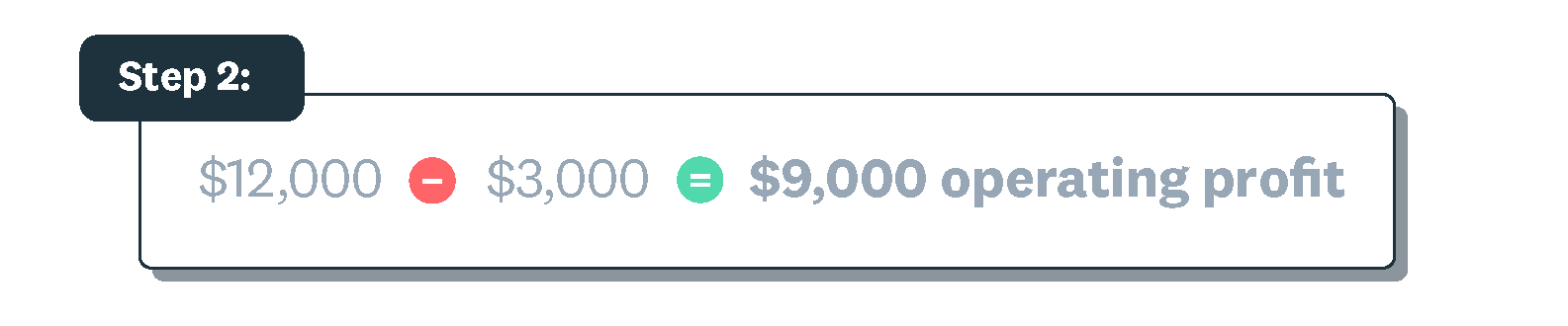
Here's a simple example. Say your business sold $20,000 worth of products or services. It cost $8,000 to provide them, and you spent another $3,000 on running costs like rent, electricity and phone charges. Your figures work out like this:
- Gross profit: $20,000 − $8,000 = $12,000
- Operating profit: $12,000 − $3,000 = $9,000
Once you know your operating profit, you can measure profitability across different parts of your business and track how it changes.
What is operating profit margin?
Operating profit margin turns operating profit into a percentage of revenue, which makes it easier to compare periods or businesses of different sizes. The formula is: operating profit margin = (operating profit ÷ revenue) × 100.
Using the figures above, that's ($9,000 ÷ $20,000) × 100 = 45%. In other words, your business keeps 45 cents of operating profit from every dollar of sales. For a fuller look at how this sits alongside gross and net margins, see the guide to operating profit margin and other margin types.
Why operating profit matters for your business
Operating profit shows how well your core business performs, separate from financing and tax decisions. Tracking it helps you:
- see how efficient your operations are over time
- compare your performance against similar businesses
- spot whether rising costs are eating into your trading profit
- guide decisions on pricing, costs and investment
You'll find the figures you need on your income statement, which sets out revenue, costs and profit for the period.
Operating profit vs other profit measures
Operating profit sits between gross profit and net profit on your income statement. Comparing it with the measures around it helps you read your numbers with more confidence.
Operating profit vs gross profit
Gross profit subtracts only your cost of goods sold from revenue. Operating profit goes further, also subtracting operating expenses like rent, wages and utilities, so it reflects the full cost of running the business. Tracking your gross profit margin alongside operating profit shows where costs build up.
Operating profit vs net profit
Net profit is your bottom line. It takes operating profit and subtracts interest and tax, leaving the amount you actually keep. A business can post a healthy operating profit yet a much smaller net profit once loan interest and tax are paid.
Operating profit vs EBIT and EBITDA
Operating profit is often called EBIT, since both measure earnings before interest and tax. They can differ when a business has income from outside its core operations, which EBIT may include. EBITDA goes one step further by adding back depreciation and amortisation. After tax, operating profit becomes net operating profit after tax (NOPAT).
What operating profit does not include
Operating profit measures only your core trading, so several items are deliberately left out:
- interest on loans and other financing costs
- income tax
- one-off gains, such as selling equipment or property
- investment or interest income from outside your core business
Because it ignores interest and debt, a positive operating profit doesn't guarantee a net profit. A business with heavy borrowing can trade profitably yet still lose money once financing costs are counted.
Track operating profit with Xero
Working out operating profit by hand each month takes time and leaves room for error. Xero pulls your revenue and expenses into clear, up-to-date reports, so you can see your operating profit and margin without manual sums. Start with Xero and get one month free to keep a real-time view of how your business is performing.
FAQs on operating profit
Here are quick answers to common questions about operating profit.
Is operating profit the same as operating income?
Yes. The two terms mean the same thing: the profit from your core business operations before interest and tax.
Is operating profit the same as EBIT?
Usually, but not always. Operating profit counts only trading activities, while EBIT can also include income from outside your core operations, such as interest earned.
What's the difference between operating profit and net profit?
Operating profit is what you earn before interest and tax. Net profit is what remains after those are deducted, so it's always the smaller figure.
What is a good operating profit margin?
There's no single figure, as a healthy margin varies by industry. Compare yours with similar businesses and track whether it's improving over time.
What does operating profit not include?
It leaves out interest, tax, one-off asset sales and any income from outside your core operations.
Why does operating profit matter?
It shows how profitable your everyday operations are, separate from financing and tax, so you can judge how efficiently the business runs.
Related terms
Learn more about operating profit
Handy resources
Advisor directory
You can search for experts in our advisor directory
Profit & Loss template
Download Xero’s profit and loss statement template to show how much money you business is making
Financial reporting
Keep track of your performance with accounting reports
Disclaimer
This glossary is for small business owners. The definitions are written with their requirements in mind. More detailed definitions can be found in accounting textbooks or from an accounting professional. Xero does not provide accounting, tax, business or legal advice.