Cost of sales: what it is and how to calculate it
Learn what cost of sales includes, how to calculate it and how it differs from expenses, with worked peso examples.
Written by Lena Hanna—Trusted CPA Guidance on Accounting and Tax. Read Lena's full bio
Published Tuesday 6 October 2026
Table of contents
Key takeaways
- Cost of sales is the direct cost of producing and delivering what you sell. It’s also called cost of goods sold (COGS) and leaves out overheads such as rent and marketing.
- For businesses that hold stock, the figure equals beginning inventory plus purchases minus ending inventory. Service businesses add up direct labour, supplies and other delivery costs instead.
- Cost of sales sits above gross profit on your income statement, and operating expenses sit below it. Keeping them apart shows how much each sale really earns.
- Knowing your cost of sales helps you set prices that protect your margin. A 50% markup and a 50% margin lead to very different prices.
What is cost of sales?
Cost of sales is the total direct cost of producing or buying the goods and services you sell in a period. It covers items like stock, materials and delivery labour, and excludes overheads such as rent and marketing.
Picture a milk tea stall. The tea, milk, pearls and cups in each drink are cost of sales, while the stall’s monthly rent is an overhead.
You’ll also see it called cost of goods sold. Product businesses tend to say COGS, while service and mixed businesses often prefer the broader label.
Philippine companies use full Philippine Financial Reporting Standards (PFRS), PFRS for SMEs or PFRS for Small Entities, each adopted from International Accounting Standards Board rules. Under full PFRS, Philippine Accounting Standard (PAS) 2 Inventories is the local version of International Accounting Standard (IAS) 2, as IAS Plus’s Philippines profile shows. Under IAS 2 Inventories, you expense the cost of stock sold in the same period as the related revenue.
What counts as a direct cost depends on what you sell:
- Retailers count the stock they buy, plus packaging and shipping
- Service providers count contractor fees and the software used to deliver client work
- Manufacturers count raw materials, production labour and equipment use
- Food businesses count ingredients and takeaway packaging
What’s included in cost of sales?
Cost of sales includes any cost directly tied to making or delivering what you sell, such as materials, production labour and freight. Costs you’d pay regardless of sales, like office rent and admin salaries, belong in operating expenses.
These costs usually count as direct:
- Direct materials and stock purchases
- Direct labour for staff who make products or deliver services
- Production supplies used up in making goods
- Freight and shipping to bring stock in or send orders out
- Packaging for the products you sell
These costs go under operating expenses instead:
- Marketing and advertising
- Salaries for admin and management staff
- Office rent and utilities
- General office supplies
Some costs could go either way, depending on how closely they link to sales or production. Common grey areas include:
- Sales commissions paid on each sale
- Maintenance for production equipment
- Quality control checks within the delivery process
- Payment processing fees on customer orders
Choose a treatment for each grey-area cost, write it down and apply it the same way every period. That consistency lets you compare margins month to month with confidence.

How do you calculate cost of sales?
For businesses that hold stock, cost of sales = beginning inventory + purchases − ending inventory. Service businesses add up direct labour, direct supplies and other delivery costs for the period.
The inventory formula works because any stock you started with or bought, and no longer have, has left the business, mostly through sales. Solid inventory accounting keeps each of these inputs accurate.
Follow these steps to work it out for any period:
- Choose the period you’re measuring, such as a month, quarter or financial year
- Find your beginning inventory at cost, which matches last period’s closing stock value
- Add the cost of all stock purchases and direct costs in the period, including inbound freight
- Count your ending inventory on the last day and value it at cost
- Subtract ending inventory from the total to get your cost of sales
Once you have the total, subtract it from revenue for the same period to find gross profit. The core formula shifts slightly depending on how your business makes money.
Retailers and resellers
Retailers use the inventory formula directly: beginning inventory + purchases − ending inventory. If your accounting policy treats them as direct selling costs, also add shipping, packaging and payment processing fees.
Manufacturers and food producers
Manufacturers add raw materials + direct labour + manufacturing overhead, then adjust for changes in inventory. Overhead here means production costs such as factory utilities and machine depreciation, with head office costs left out. Adjusting for opening and closing work in progress and finished goods means you only count the cost of items actually sold.
Service providers and agencies
Service businesses calculate direct labour + direct materials and supplies + other direct delivery costs. Count wages only for time spent on client work, plus contractor fees and any software bought for specific projects.
What’s the difference between cost of sales and expenses?
Cost of sales covers costs directly tied to the products or services you sell, while operating expenses cover the cost of running the business overall. Both reduce profit, and they sit in different places on your income statement.
Direct costs typically include:
- Stock bought for resale
- Raw materials and production supplies
- Wages for production or delivery staff
- Inbound freight and product packaging
Operating expenses typically include:
- Rent for offices and shopfronts
- Wages for admin and sales management
- Marketing and advertising
- Utilities, insurance and accounting fees
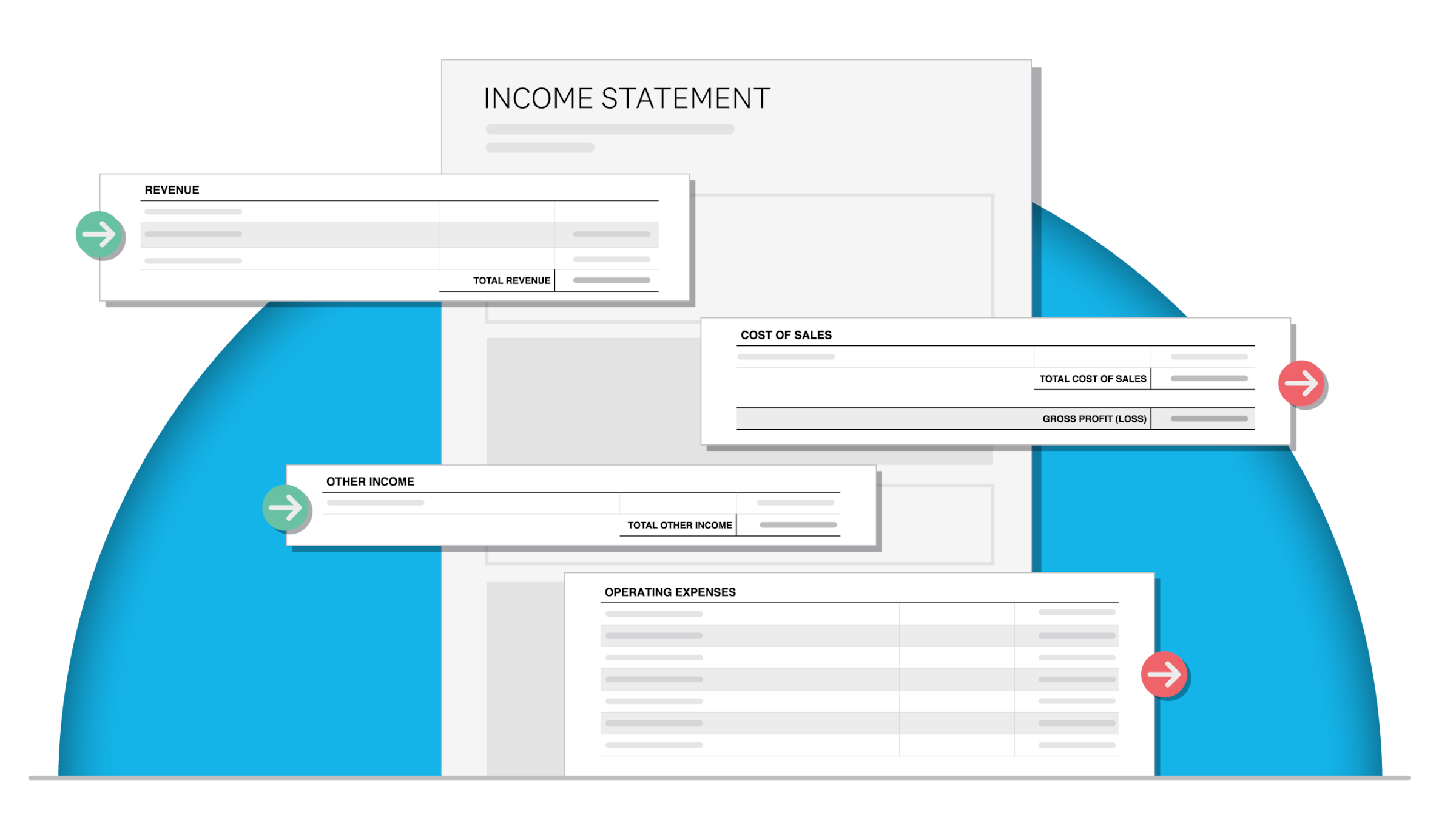
On the income statement, cost of sales sits directly below revenue and above gross profit. Operating expenses come after that line, and subtracting them along with taxes gets you to net profit.
When you’re unsure where a cost belongs, picture a month with zero sales. If the cost would drop away, it’s likely a direct cost; if you’d still pay it, treat it as an operating expense.
Cost of sales examples
These worked examples apply the formulas to a sari-sari store, a homeware shop and a digital agency. All figures are in Philippine pesos (₱).

Sari-sari store using the inventory formula
A neighbourhood sari-sari store starts the month with ₱80,000 of stock at cost and buys another ₱150,000. At month end, the remaining stock is worth ₱60,000 at cost.
₱80,000 + ₱150,000 − ₱60,000 = ₱170,000 cost of sales
With revenue of ₱250,000, gross profit is ₱250,000 − ₱170,000 = ₱80,000. That’s a gross profit margin of 32% (₱80,000 ÷ ₱250,000).
Homeware shop pricing a pottery cup
A homeware shop buys handmade pottery cups from a supplier for ₱150 each, then pays ₱30 in freight and ₱20 in packaging per cup. Each cup costs ₱150 + ₱30 + ₱20 = ₱200.
To earn a 50% gross margin, the shop needs to price each cup at ₱400, keeping ₱200 of gross profit per sale. The formula is price = cost ÷ (1 − target margin), so ₱200 ÷ 0.5 = ₱400.
A ₱300 price gives a 50% markup on cost but a 33% margin, because the ₱100 profit is a third of the selling price. Markup measures profit against cost, while margin measures it against price.
Digital agency using direct service costs
A digital agency’s direct costs for one month are ₱60,000 in contractor fees, ₱90,000 in wages for staff delivering client work and ₱10,000 in project software.
₱60,000 + ₱90,000 + ₱10,000 = ₱160,000 cost of sales
With ₱300,000 in revenue, gross profit is ₱140,000, a gross margin of about 47% (46.7%). The agency’s office rent and admin salaries sit below gross profit as operating expenses.
Why is cost of sales important?

Cost of sales sets the baseline for your profit, showing how much of each peso of revenue remains after covering what you sold. Knowing it lets you set prices with confidence and see which products or services earn the most.
Every peso you save here flows straight to gross profit, and your profit margin grows with it. A monthly review helps you spot rising supplier prices or freight charges early.
It also shapes pricing. As the pottery cup shows, knowing your true unit cost lets you price for the margin you want.
Fixed and variable costs in cost of sales
Most direct costs are variable costs that rise and fall with how much you sell. Others are fixed costs that stay the same each month regardless of volume.
Common variable examples include:
- Raw materials and stock purchases
- Packaging for each order
- Freight charged per shipment
- Contractor fees billed by the hour or project
Common fixed examples include:
- Leases on production equipment
- Salaries for full-time production supervisors
- Monthly subscriptions for delivery software
- Depreciation on manufacturing machinery
Splitting costs this way shows how profit changes as volume grows. Your marginal cost, the extra cost of producing one more unit, comes from variable costs, so it guides decisions on bulk orders and discounts.
Track your cost of sales with Xero
Knowing what each sale costs you shows what it earns and where to adjust prices or suppliers. Xero brings these numbers together, so you spend less time on spreadsheets and more time running your business.
With Xero job costing, you can track labour, materials and expenses against each project and see its profitability as work progresses. Xero’s inventory management tools track stock levels and costs, so your numbers stay current as you buy and sell.
Choose a plan and get one month free to see your margins clearly from day one.
FAQs on cost of sales
Here are quick answers to common questions on this topic.
Is cost of sales the same as COGS?
Yes, both terms describe the same thing, and some businesses label the line “cost of revenue” instead. Pick one label and use it consistently so your accountant and lenders can compare periods easily.
Does cost of sales include labour?
Yes, when the labour goes directly into making products or delivering services. If a team member splits time between client work and admin, track their hours and include just the delivery portion.
Is cost of sales an expense on the income statement?
Yes, it’s an expense, reported on its own line straight after revenue and separate from operating expenses. Stock you haven’t sold yet stays on your balance sheet as an asset until the sale happens.
How can I reduce my cost of sales?
Negotiate with suppliers, test alternative materials, cut production waste and consider outsourcing, starting with your highest-volume products. Saving ₱10 on each ₱200 pottery cup across 500 monthly sales adds ₱5,000 to gross profit, a practical way to increase profits.
Disclaimer
Xero does not provide accounting, tax, business or legal advice. This guide has been provided for information purposes only. You should consult your own professional advisors for advice directly relating to your business or before taking action in relation to any of the content provided.
Start using Xero for free
Access Xero features for 30 days, then decide which plan best suits your business.