Pro forma invoice: what it is, when and why to use it
Discover how a proforma invoice speeds up sales, sets clear terms, and improves cash flow.

Written by Jotika Teli—Certified Public Accountant with 24 years of experience. Read Jotika's full bio
Published Thursday 2 April 2026
Table of contents
Key takeaways
- Use pro forma invoices when customers need formal documentation before finalising a sale, particularly for import duties, corporate procurement approvals, or financing arrangements.
- Label your document clearly as "Pro Forma Invoice" at the top and avoid recording it in your accounts receivable since it doesn't represent money owed to your business.
- Include all essential details like buyer and seller information, itemised products with pricing, terms of sale, and a reference number for tracking, but never assign an official invoice number.
- Wait for customer confirmation before processing orders or shipping products, as pro forma invoices aren't legally binding and the sale isn't final at this stage.
What is a pro forma invoice?
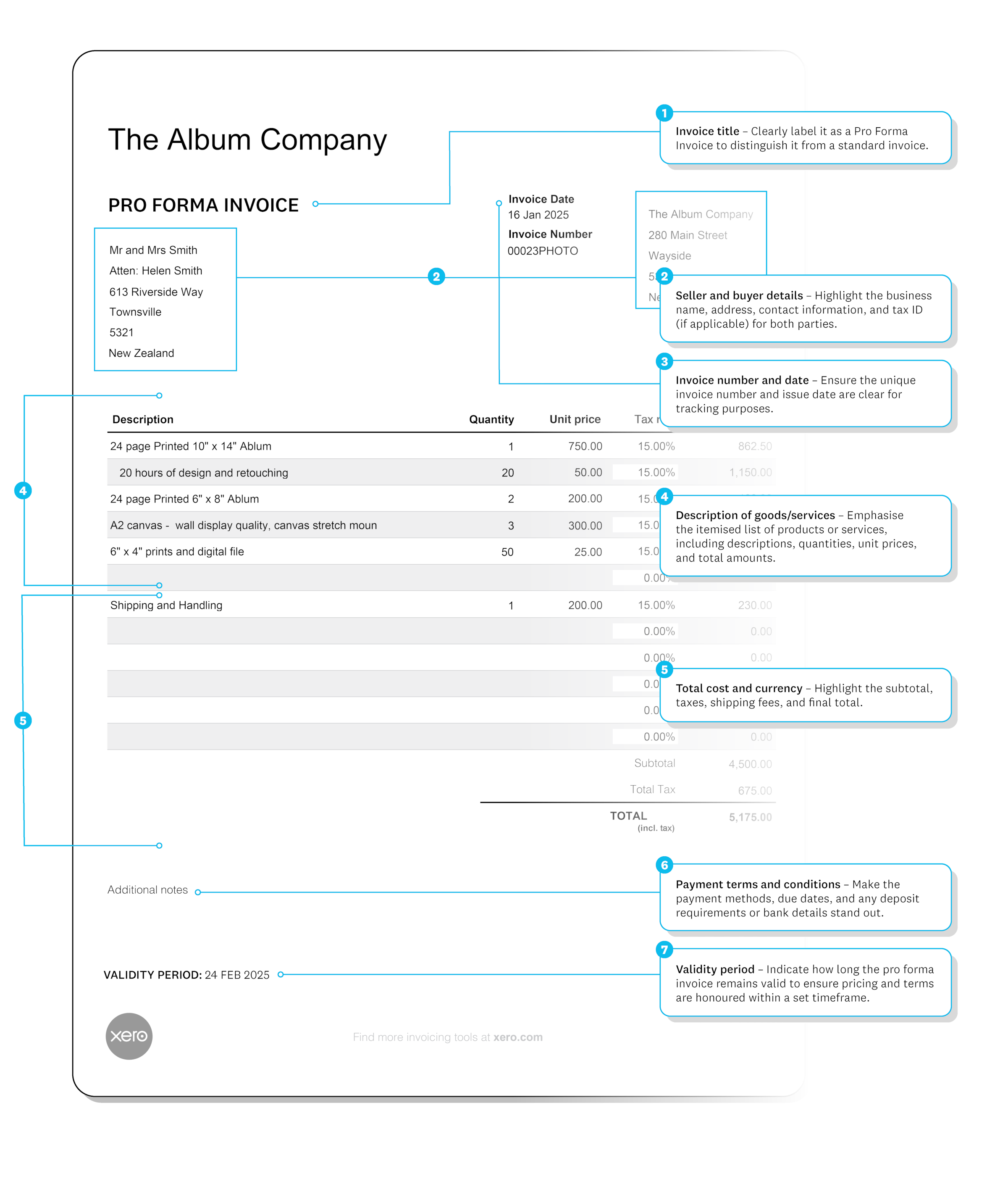
A pro forma invoice is a preliminary bill of sale sent to a buyer before a transaction is finalised. It outlines the products and prices involved but doesn't request payment.
Unlike a standard invoice, a pro forma invoice:
- has no invoice number or due date
- isn't recorded as accounts receivable
- doesn't represent money owed to your business
Think of it as a detailed preview of what the final invoice will look like once both parties agree to the sale.
When to send a pro forma invoice
Send a pro forma invoice when a customer requests one, typically after you've agreed on a quote but before the sale is finalised.
Customers commonly request pro forma invoices to:
- calculate import duties: customs authorities may require cost details before clearing goods. For example, U.S. Customs and Border Protection uses pro forma invoices to assess duty and examine goods, though you'll need to provide a final commercial invoice later.
- meet procurement requirements: corporate buyers often need formal documentation for internal approvals
- arrange financing: lenders may require a pro forma invoice before releasing funds for a purchase
If your customer is an importer, ask whether they need a pro forma invoice before shipping.
The sale isn't final at this stage. Wait for your customer's confirmation before processing the order, shipping products, or issuing a final sales invoice.
Three common reasons for issuing a pro forma invoice
Pro forma invoices serve specific purposes in business transactions. Here are three common reasons to issue one:
- Financing arrangements: Buyers use pro forma invoices to confirm order costs and secure funding before completing a purchase.
- Customs clearance: Pro forma invoices state the value of imported goods for customs authorities. Without this documentation, goods may not clear customs in some countries.
- Procurement processes: Corporate buyers often request pro forma invoices because procurement teams consider them more definite than quotes for internal approval workflows. In many cases, such as when you don't yet have a commercial invoice, Customs and Border Protection (CBP) accepts a pro forma, making it a trusted document for official processes.
What should a pro forma invoice look like?
A pro forma invoice looks similar to a regular invoice, but you must clearly label it "Pro Forma Invoice" at the top.
Include the following information:
- Buyer and seller details: names, addresses, and contact information for both parties
- Product descriptions: itemised list of goods or services with quantities
- Pricing: unit prices, totals, and any applicable taxes or fees
- Terms of sale: payment terms, delivery conditions, and validity period
- Reference number: a tracking number for easy retrieval (this isn't an official invoice number)
For international shipments, importers may also require:
- weights and dimensions of products
- shipping costs and method
- country of origin
How is a pro forma invoice different from other invoices and quotes?
A pro forma invoice is often confused with other business documents. Here's how it differs from each:
- Sales invoice: A sales invoice requests payment after you complete a transaction. It signals that the buyer officially owes money and includes a due date. You send a pro forma invoice before finalising the sale, so it doesn't request payment or include a due date.
- Commercial invoice: A commercial invoice is a legal document for international trade that confirms a completed sale. According to the International Trade Administration (ITA), importers must always provide commercial invoices when importing goods into the United States. It includes tariff information and details about buyer and seller responsibilities. A pro forma invoice may help estimate customs duties, but it doesn't confirm a finalised transaction.
- Quote: A quote and a pro forma invoice both outline proposed prices. The difference is timing: you typically use quotes during negotiations, while you send pro forma invoices after agreeing on a deal to support customs, financing, or procurement processes.
How to create a pro forma invoice
Follow this process to create a pro forma invoice and avoid common mistakes:
- Start with a standard invoice template: Use your regular invoice format as a base.
- Label it clearly: Add "Pro Forma Invoice" at the top so your customer knows it's not a final invoice.
- Complete all required fields: Include buyer and seller details, product descriptions, pricing, and terms of sale.
- Add a reference number: Use a tracking number for easy retrieval, but don't assign an official invoice number.
- Keep it out of your accounts: Don't record the pro forma invoice in your accounts receivable ledger. The sale isn't confirmed yet, so the buyer doesn't owe you money.
If you're using Xero, check how to create a pro forma invoice without triggering a sales record. Make sure you send the correct document type to avoid recording income prematurely if your business uses accrual accounting.
Manage your invoicing with Xero
Pro forma invoices are just one part of a smooth invoicing workflow. Whether you're preparing quotes, sending final invoices, or tracking payments, the right tools help you work faster.
Xero's invoicing features help you create professional documents, track what's owed, and get paid faster. You can customise templates, automate payment reminders, and see your cash flow in real time.
Simplify your invoicing today. Get one month free and see how Xero can help your business run more smoothly.
FAQs on pro forma invoices
Still have questions about pro forma invoices? Here are answers to common concerns.
Is a pro forma invoice legally binding?
No, a pro forma invoice isn't legally binding. It's a good-faith estimate you send before finalising the sale, not a formal request for payment.
Can a pro forma invoice be cancelled?
Yes, you can cancel a pro forma invoice at any time. Since it's not a legal document or an official accounting record, you don't need a formal cancellation process if the sale doesn't proceed.
Can you turn pro forma invoices into commercial invoices?
No, you can't convert a pro forma invoice directly into a commercial invoice. While they share similar information, a commercial invoice is a legal document that includes additional trade terms, tariff details, and regulatory information required for international shipments.
How can a pro forma invoice help you?
Pro forma invoices help you work with customers who need formal documentation before completing a purchase. Importers may require them for customs clearance, corporate buyers may need them for procurement approvals, and some customers use them to arrange financing.
Is it OK to pay a pro forma invoice?
No, you shouldn't pay a pro forma invoice. It's not a binding agreement, and the final price or terms may still change. Wait for an official sales invoice before making payment.
What are the advantages of pro forma invoices?
Pro forma invoices offer three main advantages:
- Clarify expectations: Ensure both buyer and seller agree on products, prices, and terms before finalising the sale.
- Support customs clearance: Provide the documentation importers need to clear goods through customs.
- Allow flexibility: Make changes to products, services, or costs without affecting your business accounts.
Related content
What is an invoice?
Get the lowdown on invoices.
How to send an invoice
Find out when and how to send an invoice.
How to make an invoice
Let’s walk through the process of making an invoice.
Disclaimer
Xero does not provide accounting, tax, business or legal advice. This guide has been provided for information purposes only. You should consult your own professional advisors for advice directly relating to your business or before taking action in relation to any of the content provided.
Start using Xero for free
Access Xero features for 30 days, then decide which plan best suits your business.