Recession proof business guide: protect cash flow
Learn practical steps to build a recession proof business that protects cash flow and keeps customers.
Written by Lena Hanna—Trusted CPA Guidance on Accounting and Tax. Read Lena's full bio
Published Thursday 2 April 2026
Table of contents
Key takeaways
- Focus on providing essential products or services that customers need regardless of economic conditions, maintain strong cash reserves, and diversify your revenue streams to build natural recession resistance.
- Monitor your cash flow weekly and create detailed forecasts to predict shortfalls before they happen, as most businesses can only cover average outflows for about two weeks.
- Communicate price increases clearly to customers by explaining the reasons behind changes and getting the increase right the first time rather than implementing multiple smaller increases.
- Use economic downturns as opportunities to train staff properly, fix legacy problems, and improve operational efficiency while competitors struggle with defensive strategies.
What makes a business recession-proof?
A recession-proof business maintains stable revenue and operations even when the economy contracts. While no business is completely immune to economic downturns, some are more resilient than others.
Recession-proof businesses typically share these characteristics:
- Essential products or services: They provide goods or services that customers need regardless of economic conditions, such as healthcare, food, or utilities.
- Strong financial management: They maintain healthy cash reserves, monitor cash flow closely, and keep debt manageable.
- Diversified revenue streams: They don't rely on a single customer, product, or market for most of their income.
- Adaptable business models: They can quickly adjust pricing, offerings, or operations in response to changing conditions. For example, research on the COVID-19 pandemic found that businesses that adopted digital tools and e-commerce were better able to maintain operations and revenue.
- Low fixed costs: They keep overhead manageable so they can scale down without major disruption.
- Customer loyalty: They've built relationships that keep customers coming back even when budgets tighten.
Many of these characteristics can be developed over time. Even if your business isn't naturally recession-resistant, you can build resilience through better financial practices and strategic planning.
Recession-proof industries and business examples
Certain industries historically show more resilience during economic downturns, though no business is completely immune. Here are some examples:
- Healthcare and medical services: People need medical care regardless of economic conditions. Demand for healthcare remains consistent even when discretionary spending drops.
- Accounting and financial advisory: Businesses and individuals need help managing finances, especially during uncertain times. Accountants and bookkeepers often see steady demand as clients seek guidance.
- Essential retail: Grocery stores, pharmacies, and other essential retailers maintain sales because customers still need food, medicine, and household basics.
- Repairs and maintenance: Auto mechanics, plumbers, and appliance repair services stay busy because people fix what they have rather than buying new.
- Utilities and waste management: Electricity, water, and waste collection remain essential services that customers can't cut.
- Childcare and education: Working parents still need childcare, and many people invest in education and training during downturns to improve their job prospects.
- Food and beverage: Affordable dining options and comfort foods often hold up well, and small indulgences can even see increased demand. For example, during the 2008 United States recession, alcohol sales rose by 9%.
- Discount and second-hand retailers: Customers become more price-conscious during recessions, benefiting discount stores, op shops, and resale businesses.
- Professional services: IT support, legal services, and consulting often maintain demand as businesses need expert help navigating challenges.
- Death care services: Funeral homes and related services provide essential support that remains necessary regardless of economic conditions.
Even if your business isn't in one of these industries, you can apply the principles that make them resilient: providing essential value, maintaining strong finances, and building customer loyalty.
What happens during a slowdown
A slowdown occurs when consumer spending levels off. If spending declines for six months or more, it becomes a recession. Both follow predictable patterns in the economic cycle.
Marc Cowling, professor of economics and productivity at Oxford Brookes University, notes there are generally more ups than downs. "Recessions are felt for about 12–18 months, then they're followed by a two-year recovery, a four-year boom, a year of overheating, and then a new recession."
Economic slowdowns reduce customer spending, which triggers a chain reaction across your business. The first symptom is typically a drop in sales.
Xero economist Louise Southall explains how this unfolds:
- Sales decline: Customers spend less, which immediately reduces revenue and profits.
- Revenue masks problems: Businesses raising prices to cover inflation may see revenues hold up initially.
- Profits erode: When revenues stop growing as quickly as expenses, margins take a hit.
Specialist small business consultant Grant Anderson notes that dwindling profits hit cash flow next. "Money dries up and businesses tighten their belts. They start cutting costs, carrying less inventory, and limiting payroll where they can."
Inflation complicates recession planning. Mark Koziel, president of Allinial Global, explains that slowdowns eventually cool off inflation as declining sales allow supply chains to catch up with demand.
However, there's a timing gap. Sales typically drop before prices fall, so you may face shrinking revenue and high costs at the same time. Plan your cash flow accordingly.
How do businesses prepare?
Preparing for a recession means building financial resilience and operational flexibility before conditions worsen. While no business is completely recession-proof, strategic planning helps you weather the cycle and emerge stronger.
Cowling notes that exporters often fare better because they spread risk across multiple economies. For most businesses, however, preparation comes down to smart financial management and adaptability.
Our experts recommend these steps for preparing, even when juggling inflation and a tight employment market.
Expert tips for recession-proofing and inflation-proofing your business
The following sections provide detailed guidance on each of these areas.
1. Preparing for a sales downturn (recession proofing)
A sales downturn happens when customers reduce spending and become more price-conscious. For small businesses, this often means competing against larger chains that can offer lower prices.
"Covid reintroduced people to small businesses but it might have been short-lived," observes Cowling. "Customers are drifting back to the big chains that can offer lower prices."
How to protect your business against declining sales
Take these steps to maintain sales during an economic downturn:
- Match supply to current demand: Adjust your inventory and services to reflect actual demand, not what it used to be. Avoid blanket cuts across all products since they won't be affected equally.
- Watch for unexpected opportunities: Small luxury items like chocolate boomed during the 2008 financial crisis because they were affordable indulgences. Look for similar patterns in your business.
- Use customer loyalty:Small businesses built goodwill with local communities during the pandemic. Introduce locals packages or customer appreciation days to benefit from that loyalty.
- Keep marketing: Most businesses will see some sales decline, but don't stop promoting your business. Your customers are loyal and will respond to outreach.
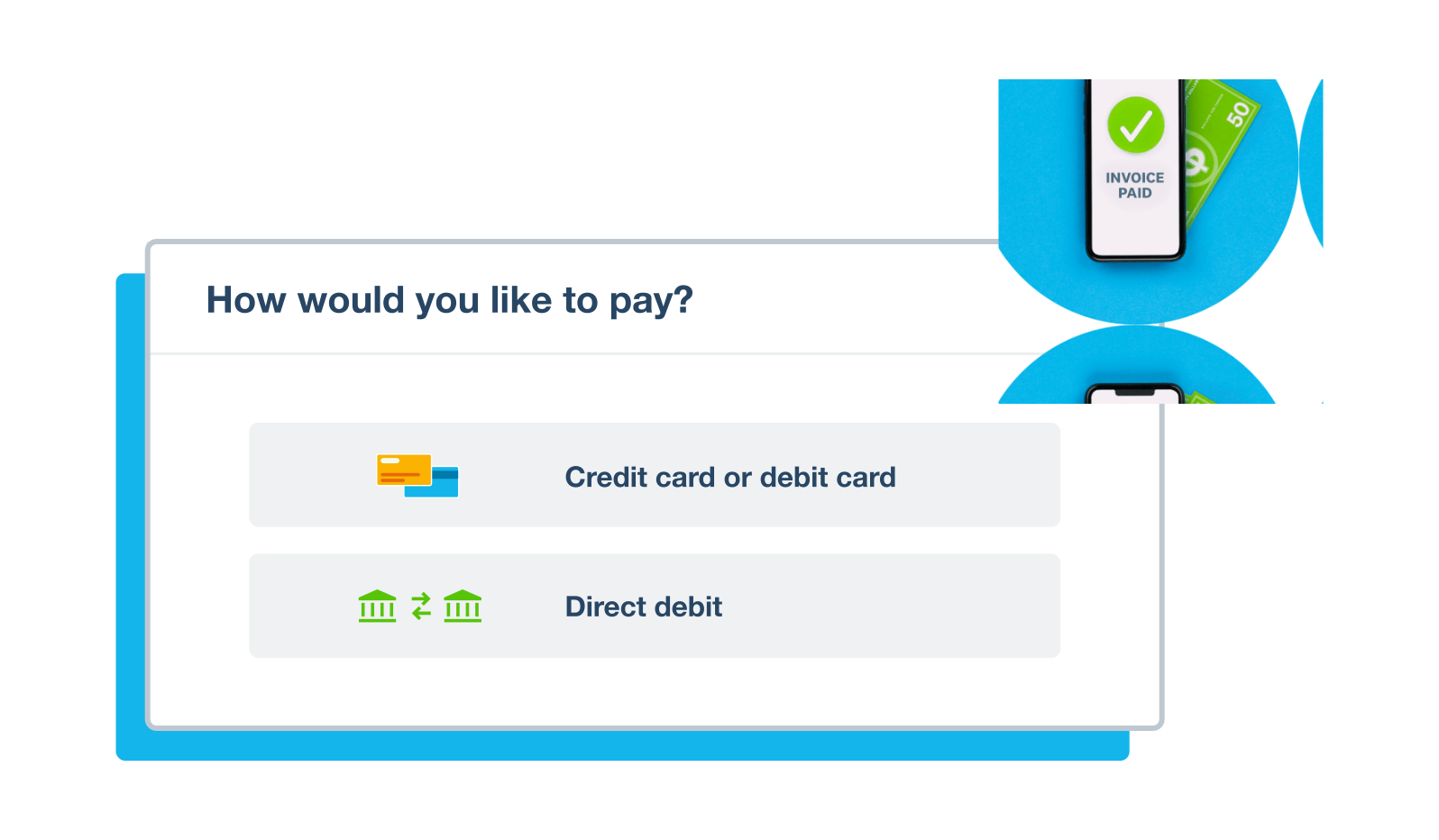
Online invoices allow customers to click straight through and pay instantly, which can reduce wait times for the vendor.
2. Coping with delayed payments (recession proofing)
Delayed payments become more common during economic downturns as customers struggle to pay on time. This creates a chain reaction that spreads through supply chains.
Xero's data shows how quickly this happens:
- 11% increase in payment wait times after the 2018 US–China trade tensions.
- 15% increase after the first Covid outbreak.
Southall notes the problem is self-perpetuating. "A business that's paid late will then struggle to pay their bills on time, and so the problem spreads quickly."
How to protect your business against delayed payments
Protect your business against delayed payments:
- Send invoices immediately: The payment clock doesn't start until you've sent the bill. Get invoices out quickly to minimise wait times.
- Track payment times: Monitor how long it takes to get paid and take action if delays start to slip.
- Chase overdue invoices: Don't let unpaid invoices accumulate. Follow up promptly on anything past due.
- Request relief from suppliers: If customers are paying you late, ask your own suppliers for more time. "It's not uncommon to ask for more time to pay," says Koziel. "Remember that everyone just went through this with Covid."
- Give customers flexibility: Accepting online payments can reduce wait times. Apps can automatically issue payment reminders when invoices are overdue.
3. Working through cash flow crunches (recession proofing and inflation proofing)
Cash flow crunches happen when incoming payments slow down while expenses stay constant. Research suggests the typical firm's cash reserves can only cover average outflows for about two weeks, so problems escalate quickly.
"When sales take a 10% dive, and then customers start paying late, the cash situation gets really difficult really fast," says Cowling.
Poor cash flow affects everything: employee wages, supplier payments, utilities, and loan repayments. The stress compounds across your entire operation.
Inflation complicates this further. Koziel explains that slowdowns eventually cool off inflation as declining sales allow supply chains to catch up with demand. However, sales typically drop before prices fall, so you may face shrinking revenue and high costs at same time.
How to protect your business against cash flow problems
Protect your business against cash flow problems:
- Track receivables and payables: Keep a clear view of unpaid invoices and upcoming bills so you can anticipate shortfalls.
- Negotiate payment terms early: If incoming payments slow down, talk to suppliers and lenders about extending deadlines before you miss payments. "They will feel better about extending your credit if you can give them specific reasons why," says Anderson. Share your forecast to explain why cash flow is low and when it will improve.
- Use sales forecasting: Spot shifting demand early to avoid overinvesting in inventory, transport, or staffing that you don't need.
- Adapt to the market: "Don't keep doing what you always did," says Southall. Step back from products or services that have cooled off, and stay alert to emerging opportunities.
- Cut costs strategically: Protect cash flow by reducing discretionary spending first, not essential operations. "I've seen people cut essential operations along with unnecessary costs," warns Anderson. Ask your staff for ideas since they often spot wasteful spending before owners do.
4. Adjusting to inflation (inflation proofing)
Inflation keeps costs high even after sales have started to slump. Input costs like inventory and energy don't drop immediately when demand falls.
Traditional cost-cutting through layoffs may not make sense this time. "Employees have been so hard to find and the recession will be over in 12 months, maybe 18," says Cowling. "Why would a business lay people off unless they really had no other option?"
This means you need to focus on other ways to protect your business against rising costs.
How to protect your business against rising costs
Watch profitability, not just revenue. Small businesses often absorb extra costs rather than passing them to customers, which erodes margins over time.
"Owners often check sales or revenue when gauging where the business is at," says Southall. "In normal times, those numbers are a good proxy for profits. But it breaks down when costs and volumes are changing so much. You need to go directly to the profitability measures."
Track the right metrics:
- Monitor profit margins monthly: Track gross and net margins, not just total revenue.
- Get professional help: An accountant or bookkeeper can produce monthly reports tracking margins and profits for a flat fee.
- Find an advisor:Find an accountant or bookkeeper who can help you stay on top of your numbers.
5. Handling the squeeze on margins (inflation proofing)
Margin squeeze happens when costs rise faster than you can raise prices. Many businesses absorb part of the increase to avoid losing customers, but this approach eventually becomes unsustainable.
"A small business might see their costs go up 30% and they feel that pain immediately," says Cowling. "But they know they can't pass the whole lot on to customers or sales will tank. So they put prices up 10% and take two-thirds of the hit."
How to protect your business against tighter margins
Handle price increases effectively:
- Right-size your increase: "Businesses need to right-size that increase so they're not going back to their customers three months later with more bad news," says Southall. Get it right the first time rather than being too timid.
- Communicate clearly: Customers understand inflation is happening. Be open about why prices are changing and what value you're still delivering.
- Stay honest about service changes: If you're reducing services due to staffing or cost constraints, explain why. "Loyal customers will still want to support you," says Koziel.
6. Access to debt and finance (recession proofing)
Access to traditional finance often tightens during recessions because the assets securing your loans lose value. However, studies show that small and medium enterprises (SMEs) with access to alternative financing, like peer-to-peer lending and crowdfunding, can exhibit greater resilience. Machinery, inventory, and accounts receivable all tend to decline when economic conditions worsen.
"You may no longer have enough security against your existing loans," explains Koziel. "And your scope for new lending will shrink or disappear altogether."
How to handle finance in a recession
Handle finance in a recession:
- Request flexibility early: Banks have seen many recessions and are used to adjusting terms. Don't be afraid to ask for modified payment schedules or extended deadlines.
- Prepare a clear strategy: Have a sound financial plan for the next few months before approaching your lender.
- Discuss security changes: "If you plan to run inventory low and your loans are usually secured by inventory, you need to work out how that looks with your lender," explains Koziel.
- Share problems proactively: "If your cash flow forecast shows certain payments are at risk, share that information early," recommends Anderson. "Lenders will have much more confidence that you'll make good if they see you're forward looking and proactive."
7. Making decisions at speed
Fast decision-making becomes critical when economic conditions shift rapidly. Trade wars, pandemics, and geopolitical events can disrupt business conditions with little warning.
"Businesses already juggling the impacts of high inflation, low unemployment, and slowing sales may feel overwhelmed," says Southall. "They don't know what to focus on, or what's coming next."
How to make decisions at speed
Make decisions at speed:
- Get expert support: Lean on mentors, accountants, and bookkeepers to help frame decisions and prioritise issues. "Accountants and bookkeepers will help you deal with issues in the right order, and they'll make sure you have the necessary numbers to make smart decisions," says Southall.
- Use regular reporting cycles: Establish monthly or fortnightly check-ins to review financial reports and troubleshoot problems before they escalate.
- Keep consultations affordable: Many advisors handle regular consultations online for a flat fee, which prevents cost blow-outs and meeting fatigue.
- Stay clear-headed: "A regular cycle of reporting and troubleshooting can help you identify and resolve issues faster and will keep you clear-headed about the strategies you've chosen," says Southall.
8. Finding employees during a downturn
Labour shortages during a downturn create an unusual challenge. Traditionally, businesses lay off workers during recessions, but this time many are holding on to hard-won staff.
"Businesses have worked so hard to recruit staff that they're going to be very reluctant to shed them at the first sign of a downturn," says Southall. "They may cut back on hours, but wholesale redundancies seem unlikely at this stage."
This creates a challenging situation with both benefits and drawbacks. High employment supports consumer spending and may shorten the recession, but it also limits business capacity.
"Customers are walking into half-full restaurants and being told they can't be seated because there aren't enough staff," notes Koziel. "It limits a business's capacity to generate revenue."
Going on a recruitment drive
Approach recruitment during a downturn:
- Watch for talent availability: While unemployment stays low overall, worker income is dropping in real terms. "Pay rises won't match inflation and some employees will find their hours cut," says Cowling. "Their spending power will decline which means now is a good time to poach them."
- Look for redistribution from larger businesses: "Those medium and larger sized businesses may still go with the knee jerk reaction of laying people off," predicts Koziel. "That will give smaller players a chance to find much-needed help."
- Consider the upside of hiring: If you've been understaffed, adding capacity could actually increase sales. "A business that has been understaffed hasn't been able to meet demand for months anyway," explains Koziel. "If they can suddenly hire extra people and increase their capacity, they may actually find that sales go up."
Recession-proofing your business checklist
Metrics to watch
- Debtor days: Track the average time to get paid and take action if it increases.
- Cash flow: Monitor your cash position weekly, not just monthly.
- Profit: Focus on actual profit, not just revenue, which can mask margin erosion.
- Profit margins: Watch both gross and net margins to spot problems early.
Actions to consider
- Right-size your prices: Set increases that cover costs without requiring follow-up adjustments.
- Use downtime productively: Train staff, fix equipment, or improve processes.
- Trim your budget strategically: Cut discretionary spending first, not essential operations.
- Adjust inventory levels: Match stock to current demand, not historical patterns.
- Reallocate human resources: Shift staff to higher-value activities or growth opportunities.
Conversations to have
- With customers: Discuss upcoming price or service changes before implementing them.
- With banks: Review loan security and payment terms proactively.
- With employees about efficiency: Ask staff to identify wasteful spending they see.
- With employees about hours: Discuss flexible arrangements if needed.
For next time
Build a cash reserve: Aim for three to six months of operating expenses in accessible savings. If you don't have this now, start building it once conditions improve so you're better prepared for the next downturn.
How a slowdown can create opportunity
Slowdowns also present opportunities. Recession-proofing your business shouldn't be all about being defensive. Focus on these upsides:
- Time to think strategically: "In a boom, you don't have time to do everything the way you might like," says Cowling. "Slowdowns give you time to sort stuff out and reorganise the business to work better."
- Opportunity to train staff properly: "Small businesses get busy so quickly that they often just hire people without ever really training them properly," notes Koziel. A slowdown is a chance to set the business up so future employees can succeed.
- Chance to fix legacy problems: "Businesses always have a backlog of stuff to do, like fixing machinery or updating databases," explains Cowling. Use quieter periods to address these issues.
- Lower costs for growth: "Some owners will opt to sell or close their business," says Anderson. "You may be able to acquire customers, equipment, or premises at a lower cost than during a boom."
- Improved efficiency: "Those businesses that survive downturns are also usually the most productive," observes Southall. They improve processes or adopt new technologies, emerging stronger than before. This is often driven by leadership, as studies show that resilient leaders are more likely to implement proactive strategies and innovate during a crisis.
Build resilient finances with Xero
Preparing for economic uncertainty takes planning, but you don't have to figure it out alone. The strategies in this guide all come back to one core principle: businesses with clear financial visibility make better decisions faster.
Whether you're managing cash flow, tracking payments, or planning for different scenarios, having the right tools makes a difference. Xero gives you real-time insights into your business finances, automates routine tasks, and connects you with advisors who can help you navigate challenging conditions.
Get one month free and take control of your business finances today.
FAQs on recession-proofing your business
Find answers to common questions about building a recession-proof business.
What is the most recession-proof industry?
Healthcare consistently shows the most resilience because people always need medical care. Other resilient sectors include essential retail, utilities, and financial services. That said, recession-proof strategies matter more than industry alone.
How long does a typical recession last?
While most recessions last 12 to 18 months, they can be much shorter. For example, the recession at the start of the COVID-19 pandemic peaked in February 2020 and reached its lowest point in April 2020. Prepare your cash flow and operations to weather several months of reduced revenue.
Should I cut marketing during a recession?
Adjust your marketing rather than cutting it completely. Focus on cost-effective tactics like email marketing and social media to stay connected with your customers and position your business to recover.
Can my business become recession-proof if it's not in a resilient industry?
Yes. Any business can build resilience through strong financial management, adaptability, customer loyalty, and operational efficiency. Focus on the strategies in this guide regardless of your industry.
How much cash reserve should I have for a recession?
Aim for three to six months of operating expenses in accessible savings. Forecast your cash flow to understand your minimum monthly needs and build toward that target, even if gradually.
Disclaimer
Xero does not provide accounting, tax, business or legal advice. This guide has been provided for information purposes only. You should consult your own professional advisors for advice directly relating to your business or before taking action in relation to any of the content provided.
Start using Xero for free
Access Xero features for 30 days, then decide which plan best suits your business.