What is dropshipping? How it works and how to start
Sell products online without buying stock upfront. Here's how dropshipping works and how to get started.
Written by Jotika Teli—Certified Public Accountant with 24 years of experience. Read Jotika's full bio
Published Thursday 2 April 2026
Table of contents
Key takeaways
- Choose a specific niche rather than selling general products — targeting a focused audience, like sustainable pet supplies or specialised hobby gear, helps you stand out in a crowded market and protect your profit margins.
- Vet your suppliers carefully before listing their products, since you're responsible for refunds, disputes, and customer complaints even when delays or quality issues are entirely outside your control.
- Budget for paid advertising from day one, as organic traffic takes months to build and most new dropshippers need three to six months of consistent marketing investment before seeing reliable profits.
- Keep a close eye on your numbers — realistic margins for new dropshippers sit between 10% and 30% after costs, so tracking expenses, platform fees, and supplier charges is essential to running a sustainable business.
What is dropshipping?
Dropshipping is a sales method where you sell products online without holding stock. When a customer places an order, your supplier ships the product directly to them.
This means you skip managing inventory and shipping logistics entirely. Instead, you focus on running your store, marketing your products, and processing orders. You're still responsible for managing transactions, handling refunds, and resolving any disputes.
With low startup costs and no inventory to manage, dropshipping may appeal to you as a first-time entrepreneur. Success depends on understanding how the model works and where the challenges lie.
How does dropshipping work?
The dropshipping process follows a clear sequence from supplier to customer. Understanding each step helps you set up your business correctly.
1. You find your suppliers
Not all suppliers work with dropshippers. Once you find a supplier, evaluate them against these criteria:
- Product quality: provides reliable, consistent items that meet customer expectations
- Competitive pricing: offers wholesale rates that leave room for your markup
- Shipping reliability: delivers fast dispatch times and accurate tracking
- Clear terms: documents policies for pricing, returns, and restocking fees
- White-labelling options: provides branded packaging that makes products appear to come from your store
- Integration tools: offers automated systems like dashboards or direct store connections that streamline orders
2. You list products on your online store
List your products with detailed descriptions, high-quality images, and accurate specs. Your supplier may provide these, or you can create branded versions yourself.
Set competitive prices by factoring in your markup, platform fees, and transaction charges. Customers compare prices in seconds, so balance profitability with market rates. You can find more guidance on pricing strategies and cost of goods sold to help you get this right.
3. A customer places an order
When a customer orders something, the payment is made directly to you, the dropshipper. You're now in charge of the transaction, so it's your responsibility to manage refunds and resolve disputes.
4. You forward the order to your supplier
Send the order details to your supplier, including the customer's address, product specifications (size, colour, and so on), and any special requests.
5. The supplier ships the product to your customer
The supplier packages and ships the product directly to your customer.
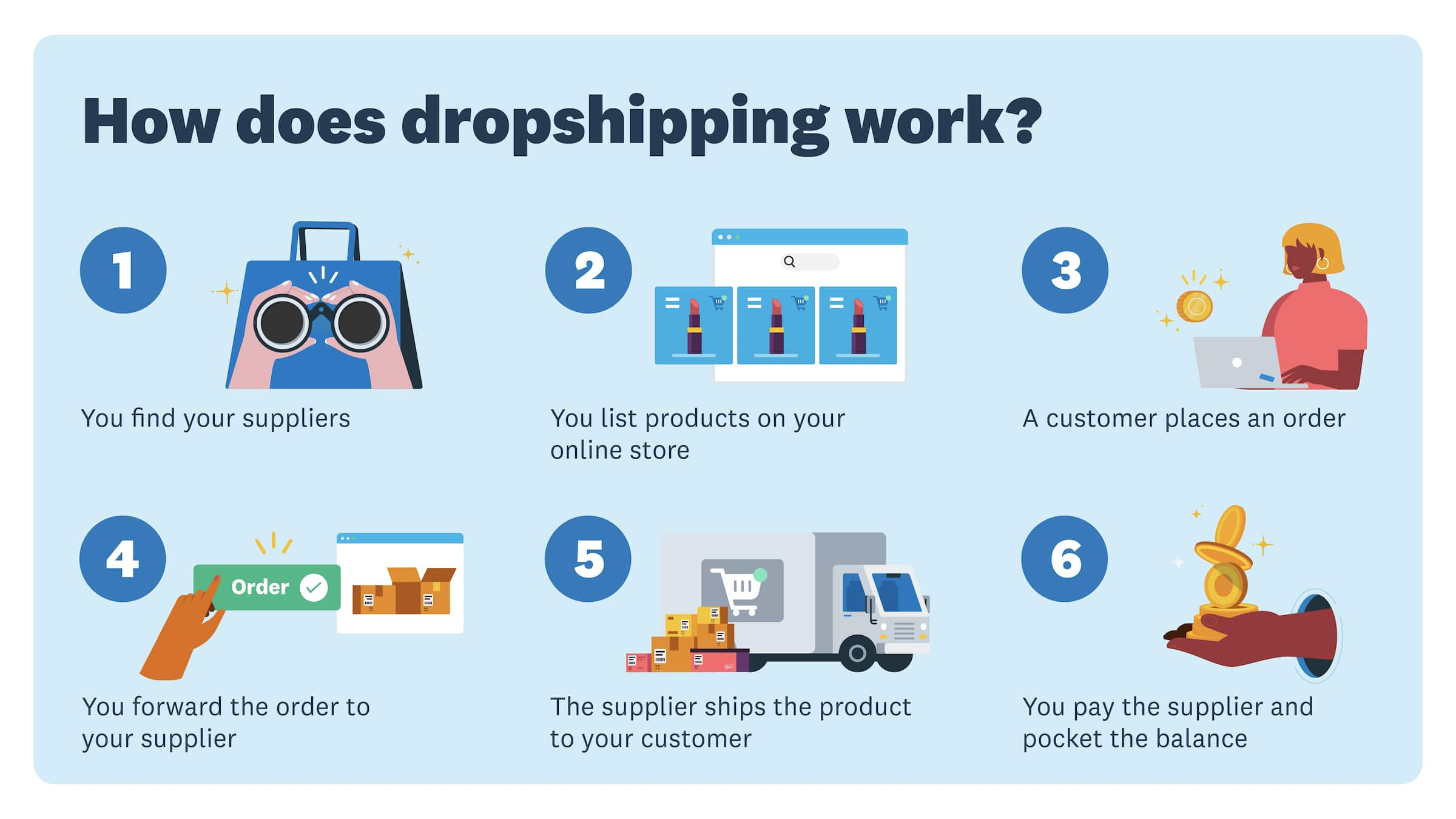
6. You pay the supplier and pocket the balance
Once the supplier ships the product, complete the transaction.

Pay the supplier the agreed wholesale cost and any shipping fees. The difference between what the customer paid and your costs is your profit.
Dropshipping vs traditional retail
Dropshipping and traditional retail differ in a few important ways. Understanding those differences helps you decide which model suits your business.
- Managing inventory: dropshippers hold no stock, while traditional retailers must store and secure inventory
- Initial investing: dropshippers avoid upfront inventory costs, while traditional retailers invest heavily before selling
- Operational risks: dropshippers depend on suppliers for quality and shipping, while traditional retailers face unsold stock, demand shifts, and theft
Some products suit dropshipping better than traditional retail. Consider these categories when choosing what to sell:
- Niche products: test demand without large stock commitments, such as eco-friendly cleaning supplies or vegan skincare
- High-value items: avoid upfront costs and secure storage for expensive goods like designer bags or luxury watches
- Trendy or seasonal items: minimise unsold stock risk on fashion accessories, heated blankets, or holiday decorations
Dropshipping pros and cons
Dropshipping offers low startup costs and flexibility, though margins and control work differently than traditional retail. Here's what to weigh before deciding if it's right for you.
Dropshipping benefits
Dropshipping offers several advantages for entrepreneurs with limited capital or time. Here's what makes it attractive:
- Scalability: outsource inventory and logistics to free yourself to focus on expanding your product range, marketing, and customer service
- Location flexibility: run your business from anywhere with an internet connection, with no physical storefront or warehouse required
- Lower startup costs: pay suppliers only after you make a sale, so you don't need to invest heavily upfront in inventory
- Reduced overheads: skip warehousing, insurance, and storage costs that traditional retailers face
- Better cash flow: receive customer payments before paying suppliers, so you're not tying up funds in stock
- Lower environmental impact: reduce waste from unsold stock and cut emissions with fewer transportation steps
Dropshipping drawbacks
Dropshipping comes with challenges you should plan for. Understanding these drawbacks helps you prepare:
- Complex shipping: manage multiple suppliers that make delivery times unpredictable, and customers may receive items from one order in separate shipments
- International complications: handle cross-border orders that can bring delays, customs fees, and customer frustration
- Lower profit margins: buy items individually with no bulk discounts, and some suppliers charge extra for small orders
- Intense competition: compete against many sellers due to low barriers to entry, leading to price wars that squeeze margins further
- Supplier dependence: take the blame for quality issues, shipping delays, and damaged packaging you can't control
- Branding limitations: accept that many suppliers don't offer white-labelling, so customers receive generic packaging that weakens your brand
Is dropshipping still profitable in 2025?
Yes, dropshipping remains profitable in 2025, but margins are tighter than they were five years ago. Statista projects the global dropshipping market will reach US$476 billion by 2026.
Success today depends on finding the right niche and running your business efficiently. The market has evolved significantly. Here's what's changed:
- Market saturation: find popular product categories like phone accessories and generic fashion crowded, making differentiation harder
- Rising customer expectations: meet shoppers who expect fast shipping and easy returns, which can be difficult with overseas suppliers
- Platform costs: pay higher fees from Shopify, payment processors, and advertising, squeezing margins further
Despite these challenges, opportunities remain. Here's what's working in 2025:
- Niche focus: target specific audiences, like sustainable pet products or specialised hobby gear, to outperform generalist shops
- Local suppliers: work with regional suppliers to reduce shipping times and improve customer satisfaction
- Brand building: invest in content, packaging, and customer experience to command higher prices
More people continue to adopt ecommerce in South Africa, creating real opportunities for dropshippers who understand the local market. Consider local payment processors like PayFast and factor shipping logistics into your supplier decisions.
Realistic profit margins for new dropshippers typically range from 10% to 30% after all costs. Building a sustainable business takes time, consistently investing in marketing, and ongoing efforts to optimise.
Dropshipping business models
There are several dropshipping business models. Each has different strengths depending on your goals.
Wholesale dropshipping partners you with wholesalers who ship products directly to your customers.
- Wide product ranges let you test different items with minimal risk
- Bulk pricing improves your margins compared to retail sourcing
Print-on-demand dropshipping produces items only after a customer orders them.
- Works well for custom designs on standard products like t-shirts, mugs, and phone cases
- Lets you test designs without investing in large print runs
- Suppliers make products to order, so shipping times can be longer
Retail dropshipping sources products from retailers like Amazon and ships them to customers.
- Provides access to a huge range of readily available products
- Useful for testing demand or exploiting price differences between markets
- Squeezes profit margins since you buy at retail prices
- Products arrive in original retail packaging only
How to start dropshipping
Starting a dropshipping business takes careful planning. Follow these four steps to launch your store.
- Find your market niche. Choose a market segment that matches your interests and meets real demand. Use Google Trends to spot growing categories, and search Amazon or eBay for in-demand products. Selling unique, hard-to-find items gives you a better chance of standing out. Read our guidance on market research to get started.
- Choose reliable suppliers. Look for suppliers with strong reputations, competitive prices, and fast dispatch times. Check their minimum order requirements and packaging quality. Platforms like Spocket, Modalyst, and DSers connect your store with vetted suppliers. They let you browse supplier catalogues, import products with auto-filled descriptions and images, and customise product details to match your brand voice.
- Create your online store. Build a user-friendly store where customers can browse and buy. Choose a platform like WooCommerce, Shopify, BigCommerce, or Wix. Pick a payment processor such as Stripe or PayPal. Add products with detailed descriptions, clear images, and accurate specs. Incorporate your branding into the site design for a cohesive look.
- Plan your marketing strategy. Effective marketing drives traffic and sales. Focus on social media by choosing platforms that match your audience, like TikTok for younger customers, and post regularly to showcase products. Run digital advertising with pay-per-click (PPC) campaigns on Google, Facebook, and Instagram to reach your ideal customer. Encourage customer reviews by offering small discounts, displaying them on your site, and using feedback to improve your service.
Common dropshipping mistakes to avoid
Many dropshippers succeed by avoiding common pitfalls. Here's what to watch out for.
- Know your target customer: tailored marketing maximises budget and builds loyalty. Research your audience and tailor your products and messaging to their specific needs.
- Respond quickly to enquiries: prompt replies build trust and increase sales. Answer questions promptly, maintain clear return policies, and handle complaints professionally.
- Verify your suppliers: quality products protect your reputation. Request samples, monitor feedback, and ensure suppliers resolve issues quickly.
- Maintain financial records: organised books support healthy cash flow and tax compliance. Track expenses, monitor margins, and stay on top of compliance.
- Budget for marketing costs: plan for paid advertising since organic traffic takes time to build. Budget for paid advertising and test campaigns before scaling.
- Commit to your niche: customers respond when a seller genuinely cares about what they're selling. Choose products you genuinely find interesting, and let that enthusiasm show.
Manage your dropshipping business with Xero
A clear picture of your finances turns a dropshipping side hustle into a real, growing business. Xero's accounting software helps you stay on top of orders, margins, and cash flow from day one.
- Ecommerce integration: connect your store to sync sales and expenses automatically
- Real-time cash flow forecasting: see when money comes in and goes out so you can plan ahead
- Multi-currency support: handle international suppliers and customers without manual conversions
- App marketplace: find more tools in the Xero App Store as your business grows
Ready to take the admin out of dropshipping? Get one month free and see how much easier it is to run your finances with Xero.
FAQs on dropshipping
Here are answers to common questions about starting a dropshipping business.
Can I start dropshipping with no money?
You'll need some funds to start. While startup costs are low, budget for a domain, hosting, and initial marketing.
How much do dropshippers make?
Earnings range widely depending on your niche, margins, and competition. Some dropshippers earn a modest side income, while others build it into a full-time business.
What is the best dropshipping platform?
The best platform depends on your needs. Here are three popular options to consider:
- Spocket: connects you with US and European suppliers offering fast shipping
- Modalyst: offers a wide product range including unique brands and print-on-demand
- DSers: partners officially with AliExpress for low-price suppliers and bulk orders
Why do so many dropshippers fail?
Success comes from strong niche selection, reliable suppliers, adequate marketing budget, and realistic profit expectations. Treating dropshipping as a real business makes a significant difference.
Can I do dropshipping in South Africa?
Yes. Dropshipping is legal and growing in South Africa. Consider local payment processors like PayFast, and factor in longer shipping times if you're using international suppliers.
How long does it take to make money with dropshipping?
Most dropshippers take three to six months to see consistent profits. Your timeline depends on your niche, how much you invest in marketing, and how quickly you optimise your store.
Do I need a business licence for dropshipping?
Requirements vary by location. In South Africa, you may need to register as a sole proprietor or company and comply with tax obligations. Check local regulations before you start trading.
Disclaimer
Xero does not provide accounting, tax, business or legal advice. This guide has been provided for information purposes only. You should consult your own professional advisors for advice directly relating to your business or before taking action in relation to any of the content provided.
Start using Xero for free
Access Xero features for 30 days, then decide which plan best suits your business.