Financial statements: types, uses and how to read them
Learn how financial statements help your small business make smarter decisions, improve cash flow, and grow.
Written by Lena Hanna—Trusted CPA Guidance on Accounting and Tax. Read Lena's full bio
Published Thursday 2 April 2026
Table of contents
Key takeaways
- Read all four financial statements together rather than in isolation, as net income from your income statement flows into retained earnings and cash from operations should support your balance sheet cash balance.
- Compare your financial statements across multiple periods to spot trends in revenue growth, expense patterns, and cash position changes that help you identify opportunities and recognise what's working.
- Distinguish between revenue and actual cash on hand by tracking accounts receivable separately, since recording a sale and receiving payment are separate events that affect your ability to cover expenses.
- Calculate key financial ratios like the current ratio and quick ratio using your balance sheet data to assess whether you can cover short-term obligations and make informed decisions about your business's liquidity.
What is a financial statement?
A financial statement is a formal record of your business's financial activities and performance over a specific period, typically a month, quarter, or year. Frameworks like the IAS 1 Presentation of Financial Statements govern standards for their preparation. Lenders and investors use financial statements to assess your business's financial health and earnings potential.
Types of financial statements
Four main types of financial statements give you a complete picture of your business's financial health:

- Balance sheet: shows what you own and owe at a point in time
- Income statement: tracks revenue and expenses over a period
- Cash flow statement: records money moving in and out
- Statement of changes in equity: shows retained profits and owner investment
Balance sheet
The balance sheet shows your business's financial position at a specific point in time by comparing what you own with what you owe.
Key components include:
- Assets: what your business owns, such as cash, equipment, inventory, and intellectual property
- Liabilities: what your business owes, including loans, accounts payable, and other debts
- Equity: what remains after subtracting liabilities from assets, representing the owner's stake in the business
Use this formula to find the equity.
The accounting equation and equity calculation help show net assets at a point in time, but you can better assess financial stability using multiple indicators such as liquidity ratios, leverage ratios, profitability, and operating cash flow.
Income statement/Profit and loss statement
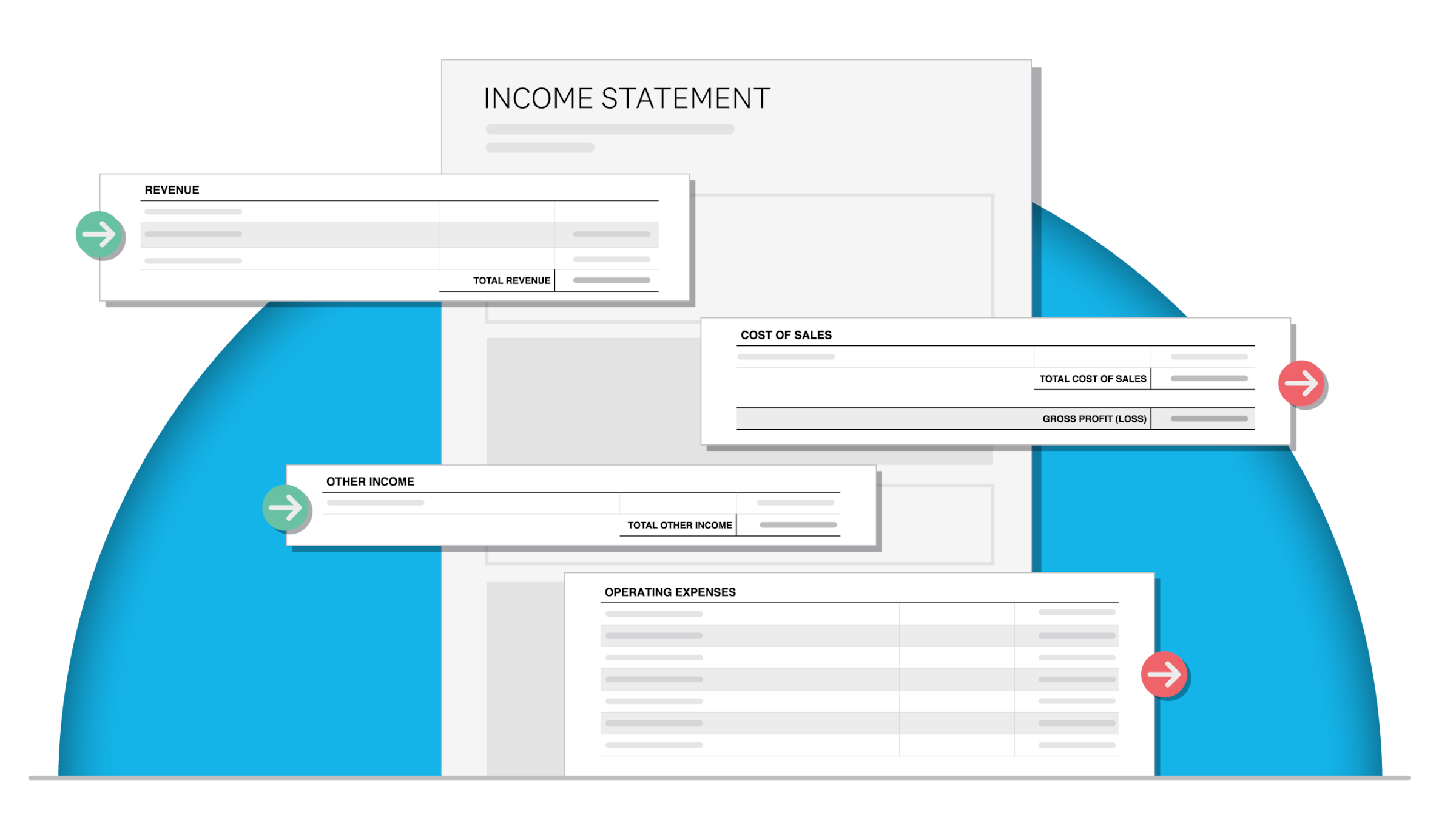
The income statement (also called a profit and loss statement) shows your business's revenues and expenses over a period. Subtract total expenses from revenue to find your net income.
Here's an example for a manufacturing business:
- Revenue: $150,000
- Operating expenses: $50,000 (office rent, utilities)
- Cost of sales: $70,000 (materials, labour)
- Net income: $30,000
Cash flow statement
The cash flow statement tracks money moving in and out of your business over a period. It shows whether you can cover short-term expenses like bills and payroll.
Cash flow statements record three types of activity:
- Operating activities: cash from day-to-day business, like customer payments
- Investing activities: cash from buying or selling assets, like equipment
- Financing activities: cash from loans, investor funding, or dividend payments
What companies include can vary. A study of European firms found that 76% of the sample also included interest paid in operating activities.
Statement of changes in equity
The statement of changes in equity (also called a retained earnings statement) shows how much profit your business keeps after paying costs and dividends to owners.
Businesses typically retain earnings to:
- repay debt
- reinvest in growth
- build a cash reserve for unexpected expenses
How to read financial statements
When you read financial statements, you understand what the numbers tell you about your business's health. Before diving into detailed analysis, get comfortable with the basics of each statement.
Start with the basics of each statement
Each statement answers a different question:
- Balance sheet: what does my business own and owe right now?
- Income statement: did my business make a profit this period?
- Cash flow statement: where did my cash come from and go?
- Retained earnings: how much profit has stayed in the business?
Understand key financial terms
You'll see these terms across all financial statements:
- Assets: resources your business owns (cash, equipment, inventory)
- Liabilities: debts your business owes (loans, accounts payable)
- Equity: the owner's stake in the business (assets minus liabilities)
- Revenue: money earned from sales or services
- Expenses: costs of running the business
- Net income: profit remaining after all expenses

Read statements together, not in isolation
-calculation-2.1708626946541.png)
Financial statements connect to each other. Net income from the income statement flows into retained earnings. Cash from operations on the cash flow statement should support the cash balance on the balance sheet.

Reading statements together reveals the full picture. A business can be profitable on paper, so tracking when customers pay helps ensure cash availability.
Compare statements over time
One statement shows a snapshot. Multiple statements show trends. Compare your current statements to previous periods to spot:
- growing or declining revenue
- rising or falling expenses
- changing cash position
- shifting debt levels
Trends help you identify opportunities early and recognise what's working.
Why financial statements are important for small businesses
Financial statements help you make smarter business decisions by giving you a clear view of your business's financial health. Understanding your statements helps you:
- Assess financial health: see your profitability, cash position, and costs at a glance to make stronger decisions
- Attract investors and secure loans: show lenders and investors that your business is profitable and can repay debts
- Comply with tax requirements: meet reporting rules and tax obligations with accurate financial records
- Track performance over time: spot trends in products or business areas that need attention or investment
- Manage cash flow: plan for expenses, payroll, and unexpected costs with clear cash visibility
- Make informed decisions: use accurate data to guide choices that grow your business
How to use financial statements to analyse your business
Each type of financial statement helps you assess a different aspect of your business's finances and supports accurate tax reporting.
Analyse financial performance with the income statement
Use the income statement to:
- evaluate profitability: compare total revenue against net income to see if your business is making money
- monitor expenses: identify spending patterns by reviewing categorised costs like goods sold and operating expenses
- track growth trends: compare statements across periods to assess revenue growth, cost efficiency, and profit margin changes
The income statement helps you calculate three key profitability metrics:
- Gross profit: revenue minus cost of goods sold
- Operating income: gross profit minus operating expenses. The exact definition of operating profit can differ between companies; an IASB analysis found that companies used at least nine different definitions for the term.
- Net income: total profit after all expenses
These calculations show whether you need to adjust prices or reduce costs.
Manage assets and plan for growth with the balance sheet
The balance sheet helps you:
- assess liquidity: compare current assets to current liabilities using ratios like the current ratio and quick ratio to check if you can cover short-term obligations
- evaluate solvency: examine long-term liabilities and equity to gauge financial stability (a high debt-to-equity ratio signals risk)
- track asset management: review how efficiently inventory, property, and equipment contribute to your revenue
Your balance sheet provides the data you need to calculate liquidity ratios that show whether you have enough cash to pay your bills.
The cash ratio compares cash and cash equivalents to current liabilities at the balance sheet date. It's a highly conservative liquidity measure.
-calculation-2.1708626946541.png)
The quick ratio measures your ability to cover current liabilities using your most liquid current assets, excluding inventory and often excluding prepaid expenses.
The current ratio includes inventory value alongside other current assets. Use it to assess whether you can cover short-term expenses with all available current assets.
Manage your cash flow with the cash flow statement
The cash flow statement shows whether your business generates enough cash to meet its financial obligations. Use it to:
- analyse operating cash flow: check if core business activities generate enough cash to sustain operations (positive cash flow confirms healthy operations even when profits vary)
- judge investment quality: track cash spent on equipment or expansion to see if you're reinvesting for future growth
- monitor financing activities: review cash from loans, equity, or dividends to understand how external funding affects your cash position
Analyse growth with the retained earnings statement
The retained earnings statement demonstrates your business's:
- growth potential: increasing retained earnings suggest your business can reinvest profits without borrowing
- financial health: growing retained earnings show that profits exceed losses and debts, which is a positive sign
Ways to use your financial statements
Practical best practices for using statements effectively.
Consider the big picture, not just profit
Reviewing all statements together, including cash flow and liabilities, keeps your business financially strong.
Pay attention to your cash flow
Even a profitable business needs to monitor cash carefully. Check your cash flow statement regularly to track liquidity and confirm you can cover short-term costs.
Know the difference between revenue and cash
Revenue and cash on hand are different things. Sales you've recorded may not have reached your bank account yet. Track accounts receivable separately so you know how much cash is actually available to spend.
Analyse trends by comparing your financial statements
Compare your financial statements across multiple periods to spot patterns in revenue, expenses, and liabilities. This helps you invest in areas performing well and identify parts of the business with growth potential.
Get across your financial ratios
Financial ratios provide insights into your business's liquidity, profitability, and overall health. Learn to calculate and analyse ratios like the current ratio and quick ratio to evaluate your financial position and make better decisions.
Follow best practices when reading financial statements
Keep these best practices in mind when reading financial statements:
- Distinguish revenue from cash: remember that recording a sale and receiving payment are separate events
- Monitor cash flow: track when customers pay to ensure you have cash available
- Review statements together: each statement contributes to the complete picture
- Compare across periods: multiple statements reveal trends beyond a single snapshot
- Track small recurring costs: monitoring minor expenses helps protect profit over time
Following these practices helps you make better decisions based on accurate financial understanding.
Financial statement templates for your business
Pre-made templates save time when creating balance sheets, income statements, and cash flow statements. They help you or your accountant produce consistent reports quickly.
Get started with Xero's free financial statement templates.
FAQs on financial statements
Common questions about financial statements.
What's the difference between the income statement and cash flow statement?
The income statement tracks profitability by showing revenue minus expenses. The cash flow statement tracks actual money moving in and out of your business. A business can be profitable on paper, so tracking when customers pay helps ensure cash availability.
Does my small business need all four types of financial statements?
Most small businesses benefit from all four types. The balance sheet, income statement, and cash flow statement are essential for understanding financial health. The retained earnings statement is particularly useful if you plan to reinvest profits into growth or debt repayment.
How often should I prepare financial statements?
Prepare financial statements monthly or quarterly for the clearest view of your business. While international accounting standards require a complete set of statements at least annually, more regular reporting helps you spot opportunities and areas for improvement faster.
Can I automate my financial statements?
Yes. Accounting software like Xero automates financial statement creation, which saves time, reduces errors, and simplifies tax compliance.
Disclaimer
Xero does not provide accounting, tax, business or legal advice. This guide has been provided for information purposes only. You should consult your own professional advisors for advice directly relating to your business or before taking action in relation to any of the content provided.
Start using Xero for free
Access Xero features for 30 days, then decide which plan best suits your business.