Cash vs accrual accounting
Learn the difference between cash and accrual accounting, and which method Malaysian businesses are required to use.
Published Monday 17 August 2026
Table of contents
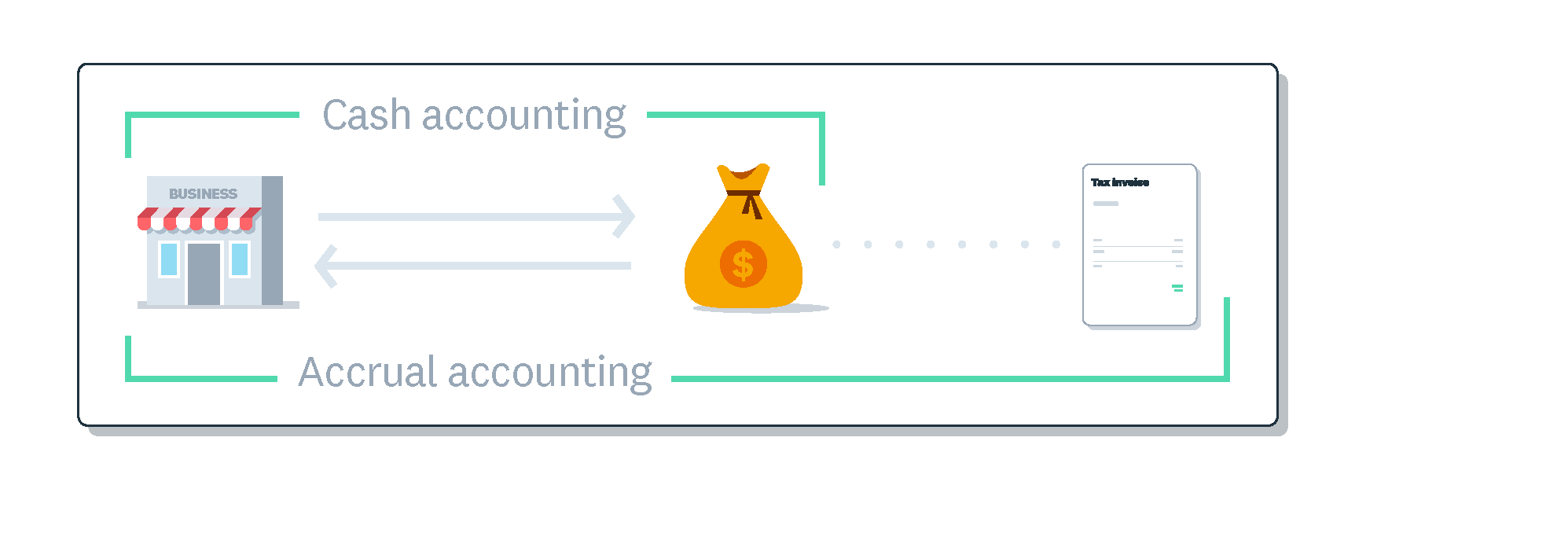
Cash accounting focuses only on cash changing hands, not outstanding bills or invoices.
Key takeaways
- Cash basis accounting records income when you receive payment and expenses when you pay them, while accrual accounting records them when earned or incurred
- Malaysian companies must use accrual-based accounting under the Companies Act 2016 and approved standards (MFRS or MPERS), with no revenue threshold allowing a cash-basis election
- Accrual accounting gives a more accurate picture of your financial position, especially for businesses with receivables and payables
- Very small sole traders may keep simpler records, but the Inland Revenue Board of Malaysia (LHDN) still assesses business income on a receivable basis under the Income Tax Act 1967
What is cash basis accounting?
Cash basis accounting records income when you receive payment and expenses when you pay them. This method tracks the actual flow of money in and out of your business, making it straightforward to understand your cash position at any given time.
For example, say you're a freelance designer and you finish an RM5,000 project in March. Your client pays you in April. Under cash basis accounting, you'd record the RM5,000 as income in April, when the money hits your bank account.
The same principle applies to expenses. If you buy RM500 in software in June but pay the bill in July, you'd record the expense in July. This approach is popular with very small businesses because it's simple to track. If you're just getting started with small business accounting, understanding cash basis gives you a clear starting point.
What is accrual accounting?
Accrual accounting records income when you earn it and expenses when you incur them, regardless of when money changes hands. This method matches revenue with the expenses that generated it, giving you a more accurate picture of profitability.
Using the same freelance designer example, under accrual accounting you'd record the RM5,000 as income in March when you complete the project, even though payment arrives in April. Similarly, you'd record the RM500 software expense in June when you receive the software, not in July when you pay.
Accrual accounting is the basis required by Malaysian Financial Reporting Standards (MFRS) and the Malaysian Private Entities Reporting Standard (MPERS), both issued by the Malaysian Accounting Standards Board (MASB). These standards align with International Financial Reporting Standards (IFRS), making financial statements comparable across borders. Learning how to record accounting transactions correctly is essential for maintaining compliant books.
Cash vs accrual accounting: key differences
Understanding the practical differences between these methods helps you see why one might suit your business better than the other.
Timing of revenue and expense recognition
The fundamental difference lies in timing. Cash basis records transactions when money moves, while accrual basis records them when the underlying economic event occurs. This means your profit figures can look quite different under each method in any given period, especially if you invoice in advance or pay suppliers on credit.
Financial accuracy
Accrual accounting provides a more accurate view of your financial performance over time. By matching income with related expenses in the same period, you can see true profitability rather than cash flow fluctuations. Cash basis can make a profitable month look like a loss if customers haven't paid yet.
Complexity
Accrual accounting requires more detailed record-keeping because you must track money owed to you and money you owe to others. You'll need to manage accounts receivable for outstanding customer invoices and maintain your accounts payable process for supplier bills. This takes more effort, but gives you better visibility into your true financial position.
Standards compliance
MFRS and MPERS both require the accrual basis of accounting. The Malaysian Accounting Standards Board (MASB) issues these standards, which apply to Malaysian companies. If your business must prepare statutory financial statements, you'll need to use accrual accounting to meet compliance requirements.
Pros and cons of cash accounting
Cash basis accounting has clear benefits and limitations depending on your business situation.
Advantages
- Straightforward to understand and implement
- Gives you a clear view of actual cash on hand
- Requires less bookkeeping time for very small operations
- Easy to see when money came in and went out
Disadvantages
- Does not show money owed to you or money you owe
- Can misrepresent your true financial position
- Not compliant with MFRS or MPERS for company financial statements
- Makes it harder to track profitability on individual projects
- May not satisfy banks or investors reviewing your accounts
Pros and cons of accrual accounting
Accrual accounting offers significant advantages for growing businesses, though it requires more effort to maintain.
Advantages
- Provides an accurate picture of financial performance
- Matches revenue with the expenses that generated it
- Meets MFRS and MPERS requirements for company accounts
- Helps you spot trends and make informed business decisions
- Preferred by banks, investors and potential buyers
Disadvantages
- More complex to set up and maintain
- Requires tracking receivables and payables
- Can show profit on paper while cash flow is tight
- May need accounting software or professional help to manage properly
Hybrid (modified cash basis) accounting
Modified cash basis accounting combines elements of both methods. Under this approach, you might use cash basis for most transactions but apply accrual treatment for specific items like long-term assets or inventory.
Specific rules govern who can use hybrid approaches and how they must be applied. In Malaysia, companies still need to meet statutory reporting requirements under approved accounting standards. If you're considering a modified approach for internal management purposes, check with a professional accountant to understand what's appropriate for your situation.
How to choose the right accounting method
Several factors should guide your choice of accounting method, though Malaysian legal requirements will be decisive for many businesses.
Business size and growth plans
If you're a sole trader with straightforward transactions and no employees, simple cash tracking might work for your day-to-day management. As you grow, add staff, or take on larger projects with longer payment terms, accrual accounting becomes increasingly valuable for understanding your true position.
Inventory
Businesses that hold stock benefit from accrual accounting because it matches the cost of goods sold with the revenue from selling them. Understanding inventory accounting becomes critical once you're buying and selling physical products.
Malaysian legal requirements
Malaysian companies (Sdn Bhd) must keep proper accounting records under Section 245 of the Companies Act 2016 and prepare financial statements that give a true and fair view under Section 244. The Malaysian Accounting Standards Board (MASB) requires these statements to follow MFRS (for listed and public-interest entities) or MPERS (for qualifying private companies), both of which mandate accrual accounting. There is no revenue threshold that allows a company to elect cash-basis accounting instead.
Very small sole traders are not required to follow MFRS or MPERS for their own records. However, the Inland Revenue Board of Malaysia (LHDN) assesses business income on a receivable basis under the Income Tax Act 1967. This means your tax position still reflects income earned rather than cash received.
Financing and investor expectations
Banks and investors typically expect accrual-based financial statements when you apply for a loan or seek investment. Accrual accounts give them a clearer view of your business performance and make it easier to compare you with other businesses.
When to switch from cash to accrual accounting
Many businesses start with simple cash tracking and later move to accrual accounting as they grow.
Signs it's time to switch
- You're incorporating as a Sdn Bhd and must meet Companies Act 2016 requirements
- Your business has significant receivables or payables that affect your true position
- You're seeking bank financing or outside investment
- You need better insight into project profitability
- Cash flow fluctuations make it hard to see your actual performance
How to make the switch
Talk to a professional accountant before changing your accounting method. They can help you identify all outstanding receivables and payables, establish opening balances and set up proper systems going forward.
A change in accounting policy for a Malaysian company is governed by MFRS 108 or MPERS Section 10, which require you to apply the new policy retrospectively where practicable and disclose the change. Malaysia has no equivalent of the US Form 3115 or Section 481(a) adjustment process. Your accountant will guide you through the appropriate treatment for your specific situation.
Track your finances with confidence using Xero
Choosing the right accounting method is one step toward running a financially healthy business. Keeping your books accurate and up to date is the ongoing work that makes the difference.
Xero accounting software helps Malaysian businesses manage invoicing, track expenses and reconcile bank transactions, giving you clear visibility into your financial position. Ready to see how it works? You can get one month free and explore the features that matter most to your business.
FAQs on cash vs accrual accounting
Here are answers to common questions about cash and accrual accounting in Malaysia.
Is accrual accounting required in Malaysia?
Malaysian companies must prepare financial statements using accrual-based standards (MFRS or MPERS) under the Companies Act 2016. The Inland Revenue Board of Malaysia (LHDN) also assesses business income on a receivable basis under the Income Tax Act 1967.
Can you switch from cash to accrual accounting?
Yes, though you should work with a professional accountant to make the transition properly. A change in accounting policy is governed by MFRS 108 or MPERS Section 10. Malaysia has no equivalent of the US Form 3115 process.
What is modified cash basis accounting?
Modified cash basis combines elements of both methods, using cash treatment for most transactions but accrual treatment for specific items like long-term assets. Specific rules govern its use, so check with your accountant.
Which accounting standards apply in Malaysia?
The Malaysian Accounting Standards Board (MASB) issues MFRS (aligned with IFRS, for listed and public-interest entities) and MPERS (for qualifying private companies). Both require accrual accounting.
Do banks prefer cash or accrual accounting?
Banks and lenders typically prefer accrual-based financial statements. Accrual accounting gives them a clearer picture of your business performance and makes it easier to assess your ability to repay loans.
Related terms
Learn more about small business accounting
Handy resources
Advisor directory
You can search for experts in our advisor directory
Xero Small Business Guides
Discover resources to help you do better business
Financial reporting
Keep track of your performance with accounting reports
Disclaimer
This glossary is for small business owners. The definitions are written with their requirements in mind. More detailed definitions can be found in accounting textbooks or from an accounting professional. Xero does not provide accounting, tax, business or legal advice.