Accounting period
What an accounting period is, the common types, how long it runs, and why it matters for your business.
Published Friday 24 July 2026
Table of contents
Key takeaways
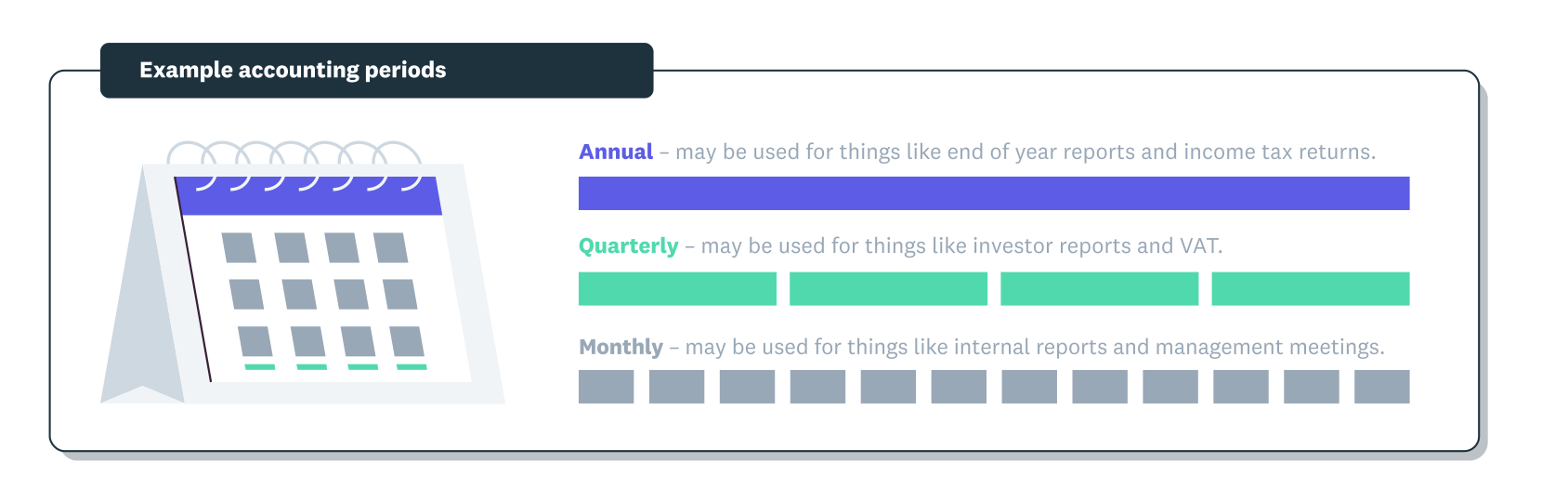
Annual accounting periods don’t have to start in January. Nor do monthly accounting periods have to start on the first of the month.
- An accounting period is any span of time you use to record transactions and report on your finances.
- Most accounting periods run for 12 months, though many businesses also track shorter monthly or quarterly periods.
- Clear periods let you compare performance over time, match income to expenses, and meet your tax and reporting obligations.
- In Malaysia, you set a financial year and basis period that shape how you report and file.
What is an accounting period?
An accounting period is any span of time you use for financial reporting. Transactions that fall within that date range form part of the statements and reports for the period.
An accounting period is also called a reporting period. You might run different periods for different tasks, for example one for income tax and another for your internal business reporting.
Handy resources
Advisor directory
You can search for experts in our advisor directory
Xero Small Business Guides
Discover resources to help you do better business
Try Xero for free
Try Xero’s fast, simple, powerful online accounting software for your small business
Disclaimer
This glossary is for small business owners. The definitions are written with their requirements in mind. More detailed definitions can be found in accounting textbooks or from an accounting professional. Xero does not provide accounting, tax, business or legal advice.
Types of accounting periods
Handy resources
Advisor directory
You can search for experts in our advisor directory
Xero Small Business Guides
Discover resources to help you do better business
Try Xero for free
Try Xero’s fast, simple, powerful online accounting software for your small business
You can choose the period that suits how you run and report on your business. These are the common types you’ll come across.
- A calendar year runs from 1 January to 31 December.
- A fiscal year covers any 12-month span, such as 1 April to 31 March.
- A monthly period covers a single month, for example 1 June to 30 June.
- A quarterly period covers 3 months, such as 1 January to 31 March.
How long is an accounting period?
An accounting period usually runs for 12 months, and this is the standard length for annual reporting. You can also use shorter periods, such as monthly or quarterly, to review how your business is tracking through the year.
An annual period doesn’t have to start in January. A monthly period doesn’t have to start on the first of the month either, so you can align each period with the way your business actually operates.
Why accounting periods matter
Consistent accounting periods give you a reliable way to see how your business is performing. They set the boundaries for every report you produce.
When you keep periods the same length, you can compare one period against another and spot trends in sales, costs, and profit. Fixed periods also help you match income to the expenses that earned it, which is the basis of accrual accounting. Clear periods make it easier to meet your tax and reporting obligations on time.
What happens at the end of an accounting period?
At the end of a period you close the books, which means you finalise every transaction that belongs to that date range. This gives you an accurate picture before you report.
Once the books are closed, you produce your financial statements, such as your profit and loss statement and balance sheet. These reports show how the business performed over the period and where it stands at the period end.
Accounting periods in Malaysia
If you run a business in Malaysia, you set a financial year that frames how you prepare your accounts and reports. This financial year also informs the basis period used for your reporting and tax.
Many businesses align their financial year with the calendar year, while others choose a different 12-month span that suits their operations. Keeping your chosen period consistent helps you stay organised and makes your year-on-year reporting easier to follow.
Manage your accounting periods with Xero
Setting clear accounting periods keeps your reporting accurate and your admin under control. Xero brings your transactions, reconciliations, and reports together in one place, so you can close each period with confidence and see how your business is tracking. Try Xero today and get one month free.
FAQs on accounting periods
Here are answers to some frequently asked questions about accounting periods.
What’s the difference between an accounting period and a financial year?
A financial year is a specific 12-month accounting period used for annual reporting. An accounting period is the broader term and can also cover shorter spans, such as a month or a quarter.
Can two businesses use different accounting periods?
Yes, each business can choose the period that fits how it operates. One might follow the calendar year while another uses a different 12-month span.
What is an interim accounting period?
An interim period is a shorter span, such as a month or quarter, that sits within your full financial year. You use it to check performance before your annual reports are ready.
Does my accounting period affect my tax reporting?
Your accounting period sets the date range that your income and expenses are reported against. This in turn shapes the figures you use when you report and file.