What is cloud computing? Benefits for small businesses
Learn how cloud computing saves time and money, scales with your business, and keeps your data secure.
Written by Lena Hanna—Trusted CPA Guidance on Accounting and Tax. Read Lena's full bio
Published Monday 30 March 2026
Table of contents
Key takeaways
- Choose Software as a Service (SaaS) applications on public cloud infrastructure for your small business, as they offer the best balance of cost, convenience, and capability without requiring technical expertise.
- Access your business data from any device and location through cloud computing, enabling real-time collaboration where multiple team members can work on the same information simultaneously.
- Reduce IT costs by paying only for what you use with cloud services, eliminating expenses for hardware upgrades, maintenance, support fees, and backup equipment.
- Trust that your data is more secure in the cloud than on local computers, as cloud providers invest heavily in encryption, automatic backups, and dedicated security teams to protect your information.
What is cloud computing?
Cloud computing stores your data, files, and software on remote servers instead of your local computer. You access everything through the internet from any device, anywhere, at any time.
This simple shift changes how you work, bank, communicate, sell, and buy. Instead of being tied to one computer in your office, you can manage your business from wherever you are.
How cloud computing works
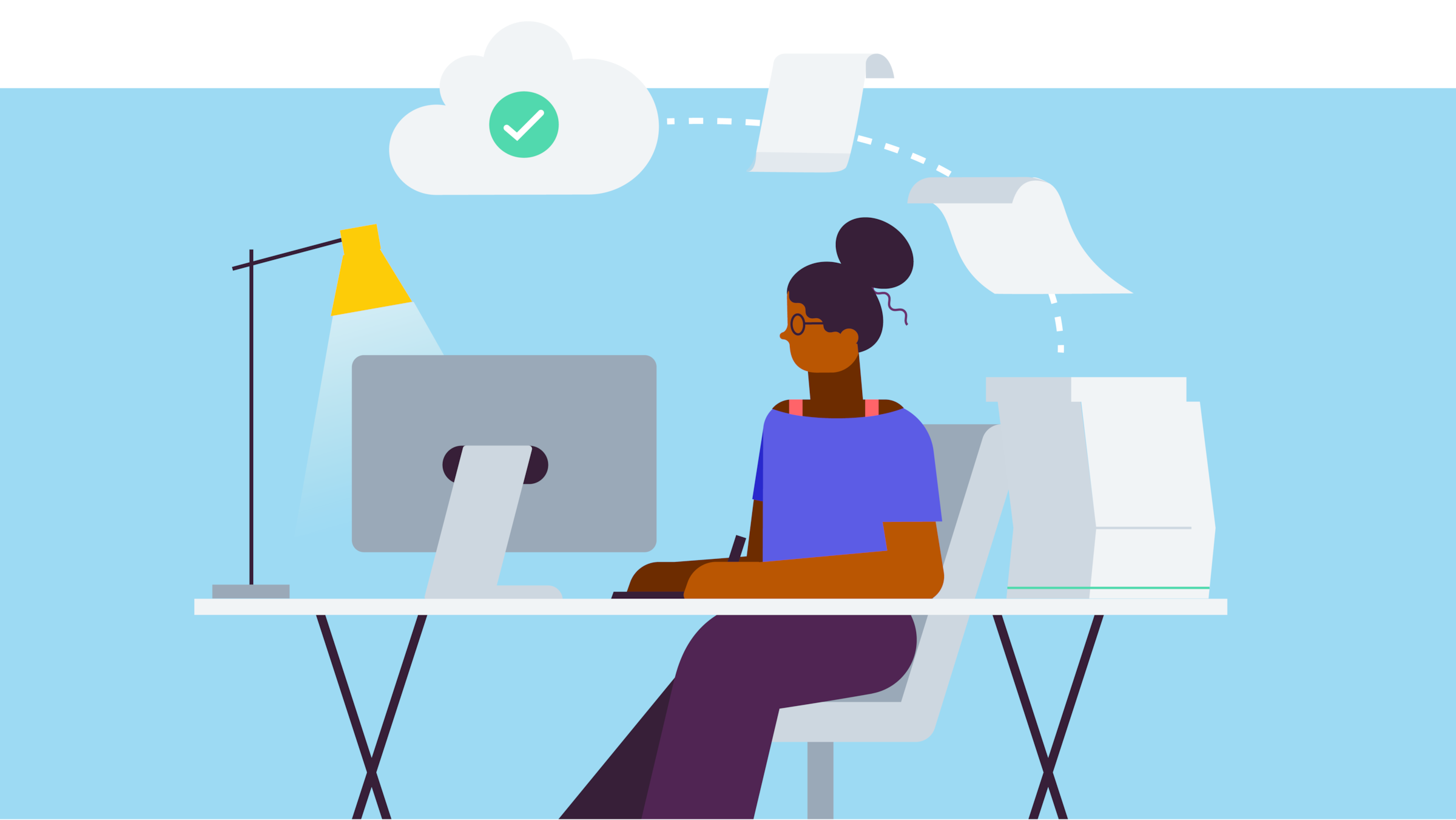
Cloud computing works by storing your data on remote servers managed by a cloud provider, rather than on your local computer or office server. When you need your files, you access them through the internet.
The basic process:
- Create or upload data: Save a document, enter a transaction, or upload a file.
- Send data to the cloud: Your information is sent securely over the internet to the provider's servers.
- Store and protect data: Your data lives on secure servers with automatic backups and encryption.
- Access it from anywhere: Log in from any device with an internet connection to view, edit, or share your data.
With cloud accounting software like Xero, this means you can send an invoice from your phone, and your accountant can see it instantly on their laptop. Everything syncs instantly, versions stay current, and you can work immediately.
Types of cloud computing
Cloud computing comes in different forms based on what's provided and how it's delivered. These are the main types small businesses should know.
Cloud services are categorised by service model:
- Software as a Service (SaaS): Provides ready-to-use applications you access through your browser. Examples include Xero for accounting, Gmail for email, and Slack for team communication. Most small businesses use SaaS daily.
- Platform as a Service (PaaS): Provides tools for developers to build and deploy applications without managing servers. Small businesses rarely need this directly.
- Infrastructure as a Service (IaaS): Provides virtual computing resources like storage and servers. Larger businesses use IaaS to build custom systems.
Cloud services are also categorised by deployment model:
- Public cloud: Shares services across many customers, managed by providers like Google, Amazon, or Microsoft. Most small business cloud tools use public cloud infrastructure.
- Private cloud: Provides dedicated infrastructure for a single organisation. Typically used by large enterprises with strict security requirements.
- Hybrid cloud: Combines public and private cloud resources. Useful for businesses with specific compliance needs.
For most small businesses, SaaS applications on the public cloud offer the best balance of cost, convenience, and capability, with Gartner forecasting worldwide spending on public cloud services to total $723.4 billion in 2025.
Benefits of cloud computing for small businesses
Cloud computing gives small businesses flexibility and peace of mind:
- Access from anywhere: Get your business data from any device, whether you're at the office, on the train, or working from home.
- Automatic backups: Cloud providers handle data protection, so you don't worry about theft, corruption, or data loss.
- Maintenance-free operation: Dedicated technical teams manage updates, patches, and security behind the scenes.
- Cost savings: Pay only for what you use, without spending on hardware, upgrades, or IT support.
- Real-time collaboration: Multiple team members can access and work on the same data simultaneously.
- Scalability: Add storage or features as your business grows, without replacing equipment. For example, one restaurant chain used the cloud's scalability to handle online orders that multiplied exponentially from 50,000 to 400,000 per day during the pandemic.
The cloud breaks the chain between your office computer and your business information. Just log in and go.
Cloud computing examples for small businesses
Cloud computing transforms everyday business activities:
- Banking: Traditional banking required visiting a branch. Cloud-based internet banking gives you access to your financial data anytime, anywhere, on any device.
- Email: Traditional mail was only available at the post office. Cloud-based webmail lets you send and receive messages from anywhere you're online.
- File storage: Traditional filing kept documents locked in the office. Cloud storage makes your files available whenever you have an internet connection.
- Shopping: Traditional retail limited customers to store hours. Cloud-based online shopping lets customers browse and buy anytime, from any device.
- Accounting software: Traditional desktop software tied your data to one computer. Cloud accounting software stores your data online, so you and your team can access it simultaneously from anywhere.
Common cloud computing myths
Small business owners often have questions and concerns about cloud computing. These are the facts behind common myths.
- Myth: Cloud computing is just the internet. Fact: The internet connects your device to the cloud. The cloud is where your data lives.
- Myth: Your data isn't safe in the cloud. Fact: Cloud platforms are highly secure, and your data stays protected when you follow good practices. Research shows human error drives 88% of all data breaches, making user behaviour a critical factor in cloud security. Cloud providers spend millions protecting your information with dedicated security teams and systems.
- Myth: The cloud is an Apple product. Fact: Apple's iCloud is one cloud product among many. Google, Dropbox, Xero, and other companies also provide cloud-based services.
- Myth: You can't work if the internet goes down. Fact: Internet outages are rare and typically brief. Your data stays safe in the cloud until you're back online.
- Myth: Cloud computing is just a fad. Fact: Cloud technology has been around for years and continues to grow, with the cloud infrastructure services market seeing spending surging 18% to $290.4 billion in 2023 alone. Internet banking started over 15 years ago, and cloud adoption keeps expanding as the technology becomes faster and more affordable.
- Myth: Cloud computing is expensive. Fact: Cloud computing is often cheaper because you only pay for what you use, but the financial benefits extend beyond direct savings. Research from McKinsey shows that the value from cloud-enabled innovation is worth more than five times what is possible by simply reducing IT costs. You save on upgrades, maintenance, support fees, and backup hardware.
- Myth: You have less control of your data in the cloud. Fact: You gain more control. Access, share, and work with your data from anywhere, on any device. You decide who has access and can revoke it instantly.
- Myth: The cloud is only for tech people. Fact: Cloud software is easier for everyone. Just log in and it works. Everything is ready to use, always up to date, and automatically maintained.
Make the move to cloud accounting with Xero
Cloud computing simplifies how you manage your business. Access your data anywhere, streamline IT management, and focus on what matters most: running your business.
Ready to experience the benefits of cloud accounting? Get one month free and see how Xero makes managing your finances effortless.
FAQs on cloud computing
Common questions about cloud computing for small businesses.
What exactly is cloud computing in simple terms?
Cloud computing stores your data and software on remote servers instead of your local computer. You access everything through the internet from any device, anywhere.
Do I need technical expertise to use cloud software?
Cloud software is designed for everyday users. Just log in through your browser and start working—everything is ready to use.
What happens if my internet goes down?
Your data stays safe on the cloud provider's servers. Once your connection returns, you can access everything exactly as you left it. Some cloud apps also offer limited offline functionality.
Is cloud computing more expensive than traditional software?
Cloud computing is often cheaper overall. You pay a predictable subscription fee and avoid costs for hardware, maintenance, upgrades, and IT support.
How secure is my business data in the cloud?
Cloud providers invest heavily in security because the stakes are high; the average cost of a data breach is $4.44 million globally. Their measures include encryption, automatic backups, and dedicated security teams. Your data is typically safer in the cloud than on a local computer.
Disclaimer
Xero does not provide accounting, tax, business or legal advice. This guide has been provided for information purposes only. You should consult your own professional advisors for advice directly relating to your business or before taking action in relation to any of the content provided.
Start using Xero for free
Access Xero features for 30 days, then decide which plan best suits your business.