Dropshipping suppliers: how to find, vet and compare
Finding the right dropshipping supplier shapes your product quality, delivery times, and reputation.
Written by Jotika Teli—Certified Public Accountant with 24 years of experience. Read Jotika's full bio
Published Friday 27 March 2026
Table of contents
Key takeaways
- Vet every supplier before committing by ordering samples, testing their response times, and checking third-party reviews — a reliable supplier protects your reputation and keeps customers coming back.
- Watch for red flags like no verifiable business address, unusually low prices, or requests for unusual payment methods, and walk away if a supplier raises multiple concerns.
- Calculate your true margin per product by tracking every cost upfront — including platform fees, shipping, returns, and currency conversion — so you can price products correctly from the start.
- Use multiple suppliers to reduce risk and expand your product range, but monitor each one's costs and performance separately to keep your margins healthy.
What are dropshipping suppliers and companies?
Dropshipping suppliers are third-party partners who store, pack, and ship products directly to your customers on your behalf. Dropshipping companies are platforms that connect you to multiple suppliers and product catalogues in one place.
You need at least one supplier to run a dropshipping business. Think of them as your backstage team, handling everything from storage to delivery while you focus on sales and marketing.
Here's how the typical dropshipping order process works:
- A customer purchases a product from your store.
- You forward the order details to your supplier.
- The supplier picks, packs, and ships the product directly to the customer.
- The customer receives the product with your branding.
Dropshipping suppliers and companies exist all over the world. If you choose a dropshipping supplier from another country, it could extend the delivery time for customers.
Companies that dropship
Most sellers use a dropshipping company or directory to find suppliers. Platforms like SaleHoo and Spocket list vetted suppliers and products, making it easier to compare options in one place.
Dropshipping suppliers fall into two main categories:
- Manufacturers: Make and sell products directly. They often require bulk purchases upfront, which can be risky if you're testing a new product.
- Wholesalers: Buy products from manufacturers and resell them to retailers. Per-unit prices tend to be higher, but you avoid the risk of bulk orders.
Best dropshipping companies
The best dropshipping companies connect you to vetted suppliers, offer platform integrations, and provide reliable shipping. Before choosing, check online reviews for product quality, shipping times, and customer service.
Here's an overview of top dropshipping companies, including their pros, cons, and standout features. Some work best with specific ecommerce platforms, so confirm compatibility before signing up.
SaleHoo
SaleHoo is a supplier directory and Shopify integration tool that helps you find vetted suppliers and import products directly to your store.
Pros:
- Access to 2.5 million products
- Over 8,000 pre-vetted suppliers
- Import up to 500 products on Basic or unlimited on Premium
Cons:
- Only two pricing plans available (Basic or Premium)
- No dedicated onboarding manager on Basic plan
- No free trial offered
Spocket
Spocket connects sellers to a location-filtered supplier directory with no commission fees. You pay only for products sold, plus a monthly subscription.
Pros:
- Sample ordering available to check product quality
- Integrations with Shopify, BigCommerce, WooCommerce, and Wix
- Vetted and verified suppliers
- 24/7 chat support on all plans
Cons:
- Starter plan limited to 25 unique products
- No direct supplier communication through the platform
AliExpress
AliExpress is a marketplace owned by Alibaba, offering over 100 million products from suppliers worldwide. Many dropshippers choose it for variety and low upfront costs.
Pros:
- No subscription or membership fees required
- Integrates with Shopify, WooCommerce, and DSers
- Low wholesale prices support higher profit margins
Cons:
- Requires significant time to research product quality and trends
- Longer delivery times from Asia-based suppliers
- Supplier legitimacy varies, so vetting is essential
Worldwide Brands
Worldwide Brands is a supplier directory established in 1999, featuring verified wholesalers and over 16 million products. The platform offers quality assurance and lifetime membership access.
Pros:
- Verified suppliers for added reliability
- Access to 16+ million wholesale products
- One-time payment for lifetime membership
Cons:
- Upfront fee of US$299 required
- No direct ecommerce platform integrations
- Some US suppliers charge extra for international shipping
How to find dropshipping suppliers
You can find dropshipping suppliers through online directories, direct outreach, marketplaces, and in-person networking. Here are the most effective methods:
- Supplier directories: Platforms like SaleHoo and Spocket list vetted suppliers in one place, making comparison easy.
- Search engines: Try terms like "wholesale dropshipping," "dropshipping service," or "dropshipping suppliers [your region]."
- Social media: Search Instagram, LinkedIn, or Facebook groups for supplier recommendations and reviews.
- Marketplaces: Browse Amazon, eBay, or Etsy for products, then research sellers to find potential supplier relationships.
- Competitor research: Order from suspected dropshippers and check the return address to identify their supplier.
- Trade shows: Attend industry events to meet suppliers in person and negotiate deals directly.
- Filter by region: Choose suppliers closer to your customer base to reduce shipping times. Check that products can be legally sold in your country and comply with local tax requirements.
How to evaluate dropshipping suppliers
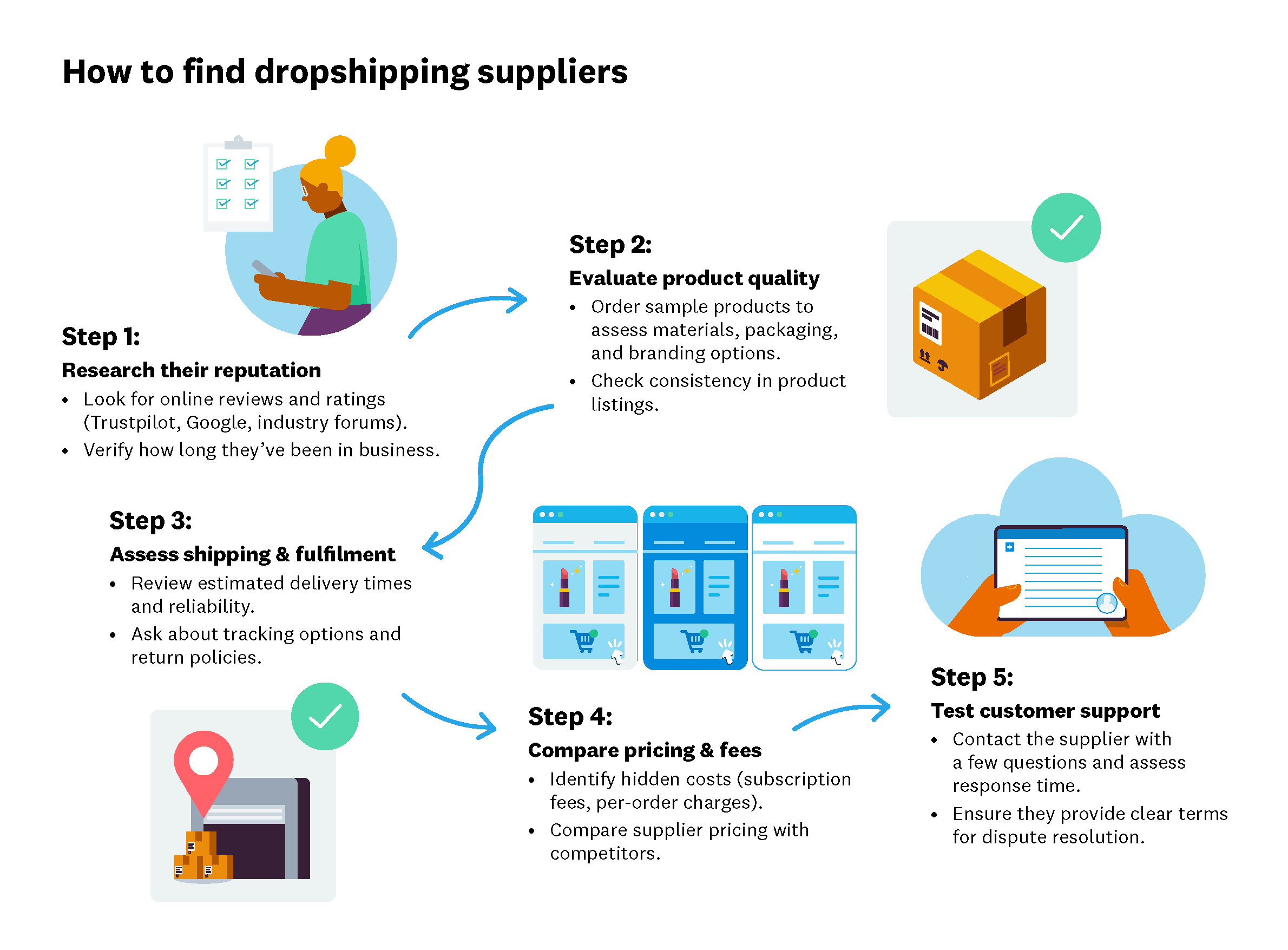
Evaluating suppliers before committing helps you avoid quality issues, shipping delays, and damaged customer relationships. Here's what to check:
Key evaluation criteria
Use these criteria to assess whether a supplier is the right fit for your business:
- Product quality: Order samples before listing products in your store.
- Shipping times: Confirm average delivery times to your target markets.
- Communication: Test response times and clarity before signing up.
- Reviews and ratings: Check third-party review sites and supplier directories.
- Return policies: Understand who handles returns and refunds.
- Platform compatibility: Confirm integration with your ecommerce platform.
Red flags to watch for
Some warning signs are worth taking seriously before you commit to a supplier:
- No verifiable business address or contact information
- Unusually low prices compared to competitors
- Poor or no online reviews
- Slow or evasive responses to questions
- No sample ordering available
- Requests for unusual payment methods
If a supplier raises multiple red flags, move on. A reliable supplier protects your reputation and keeps customers coming back.
Understanding dropshipping costs and fees
Knowing your costs upfront helps you price products correctly and protect your profit margins. Here are the main expenses to factor in:
Platform and subscription fees
These are the recurring costs you'll pay to access suppliers and run your store:
- Supplier directory memberships: Many platforms charge a monthly or one-time fee for access to vetted suppliers.
- Ecommerce platform fees: You'll pay a regular subscription to host your online store.
- Payment processing fees: Expect a small percentage charge for every customer transaction.
Per-order costs
Every order you fulfil will carry its own costs, so factor these into your pricing from the start:
- Product cost from supplier: The wholesale price you pay per item.
- Shipping fees: Varies by supplier location and delivery speed.
- Packaging or branding fees: If your supplier offers custom packaging.
Hidden costs to track
These costs are easy to overlook but can quietly eat into your margins:
- Returns and refunds
- Customer service time
- Marketing and advertising spend
- Currency conversion fees for international suppliers
To stay profitable, track every cost and calculate your true margin per product. Accounting software like Xero can help you monitor supplier payments, reconcile transactions, and see your real profit in one place.
Tips for contacting and negotiating with dropshipping suppliers
Once you've shortlisted potential suppliers, how you approach them can make a real difference to the terms you agree on. Review Xero's supplier terms for reference.
Here are some practical tips to help you get the most out of those conversations:
- Research thoroughly: Check online reviews for product quality, shipping times, and pricing before committing. Verify supplier legitimacy even when using trusted directories.
- Communicate clearly: State your expectations, concerns, and requirements upfront. Ask questions to make sure you both understand the agreement.
- Stay flexible: Be firm on your core requirements but open to supplier constraints. Find solutions that work for both sides.
- Build long-term relationships: Offer ongoing business in exchange for better pricing or terms. Suggest a trial period if you're not ready for a full contract.
- Consider their perspective: Understand supplier profit margins and business goals. This helps you negotiate fairly and build trust.
- Be professional: Prepare key business figures before conversations. Treat all suppliers with respect, whether you choose them or not.
Managing your dropshipping finances with confidence
Finding the right supplier is just the start. To build a profitable dropshipping business, you also need to track costs, monitor margins, and manage cash flow across multiple suppliers and platforms.
Xero's ecommerce accounting software helps you manage supplier payments, track product costs, and see your true profit margins in real time. Connect your ecommerce platform to Xero and automate the financial admin so you can focus on growing sales.
Explore ecommerce apps that integrate with Xero in the Xero App Store, or get one month free to see how Xero simplifies your dropshipping finances.
FAQs on dropshipping suppliers
Here are answers to common questions about finding and working with dropshipping suppliers.
Which supplier is best for dropshipping?
The best supplier depends on your product category, budget, and shipping requirements. SaleHoo and Spocket are popular for vetted suppliers and platform integrations, while AliExpress offers the widest product selection at lower costs.
How do I get a supplier for dropshipping?
Start with a supplier directory like SaleHoo or Spocket, search for products in your product category, and contact suppliers to confirm pricing, shipping times, and minimum order requirements.
Can I use multiple dropshipping suppliers?
Yes, using multiple suppliers lets you offer more products and reduce risk if one supplier has stock or shipping issues. Track each supplier's costs and performance to maintain healthy margins.
How long does it take to set up with a dropshipping supplier?
Most suppliers can be set up within a few days to two weeks. The timeline depends on platform integration, sample ordering, and negotiating terms.
Why do so many dropshippers fail?
Common reasons include choosing unreliable suppliers, underestimating shipping times, poor product quality, and failing to track costs accurately. Vetting suppliers carefully and monitoring your finances helps avoid these pitfalls.
Disclaimer
Xero does not provide accounting, tax, business or legal advice. This guide has been provided for information purposes only. You should consult your own professional advisors for advice directly relating to your business or before taking action in relation to any of the content provided.
Start using Xero for free
Access Xero features for 30 days, then decide which plan best suits your business.