Owner’s equity: what it is and how to calculate it
Learn how owner’s equity shows your stake, guides decisions, and helps you plan, fund, and grow.
Written by Jotika Teli—Certified Public Accountant with 24 years of experience. Read Jotika's full bio
Published Thursday 2 April 2026
Table of contents
Key takeaways
- Calculate your owner's equity by subtracting total liabilities from total assets to get a clear snapshot of your business's net worth at any point in time.
- Track your owner's equity regularly using your balance sheet to assess financial health when applying for loans, attracting investors, or making major business decisions.
- Increase your owner's equity by retaining earnings in the business, paying down debt, limiting owner withdrawals, and investing in appreciating assets rather than withdrawing all profits.
- Recognise that negative owner's equity signals your business owes more than it owns, requiring immediate action to increase revenue, reduce expenses, and pay down liabilities.

What is owner's equity?
Owner's equity is the value of a business after subtracting what it owes from what it owns. It represents the book value, or net worth, of your business at any point in time.
Owner's equity doesn't tell you what your business would sell for. You won't know the sale price until you negotiate with a buyer. But it gives you a clear snapshot of your financial position whenever you need it.
How to calculate owner's equity (or net worth)
Owner's equity equals total assets minus total liabilities. Add up everything your business owns, then subtract everything it owes. The remaining amount is your equity.
Owner's equity formula
Use this formula to calculate your owner's equity. The formula requires accurate asset and liability figures.
When calculating owner's equity
Count all your assets and liabilities correctly to get an accurate equity figure.
Assets include everything your business owns:
- cash: money in the bank
- accounts receivable: money customers owe you
- inventory: products you have in stock
- equipment: machinery, tools, and vehicles
- real estate: property your business owns
- intangible assets: intellectual property, trademarks, and brand value
Liabilities include everything your business owes:
- loans: money owed to banks or lenders
- accounts payable: money owed to suppliers
- wages payable: money owed to employees
- tax obligations: money owed to the tax office
What's included in owner's equity
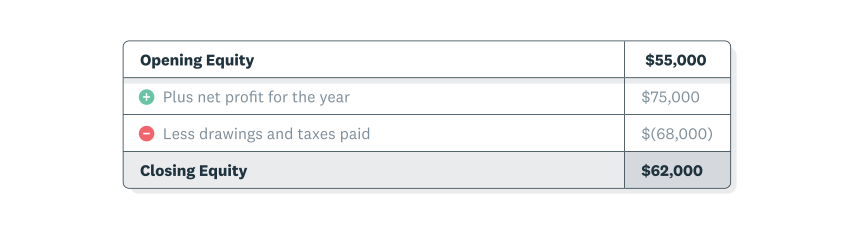
Statement shows closing equity is equal to the opening equity plus the year’s net profit, minus owner withdrawals and taxes.
Owner's equity includes everything that would belong to the business owners if all debts were paid off. The specific components depend on your business structure.
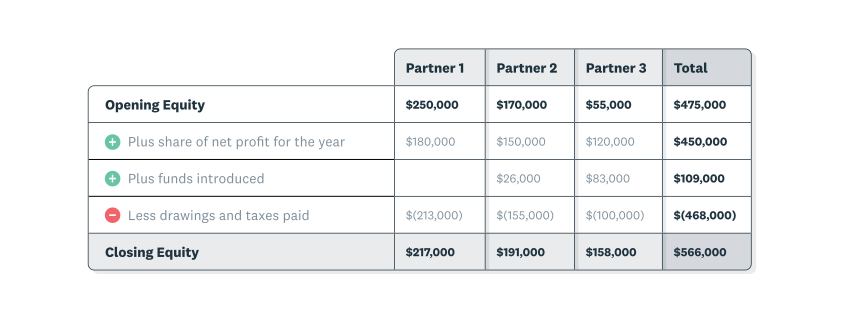
Statement shows closing equity is equal to the opening equity plus the year’s net profit and money introduced, minus owner withdrawals and taxes.
For sole proprietors and partnerships, owner's equity typically includes:
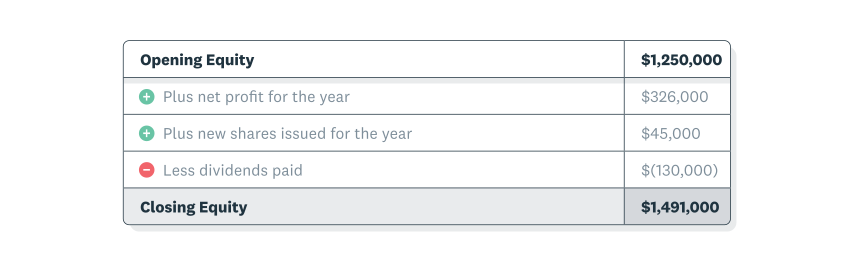
Statement shows closing equity is equal to the opening equity plus the year’s net profit and money from investors, minus owner withdrawals and taxes.
- capital contributions: money or assets you've invested in the business
- retained earnings: profits kept in the business rather than withdrawn
- owner withdrawals: money or assets taken out of the business (reduces equity)
For companies and corporations, shareholder's equity includes:
- share capital: money raised by issuing shares. According to International Financial Reporting Standards (IFRS) for small and medium-sized enterprises (SMEs), this isn't always straightforward; if payment is delayed, the value must be recorded as the present value of deferred consideration.
- retained earnings: accumulated profits not paid out as dividends
- reserves: funds set aside for specific purposes
Why owner's equity matters for your business
Owner's equity shows the true financial health of your business at any point in time. It's more than just an accounting figure.
Owner's equity becomes especially important when:
- applying for loans: lenders review your equity to assess financial stability and repayment ability
- attracting investors: investors want to see positive and growing equity before committing funds
- selling your business: equity provides a starting point for valuation discussions
- tracking progress: comparing equity over time shows whether your business is building or losing value
- making decisions: understanding your equity position helps you decide when to reinvest, expand, or pull back
A healthy owner's equity means your business owns more than it owes. If equity is low or negative, it may signal the need to reduce debt, increase revenue, or limit owner withdrawals.
Examples of owner's equity
If you own a house worth $300,000 but have a $120,000 mortgage, your equity is $180,000. The house is your asset, the mortgage is your liability, and the difference is your equity.
Business example of owner's equity
This example shows how owner's equity works for a small business:
A repair shop has:
- garage: $600,000
- machinery: $50,000
- inventory: $50,000
- total assets: $700,000
The shop owes $300,000 on the premises.
Owner's equity: $700,000 − $300,000 = $400,000
How to increase your owner's equity
Growing your owner's equity strengthens your business's financial position over time. Practical ways to build equity include:
- increase revenue: higher sales add to your assets and retained earnings
- reduce expenses: lower costs mean more profit stays in the business
- retain earnings: reinvest profits rather than withdrawing them
- pay down debt: reducing liabilities directly increases equity
- limit owner withdrawals: take only what you need to keep more value in the business
- invest in appreciating assets: equipment or property that gains value adds to your asset base
Track your equity regularly to see how these changes affect your overall financial position. Most accounting software updates your balance sheet automatically, so you can monitor progress without manual calculations.
Where to find owner's equity
Owner's equity appears on your balance sheet, listed after assets and liabilities. You can also track how it changes over time on the statement of changes in equity.
Most accounting software, including Xero, calculates and displays your owner's equity automatically when you generate a balance sheet.
What is a statement of changes in equity?
The statement of changes in equity shows how your owner's equity has increased or decreased over a period. It's one of the four basic financial statements, alongside the:
- profit and loss (P&L)
- balance sheet
- cash flow statement
This statement connects your P&L and balance sheet. It shows how your earnings for the year affect the value of your owner's equity.
Example of statement of changes in equity for sole proprietor
Statement shows closing equity is equal to the opening equity plus the year's net profit, minus owner withdrawals and taxes.
Example of statement of changes in equity for a partnership
Statement shows closing equity is equal to the opening equity plus the year's net profit and money introduced, minus owner withdrawals and taxes.
Example of statement of changes in equity for a company
Statement shows closing equity is equal to the opening equity plus the year's net profit and money from investors, minus owner withdrawals and taxes.
How the statement of changes in equity is used
Most small business owners focus on the P&L and balance sheet for day-to-day decisions. These reports contain the details you need to manage performance and plan ahead.
The statement of changes in equity is useful for tracking how your business value shifts over time, but it's not essential for routine management.
Understanding owner's equity gives you a clear picture of your business's net worth at any time. Modern accounting software handles the calculations automatically, making it straightforward to track.
Xero generates your balance sheet and tracks changes in owner's equity as you run your business. You can see your financial position at a glance, without manual calculations or spreadsheet updates.
FAQs on owner's equity
Common questions about owner's equity and how it affects your business.
Is shareholder's equity the same thing as owner's equity?
Yes, they mean the same thing. Sole proprietors and partnerships typically use "owner's equity," while companies and corporations use "shareholder's equity." Both terms refer to the value remaining after subtracting liabilities from assets.
How do I calculate the owner's equity statement?
The owner's equity statement, also called the statement of changes in equity, tracks how your equity increases and decreases over a period. To create it, you need accurate balance sheet data showing your assets, liabilities, and any owner contributions or withdrawals.
Do all transactions affect the owner's equity?
Yes, most business transactions affect owner's equity in some way:
- sales: increase assets (cash or accounts receivable), which raises equity
- expenses: reduce assets or increase liabilities, which lowers equity
- owner withdrawals: directly reduce equity
- loan repayments: reduce liabilities, which raises equity. In some cases, a business pays off a loan by issuing new equity instruments, a transaction that can also impact profit or loss depending on the values involved.
- asset purchases: shift value between asset types without immediately changing equity
Can owner's equity be negative?
Yes, owner's equity can be negative. This happens when your business owes more than it owns, meaning liabilities exceed assets. The way certain events are recorded, such as the sale of a partial interest in a subsidiary, is treated as equity transactions and can affect the final equity figure without appearing as a gain or loss. Negative equity may result from accumulated losses, excessive owner withdrawals, or taking on too much debt. If your equity turns negative, focus on increasing revenue, reducing expenses, and paying down liabilities to restore a healthy financial position.
How often should I calculate owner's equity?
Review your owner's equity at least quarterly, or whenever you generate a balance sheet. If you use accounting software like Xero, your equity updates automatically with each transaction. Check it more frequently when applying for loans, preparing for tax time, or making major business decisions.
Disclaimer
Xero does not provide accounting, tax, business or legal advice. This guide has been provided for information purposes only. You should consult your own professional advisors for advice directly relating to your business or before taking action in relation to any of the content provided.
Start using Xero for free
Access Xero features for 30 days, then decide which plan best suits your business.