Marginal cost: formula, examples and pricing strategy
Learn how marginal cost guides pricing, protects profit, and keeps your plans on track.

Written by Lena Hanna—Trusted CPA Guidance on Accounting and Tax. Read Lena's full bio
Published Wednesday 1 April 2026
Table of contents
Key takeaways
- Calculate marginal cost by dividing the change in total costs by the change in quantity produced to determine whether producing additional units will increase or decrease your profitability.
- Use marginal cost as your pricing floor to ensure every sale contributes to covering fixed costs and generating profit, while comparing it to average cost to guide production decisions.
- Increase production when marginal cost is lower than average cost to reduce overall cost per unit, but maintain current levels when marginal cost exceeds average cost.
- Balance marginal cost with marginal revenue to maximise profits, ensuring the income from selling one additional unit always meets or exceeds the cost of producing it.
What is marginal cost?
Marginal cost is the additional expense of producing one more unit of a product or service. This metric helps you understand whether increasing production will boost profits or drain resources.
Before expanding operations, you need to know whether the extra output will pay off. Calculating your marginal cost shows you the true expense of growth, so you can make informed decisions about production levels and pricing.
What are the main components of marginal cost?
Marginal cost has two main components: variable costs and fixed costs. Understanding both helps you calculate accurately.
- Variable costs: Expenses that change with output levels, such as materials, hourly wages, and energy bills. According to international accounting standards, this category can also include transaction costs like fees paid to advisers and levies by regulatory agencies. Producing more units increases these costs.
- Fixed costs: Expenses that stay the same regardless of output, such as machinery, rent, and salaries. Producing more units spreads these costs across a larger number of products, lowering your cost per unit.
How to calculate marginal cost
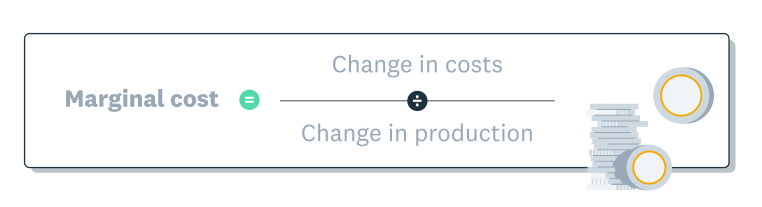
The marginal cost formula shows how much your total costs change when you produce one additional unit:
Marginal cost = Change in total costs ÷ Change in quantity produced
To calculate:
- Find the difference between your new total costs and your previous total costs
- Divide by the number of additional units produced (typically one)
For example, if producing one more computer raises your total costs by £50, your marginal cost is £50.
Compare your marginal cost to your average cost of production to guide your next move:
- marginal cost lower than average cost: producing more units will reduce your overall cost per unit. Consider increasing output.
- marginal cost higher than average cost: producing more units will raise your overall cost per unit. Keep production levels steady or look for ways to reduce costs first.
Marginal cost example
Mohammed runs a bakery and wants to know if making one extra cake is worth it. Here's his calculation:
- Current output: 100 cakes at £1,000 total (£10 per cake)
- New output: 101 cakes at £1,005 total
Calculation:
- Change in total cost: £1,005 – £1,000 = £5
- Change in quantity: 1 cake
- Marginal cost: £5 ÷ 1 = £5
Result: The marginal cost (£5) is lower than the average cost (£10), so Mohammed can increase profit by producing more cakes.
Why marginal cost matters to your business
Marginal cost helps you make three critical business decisions:
- Production volume: Determine how many units to produce without costs spiralling out of control
- Pricing strategy: Set prices that cover costs and maximise profit margins
- Growth timing: Decide when scaling up makes financial sense
Producing the right volume helps you spread fixed costs across more units. Finding the optimal production level keeps costs aligned with revenue gains. Marginal cost shows you the optimal production level.
How marginal cost affects your pricing strategy
Your marginal cost sets the minimum price you can charge without losing money on each sale, though it's important to note this calculation typically excludes broader internal administrative or holding costs. Understanding this floor helps you build a pricing strategy that stays competitive while protecting your profits.
Here's how to use marginal cost in pricing decisions:
- set your price floor: always price at or above your marginal cost for regular sales to ensure profitability on every unit
- calculate your markup: the gap between marginal cost and selling price determines your contribution to fixed costs and profit
- adjust for market conditions: during slow periods, pricing closer to marginal cost can help move inventory, but this should be temporary
- compare product lines: products with lower marginal costs can support more aggressive pricing or higher profit margins
For example, if your marginal cost is £15 per unit and you sell at £25, you have £10 per unit to cover fixed costs and generate profit. If a competitor prices at £20, you know you can match that price and still contribute £5 per unit to your profit.
Marginal revenue vs marginal cost
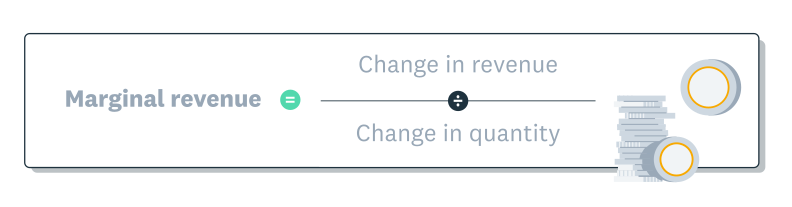
Marginal cost measures the expense of producing one more unit. Marginal revenue measures the income from selling that extra unit.
Marginal revenue formula: Change in total revenue ÷ Change in quantity sold
To maximise profits, balance your marginal cost with your marginal revenue. Keep marginal cost at or below marginal revenue to maintain profit on each additional unit. This happens because oversupply can lower demand and force you to cut prices.
Example of marginal revenue
Let's say Alison sells wallets at a market stall for £30 each. If she can't sell all her stock, she could supply the surplus wallets to another vendor across town at a rate of £20.
Her marginal revenue would be £20 for the sale of one extra wallet. If her marginal cost is higher than this (say, £22), then she would lose money on this single-unit transaction.
To improve her margins, Alison has several options:
- negotiate bulk pricing: secure a higher unit price for larger wholesale orders to offset costs
- reduce transport costs: sell to a vendor closer to her location or find cheaper delivery methods
- increase volume: sell more wallets to spread fixed costs across more units
Analysing these options helps Alison find where marginal cost meets marginal revenue for maximum profit.
FAQs on marginal cost
Here are answers to common questions about marginal cost and how to use it in your business.
What is marginal cost in simple terms?
Marginal cost is the extra money it costs to make one more item. If producing 100 units costs £1,000 and producing 101 units costs £1,008, your marginal cost is £8.
What causes marginal cost to increase?
Understanding the factors that affect your marginal cost helps you manage production efficiently. In fact, when developing accounting standards, some financial professionals sought clarity on which expenses should be considered incremental:
- labour costs: overtime pay or hiring additional staff increases per-unit expenses
- material costs: switching to more expensive suppliers or bulk pricing thresholds
- capacity limits: reaching maximum output may require investment in new equipment, larger premises, or more employees
- production inefficiencies: bottlenecks or equipment issues that slow output and raise costs
How does marginal cost help with pricing decisions?
Your marginal cost sets a pricing floor. Any price above your marginal cost contributes to covering fixed costs and generating profit. Knowing this number helps you set competitive prices while maintaining profitability.
What's the difference between marginal cost and average cost?
Average cost equals your total production costs divided by the number of units produced. Marginal cost is the additional cost of producing just one more unit. Average cost tells you overall efficiency, while marginal cost guides decisions about whether to increase output.
Disclaimer
Xero does not provide accounting, tax, business or legal advice. This guide has been provided for information purposes only. You should consult your own professional advisors for advice directly relating to your business or before taking action in relation to any of the content provided.
Start using Xero for free
Access Xero features for 30 days, then decide which plan best suits your business.