How to measure profitability: margins and formulas
Learn how to measure profitability, choose the right metrics, and grow your margins.

Written by Lena Hanna—Trusted CPA Guidance on Accounting and Tax. Read Lena's full bio
Published Thursday 2 April 2026
Table of contents
Key takeaways
- Calculate your gross profit margin by subtracting cost of goods sold from revenue, then dividing by revenue and multiplying by 100 to understand how much money remains after direct costs.
- Track your net profit margin monthly at minimum by subtracting all expenses from revenue, as this shows the true percentage of revenue your business keeps after all costs.
- Monitor profitability regularly using accounting software to spot trends early and make informed decisions about pricing and costs before small problems become major issues.
- Recognise that healthy net profit margins typically range from 10% (good) to 20% (excellent), though this varies by industry, with service businesses often achieving higher margins than retail or manufacturing.
What profitability means in small business
Profitability measures how effectively your business turns sales into profit, and it's a key indicator of health for the nearly 65.3% of small businesses in the US that were profitable in 2022. It shows what percentage of revenue you keep after paying costs. The two main profitability metrics are gross profit margin and net profit margin.
Profitability levels signal different things about your business:
- High profitability (wide margins): You keep a large share of revenue as profit. This is generally positive, though it may suggest room to lower prices and boost sales volume.
- Low profitability (narrow margins): Most of your revenue covers expenses. This could mean costs are too high, pricing is too low, or you're competing heavily on price.
Profit vs profitability and their significant differences
Here's how they differ:
- Profit: The amount of money your business keeps after paying expenses
- Profitability: The percentage of revenue you retain versus the percentage spent on operations
Here's why this distinction is useful. High profitability only improves your bottom line when paired with strong revenue, so aim for both healthy margins and solid sales.
Why measuring profitability matters for your business
Measuring profitability regularly helps you make informed decisions about pricing, costs, and growth. When margins tighten, cash flow often suffers and stress increases. In fact, 70% of small business owners have made sacrifices for their business to stay afloat, including raising prices and cutting their own salaries. Tracking your numbers helps you act before small problems become big ones.
Profitability can shift due to factors outside your control:
- Rising costs: Raw materials, energy, and transport
- Market changes: Interest rates and exchange rates
- Fixed expenses: Rent and wages

Measuring regularly ensures your margins give you the flexibility you need to run your business confidently.
Profitability metrics to track

*Net profit can be quoted before or after taxes. If quoting after-tax net profit then you need to also subtract taxes.
Three key profitability ratios help you understand business performance at different levels: gross profit margin, operating profit margin, and net profit margin. These metrics, sometimes called profitability ratios, each reveal something different about where your money goes.
Let's look at each one.
Gross profit margin
Gross profit margin shows the percentage of revenue remaining after you pay the direct costs of delivering your product or service.
- What it measures: Revenue minus cost of goods sold (COGS), expressed as a percentage
- Why it matters: Gross profit covers your operating expenses like rent, utilities, and marketing. What remains after those costs is your net profit.
Operating profit margin
Operating profit margin shows the percentage of revenue remaining after paying both direct costs and operating expenses, but before interest and taxes.
- What it measures: Revenue minus COGS and operating expenses (like rent, wages, and utilities), expressed as a percentage
- Why it matters: Operating margin reveals how efficiently you run day-to-day operations, separate from financing costs and tax obligations, though its calculation isn't always standard. One review found that among companies reporting operating profit, there were at least nine different definitions in use.
Formula: (Revenue - COGS - Operating expenses) ÷ Revenue × 100 = Operating profit margin %
Net profit margin
Net profit margin shows the percentage of revenue remaining after paying all business costs, including operating expenses.
- What it measures: Revenue minus all expenses (COGS plus operating costs), expressed as a percentage
- Why it matters:Net profit is what your business keeps. It's typically reinvested in growth or paid to owners.
- Note: Net profit can be quoted before or after taxes. This guide uses pre-tax net profit.
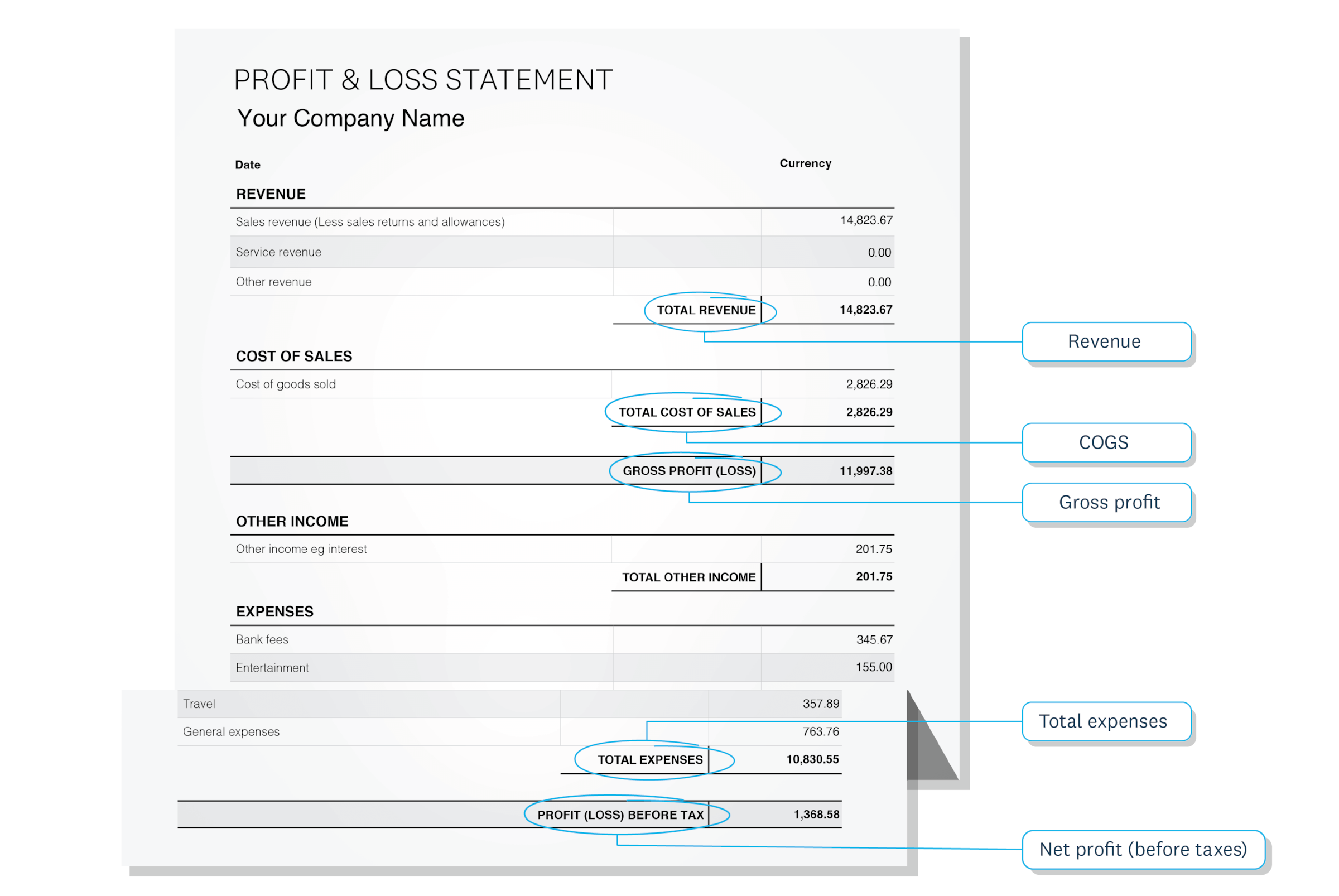
How to measure profitability
To measure profitability, divide your profit by revenue, then multiply by 100 to express it as a percentage. First, calculate your profit figure, which differs depending on whether you're measuring gross or net profit margin.
How to calculate gross profit margin
Follow these steps to calculate your gross profit margin:
- Subtract your cost of goods sold (COGS) from your total revenue to get gross profit.
- Divide gross profit by total revenue.
- Multiply by 100 to convert to a percentage.
Formula: (Revenue - COGS) ÷ Revenue × 100 = Gross profit margin %
Try the Xero gross margin calculator for instant results.
*Net profit can be quoted before or after taxes. If quoting after-tax net profit then you need to also subtract taxes.
How to calculate net profit margin
Follow these steps to calculate your net profit margin:
- Subtract all expenses (COGS plus operating costs) from your total revenue to get net profit.
- Divide net profit by total revenue.
- Multiply by 100 to convert to a percentage.
Formula: (Revenue - Total expenses) ÷ Revenue × 100 = Net profit margin %
Try the Xero net profit margin calculator for instant results.
Example of measuring profitability
Here's how to calculate profitability for a business with £100,000 in sales, £60,000 in inventory costs, and £20,000 in general expenses:
- Gross profit: £100,000 - £60,000 = £40,000
- Gross profit margin: £40,000 ÷ £100,000 × 100 = 40%
- Net profit: £100,000 - £80,000 (total costs) = £20,000
- Net profit margin: £20,000 ÷ £100,000 × 100 = 20%
This business keeps 40% of revenue after direct costs and 20% after all expenses.
Where to find the numbers you need
Before you can calculate profitability, you need to gather the right figures from your financial records. Here's where to find each component:
- Revenue: Pull from your sales records, invoices, or point-of-sale reports
- Cost of goods sold (COGS): Find in inventory records, supplier invoices, or direct labour costs
- Operating expenses: Locate in your general ledger under categories like rent, utilities, wages, and marketing
- Total expenses: Add COGS and operating expenses together
Accounting software like Xero organises these figures automatically, so you can generate reports without manual calculations.
Track profitability automatically with Xero
Accounting software removes the manual work from tracking profitability. You can monitor your margins in real time without building spreadsheets.
Here's how you can simplify measuring profitability:
- Automatic calculations: Get gross and net profit margins calculated for you
- Real-time dashboards: View your margins anytime in Xero Analytics
- Flexible reporting: Generate profit and loss statements for any period
- Up-to-date data: Bank feeds and invoicing keep your numbers current
FAQs on measuring profitability
Here are answers to common questions about measuring and interpreting profitability.
What's a good profit margin for a small business?
A healthy net profit margin depends on your industry, but a common guideline is that a 5% margin is low, 10% is healthy, and 20% is high. Service businesses often achieve higher margins than retail or manufacturing.
How often should I measure profitability?
While you should review your profitability monthly at a minimum, research shows most small business owners do it even more often, with 34% reviewing financials weekly and 21% daily. Regular tracking helps you spot trends and act quickly.
What's the difference between profitability and cash flow?
Profitability measures how much revenue exceeds expenses over time. Cash flow tracks the actual money moving in and out of your accounts. A business can be profitable in its accounts but still face cash shortages.
Which profitability metric is most important?
Net profit margin gives the clearest picture of overall business health since it accounts for all expenses. However, gross profit margin helps you evaluate pricing and production efficiency.
Can my business be profitable but still run out of cash?
Yes. Profitability is calculated over a period, but cash flow depends on timing. If customers pay late or you have large upfront costs, you may be profitable yet short on cash. This can also happen because of accounting differences, such as how you treat depreciation and principal payments on loans, which rarely align.
Disclaimer
Xero does not provide accounting, tax, business or legal advice. This guide has been provided for information purposes only. You should consult your own professional advisors for advice directly relating to your business or before taking action in relation to any of the content provided.
Start using Xero for free
Access Xero features for 30 days, then decide which plan best suits your business.