Operating profit
Operating profit shows what your core business earns before interest and tax. Here's how to calculate it.
Published Monday 17 August 2026
Table of contents

How to calculate operating profit
Key takeaways
- Operating profit is what your business earns from its core operations, after operating expenses but before interest and tax. It's also called operating income or EBIT.
- The formula is simple: operating profit = gross profit minus operating expenses (which include depreciation and amortisation).
- Operating profit margin turns that figure into a percentage of revenue, so you can compare performance over time and against similar businesses.
- Operating profit sits between gross profit and net profit, giving you a clear read on how efficiently you run day-to-day operations.
What is operating profit?
Operating profit is the money your business makes from its core trading activities, before you account for interest and tax. You work it out by taking your gross profit and subtracting your operating expenses, including depreciation and amortisation.

You'll also see operating profit called operating income or earnings before interest and tax (EBIT). Interest is left out because it depends on the rate your lender sets rather than how well you run the business, so operating profit focuses on the things you can actually control.
Operating profit formula
There are two common ways to write the operating profit formula, and both give you the same answer.
- Operating profit = gross profit − operating expenses
- Operating profit = revenue − cost of goods sold − operating expenses
Handy resources
Advisor directory
You can search for experts in our advisor directory
Financial reporting
Keep track of your performance with accounting reports
Operating expenses cover the day-to-day costs of running your business, such as rent, wages, utilities, marketing, depreciation and amortisation. Interest and tax are not part of the calculation.
How to calculate operating profit
You can calculate operating profit in four steps, working down from your total sales.
- Add up your total revenue for the period.
- Subtract your cost of goods sold to get your gross profit.
- Subtract your operating expenses, including depreciation and amortisation.
- The figure that's left is your operating profit, before interest and tax.
Example of an operating profit calculation
Imagine your business sold €20,000 worth of products or services. It cost you €8,000 to provide them, and you paid another €3,000 on running costs such as rent, electricity and phone charges.
- Step one: €20,000 revenue − €8,000 cost of goods sold = €12,000 gross profit
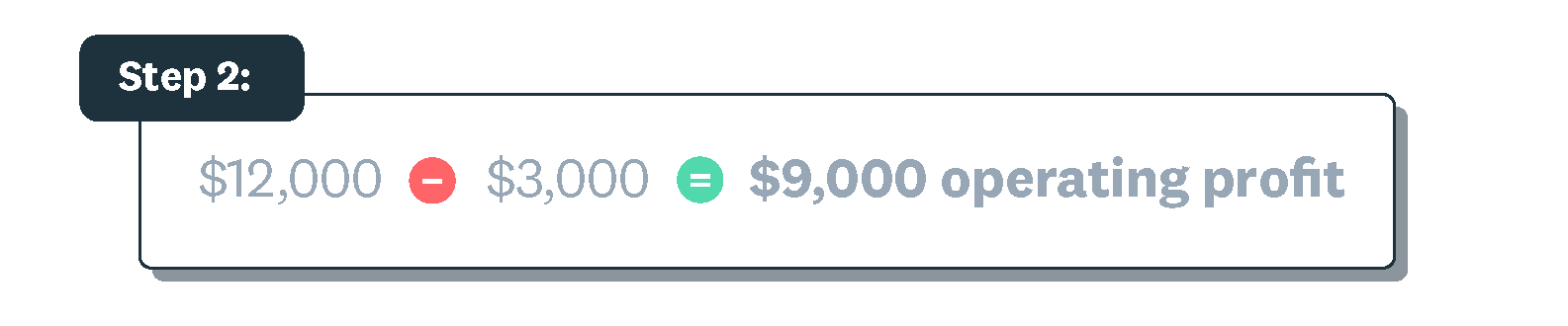
- Step two: €12,000 gross profit − €3,000 operating expenses = €9,000 operating profit
Your operating profit for the period is €9,000.
Operating profit margin
Operating profit margin expresses your operating profit as a percentage of revenue, which makes it easy to compare periods or benchmark against similar businesses. To learn how it fits alongside other margins, see the guide on how to measure profitability.
- Operating profit margin = (operating profit ÷ revenue) × 100
Using the example above, that's €9,000 ÷ €20,000 × 100 = 45%. There's no single "good" number, because margins vary widely by sector. Data compiled by NYU Stern's margins-by-sector dataset shows operating margins running from low single digits in parts of retail to well above 20% in software, so compare your margin with businesses like yours rather than a single ideal figure.
Why operating profit matters
Operating profit strips out financing and tax, so it shows how well your core business actually performs. That makes it one of the clearest signals of day-to-day efficiency, which is why lenders and investors often look at it alongside your other profitability ratios.
Tracking it over time helps you spot when rising costs or softer pricing are eating into performance, so you can act early. If the number is heading the wrong way, the guide on how to grow your profit covers practical levers to pull.
Operating profit vs gross profit vs net profit
Gross, operating and net profit each measure a different layer of profitability, and they build on one another as you subtract more costs. Understanding the difference helps you read your profit margin figures correctly.
- Gross profit: revenue minus cost of goods sold. It shows how efficiently you produce or deliver what you sell.
- Operating profit: gross profit minus operating expenses, before interest and tax. It shows how well you run your core operations.
- Net profit: operating profit minus interest, tax and any other costs. It's your true bottom line, the amount the business actually keeps.
If your gross profit margin looks healthy but operating profit is thin, your operating expenses are the place to look.
Track your operating profit with Xero
Working out operating profit by hand means pulling figures from across your records every time. Xero brings your income and expenses into real-time reports, so your gross profit, operating profit and margins update as you go. You can start today and get one month free to see how it fits your business.
FAQs on operating profit
Here are answers to some common questions about operating profit.
What does operating profit not include?
Operating profit leaves out interest payments and tax, because these sit outside your core trading. That's why it's also known as earnings before interest and tax (EBIT).
Is operating profit the same as operating income or EBIT?
Yes, operating profit, operating income and EBIT all refer to the same figure: profit from core operations before interest and tax. Different regions and reports simply use different names for it.
Does operating profit include depreciation?
Yes, depreciation and amortisation are operating expenses, so they're subtracted before you reach operating profit. If you add them back, you get a related measure called EBITDA.
How can you improve your operating profit?
You can lift operating profit by raising revenue, improving gross margin, or trimming operating expenses such as overheads and admin costs. Reviewing these regularly helps you protect the figure as costs change.
Related terms
Learn more about operating profit
Handy resources
Advisor directory
You can search for experts in our advisor directory
Profit & Loss template
Download Xero’s profit and loss statement template to show how much money you business is making
Financial reporting
Keep track of your performance with accounting reports
Disclaimer
This glossary is for small business owners. The definitions are written with their requirements in mind. More detailed definitions can be found in accounting textbooks or from an accounting professional. Xero does not provide accounting, tax, business or legal advice.