Net profit margin
Learn what net profit margin is, how to calculate it, and what counts as a good margin for your business.
Published Monday 17 August 2026
Table of contents

How to calculate net profit margin
Key takeaways


- Net profit margin shows what percentage of revenue your business keeps as profit after paying all expenses, including operating costs, interest and taxes.
- You calculate net profit margin by dividing net profit by revenue, then multiplying by 100 to get a percentage.
- A higher net profit margin means your business is more efficient at converting revenue into actual profit.
- Comparing your net profit margin over time and against industry benchmarks helps you spot trends and make better pricing or cost decisions.
What is net profit margin?
Net profit margin is net profit divided by revenue, multiplied by 100. It shows what portion of revenue your business keeps as profit after all expenses.
This percentage is one of the clearest indicators of your business's overall financial health. While revenue tells you how much money comes in, net profit margin reveals how much you actually keep. A business with €500,000 in revenue might seem successful, but if only 2% remains as profit, there's little room for growth or unexpected costs.
Handy resources
Advisor directory
You can search for experts in our advisor directory
Profit & Loss template
Download Xero’s profit and loss statement template to show how much money your business is making
Financial reporting
Keep track of your performance with accounting reports
Disclaimer
This glossary is for small business owners. The definitions are written with their requirements in mind. More detailed definitions can be found in accounting textbooks or from an accounting professional. Xero does not provide accounting, tax, business or legal advice.
Net profit margin formula
The formula for net profit margin is straightforward.
Net profit margin = (net profit ÷ revenue) × 100
Here's what each part means:
- Net profit: the amount left after subtracting all business expenses from revenue, including cost of goods sold, operating expenses, interest and taxes
- Revenue: the total income your business earns from sales before any deductions
How to calculate net profit margin
To calculate your net profit margin, you need your total revenue and net profit figures from the same period. Here's a worked example using a cleaning business.
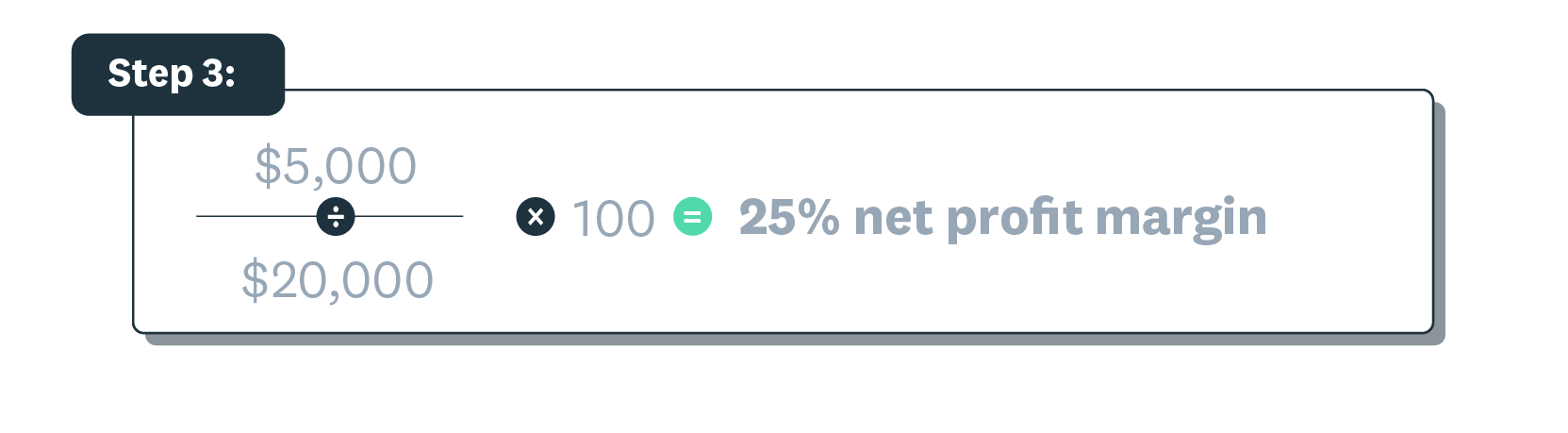
Suppose your cleaning business earns €20,000 in revenue for the month. Your cost of services is €8,000, giving you a gross profit of €12,000. From this, you pay €3,000 in operating expenses and €4,000 in taxes, totalling €7,000. Your net profit is €12,000 minus €7,000, which equals €5,000.
Now apply the formula:
Net profit margin = €5,000 ÷ €20,000 × 100 = 25%
This means your business keeps €0.25 of every euro earned as profit.
How to interpret your net profit margin
Your net profit margin tells you how efficiently your business converts revenue into profit. A 25% margin, for example, means you keep €0.25 of every €1 of revenue after covering all costs.
A rising margin over time suggests your business is becoming more efficient, whether through better pricing, lower costs or increased sales volume. A falling margin might signal rising expenses, pricing pressure or operational issues that need attention.
What is a good net profit margin?
What counts as a good net profit margin depends on your industry, business model and stage of growth. However, a common rule of thumb suggests that around 5% is considered low, 10% is healthy and 20% or above is high.
Service businesses, such as consultancies or cleaning companies, often run higher margins because they have lower material costs. Retail or hospitality businesses typically operate on thinner margins due to higher overheads and cost of goods sold. The key is to compare your margin against similar businesses in your sector and track how it changes over time. Use benchmarks to measure profitability and identify areas for improvement.
Net profit margin vs gross and operating profit margin
Gross profit margin, operating profit margin and net profit margin each measure profitability at a different stage of your business's finances. Understanding the distinction helps you pinpoint where money is being made or lost.
- Gross profit margin: calculated as gross profit divided by revenue, multiplied by 100. Gross profit equals revenue minus cost of goods sold. This margin shows how efficiently you produce or deliver your product or service.
- Operating profit margin: calculated as operating profit divided by revenue, multiplied by 100. Operating profit equals gross profit minus operating expenses, but before deducting interest and taxes. This margin reflects the profitability of your core business operations.
- Net profit margin: calculated as net profit divided by revenue, multiplied by 100. Net profit equals revenue minus all expenses, including cost of goods sold, operating expenses, interest and taxes. This margin shows your overall profitability after everything is paid.
In short, gross margin looks at production efficiency, operating margin examines operational efficiency, and net margin reveals the bottom line.
Why net profit margin matters
Net profit margin is a valuable metric for assessing and improving your business's financial performance. It matters for several reasons.
- Profitability assessment: it shows whether your business is generating enough profit relative to its revenue
- Performance tracking: comparing margins over time reveals whether your business is becoming more or less efficient
- Benchmarking: measuring your margin against industry averages helps you understand your competitive position
- Informed decisions: it guides pricing strategies, cost management and investment choices
How to improve your net profit margin
Improving your net profit margin means either increasing revenue without proportionally raising costs, or reducing expenses while maintaining sales. Here are practical ways to do both.
- Review your pricing: ensure your prices reflect the full value you provide, covering costs and leaving room for profit
- Cut unnecessary costs: audit your expenses regularly and eliminate spending that doesn't contribute to growth or customer satisfaction
- Improve operational efficiency: streamline processes, reduce waste and automate repetitive tasks to lower operating costs
- Focus on high-margin products or services: prioritise offerings that generate the most profit per sale
For more strategies on boosting your bottom line, explore ways to increase profit.
Track your net profit margin with Xero
Knowing your net profit margin is only useful if you can track it consistently. Xero's financial reports give you an up-to-date view of your revenue, expenses and profit, so you can monitor your margin over time and spot trends early. To see how Xero can help your business, get one month free.
FAQs on net profit margin
Here are answers to common questions about net profit margin.
What is a good net profit margin?
It varies by industry, but 10% is often considered healthy for most businesses. Service-based businesses may aim for 15–20%, while retail or hospitality often operates at 5% or lower.
What is the difference between net profit margin and gross profit margin?
Gross profit margin only accounts for the cost of goods sold, while net profit margin includes all expenses, such as operating costs, interest and taxes. Net profit margin gives a fuller picture of overall profitability.
Is net profit margin the same as net margin?
Yes, they refer to the same metric. Both terms describe the percentage of revenue remaining after all expenses have been deducted.
How can I improve my net profit margin?
Focus on increasing revenue through better pricing or sales volume, while reducing unnecessary expenses. Automating tasks and negotiating better supplier terms can also help.